VISITORS OF ALL DOMESTICATED SPECIES OFFER EMOTIONAL SUPPORT AND HEALING When we view the beauty of a lake or sit outside enjoying a garden or set of puffy clouds in a crisp, blue sky, we get taken aback by the beauty of nature. We feel better, because we are imbedded in creation. We might feel peaceful and serene, distracted from our everyday aches and pains or troubles. There is something about the natural world which is non-threatening and healing.
We feel rested, right that things are all right and may be overwhelmed by a spiritual calm we can’t describe. Pets help us, too, with everyday aches and pains.
My friend Kathy shared a story. “A neighbor I visited (Joyce), had a parakeet that she loved. Last week I actually took her and her bird to an amazing (exotic) pet vet who totally impressed me with her knowledge and sensitivity. And she mentioned this—how much pets help people.”
Kathy continues, “The bird has since died but the vet even called me to tell me—and maybe so that I would be sure to reach out to Joyce. And she sent a floral bouquet and message to Joyce as a condolence. I was amazed!”
An estimated 68 percent of American households have pets. The unconditional love of a pet can do more than keep you company. Pets can reduce stress, improve heart health, and even help children with their emotional and social skills. The National Institutes of Health (NIH) studies the relationship between pets to human health and much more.“ There’s not one answer about how a pet can help somebody with a specific condition,” explains Dr. Layla Esposito, who oversees NIH’s Human-Animal Interaction Research Program. “Is your goal to increase physical activity?
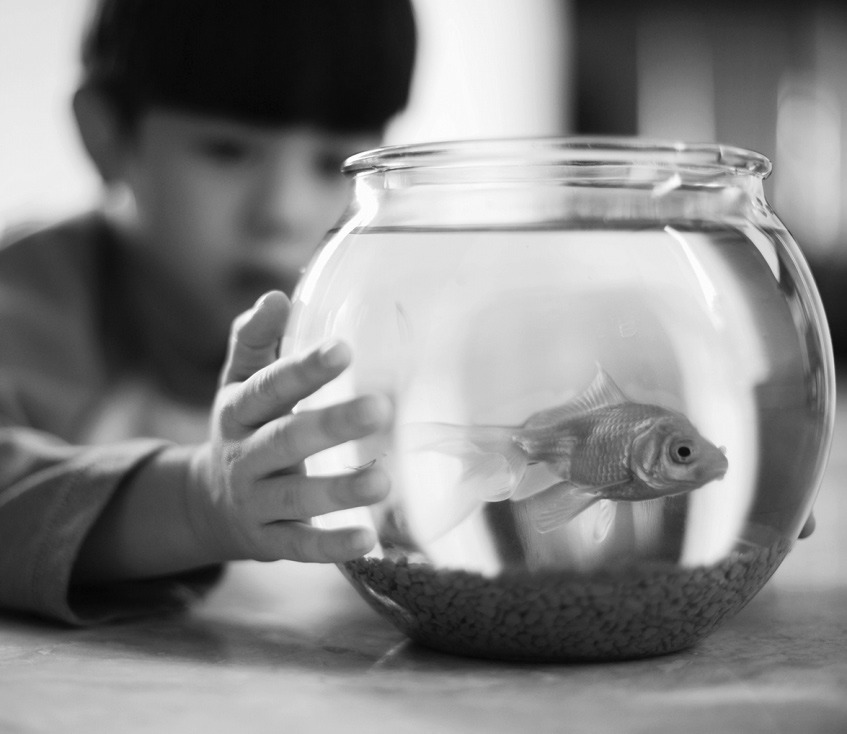
“Then you might benefit from owning a dog. You have to walk a dog several times a day and you’re going to increase physical activity. If your goal is reducing stress, sometimes watching fish swim can result in a feeling of calmness. So, there’s no-one-type-fits all.”
NIH is funding large-scale surveys to find out the range of pets people live with and how their relationships with their pets relate to healing. “We’re trying to tap into the subjective quality of the relationship with the animal—that part of the bond that people feel with animals—and that translates into some of the health benefits,” explains Dr. James Griffin, a child development expert at NIH. Animals can serve as a source of comfort and support. Therapy dogs are especially good at this.
They’re sometimes brought into hospitals or nursing homes to help reduce stress and anxiety in patients. “Dogs are very present. If someone is struggling with something, they know how to sit there and be loving,” says Dr. Ann Berger, a physician and researcher at the NIH Clinical Center in Bethesda, Maryland. “Their attention is focused on the person all the time.”
Berger works with people who have cancer and terminal illnesses. She teaches them about mindfulness to help decrease stress and manage pain.
“The foundations of mindfulness include attention, intention, compassion, and awareness,” Berger says. “All of those things are things that animals bring to the table. People kind of have to learn it. Animals do this innately.”
Animals may help you in other unexpected ways. A recent study showed that caring for fish helped teens with diabetes better manage their disease.
Researchers had a group of teens with type 1 diabetes care for a pet fish twice a day by feeding and checking water levels. The caretaking routine also included changing the tank water each week. This was paired with the children reviewing their blood glucose (blood sugar) logs with parents.
There are hundreds of scientific studies which show that so many animals-parakeets, cats, dogs, fish or guinea pigs-have a positive effect on people.
Some think the best proof of this is how people feel when they encounter these loving, caring creatures.
As a friend of mine adds, “who cares what the studies say, I just know petting a dog or horse lets me forget my aches and pains for a while!”
Sister Karen Zielinski is the Director of Canticle Studio. Canticle Studio is a part of the Sisters of St. Francis of Sylvania, OH’s overall advancement effort and has a mission of being a creative center where artists generate works, products, and services in harmony with the mission of the Sisters St. Francis. She can be reached at kzielins@sister sosf.org or 419-824-3543. ✲