THANKS TO SOCIAL MEDIA, “seed oils” have become the subject of many podcasts, reels, and posts. The debate that has arisen over this hot topic is whether seed oils are healthy or “toxic/poisonous” and damaging to our health.
Social influencers, seeking clicks, have been quick to blame these oils for a wide range of health issues, ranging from brain fog to obesity, inflammation, cancer, diabetes, and liver disease. However, it’s important to note that these claims are not based on science and evidence, but on the assertions of fad diet proponents. Some of these claims about the dangers of seed oils have even begun to enter our political discourse.
Before I proceed any further, please understand that this article is not intended to prompt a political battle—merely to lay out the facts about seed oils and let our knowledgeable and reasonable HLN readers decide for themselves.
What are seed oils? Actually, I had to educate myself on this topic because the term “seed oils” is not used in traditional science-based nutrition curricula.
Seed oils are processed vegetable oils that are extracted from seed rather than the pulp or fruit of a plant. Examples include canola, corn, cottonseed, soy, sunflower, safflower, and grapeseed oils.
Even shortening, e.g. Crisco, which was popular in the 40s through the 60s, is saturated vegetable oil containing no cholesterol or animal fat, but hydrogenation took a healthy fat and saturated it—made it creamy and solid at room temperature to mimic lard. Shortening was often used for frying and baking and is making a comeback disguised as beef tallow.
Saturated fat is the “bad” fat known to increase cholesterol levels, especially LDL cholesterol. Partially hydrogenated oils, such as the seed oils and vegetable oils, are considered “GRAS”—generally recognized as safe for human consumption by the United States FDA.
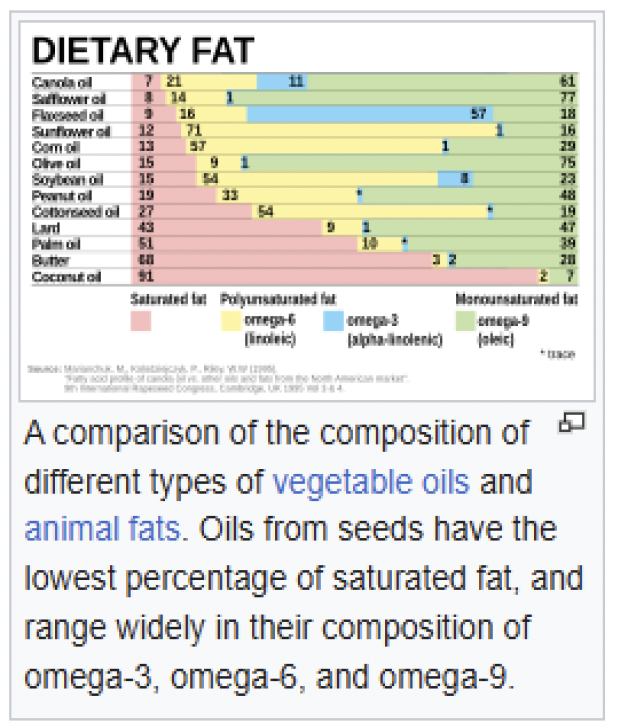
Seed oils are a mixture of saturated, polyunsaturated, and monounsaturated fats, and they include a subset of polyunsaturated oils called Omega-3 and Omega-6 oils. It’s the Omega-6 fatty acid* that seems to be one of the issues, with critics saying that the Omega-6 oil breaks down into something toxic and causes inflammation in the body.
However, as of 2017, a meta-analysis of randomized control trials found that increased dietary intake of Omega-6 does not have a significant effect on inflammation markers. Another study in 2023 by the International Journal of Molecular Sciences showed a higher intake of Omega-6 fatty acids is associated with better cardiovascular health and improved glucose metabolism. The American Heart Association also supports the inclusion of Omega-6 oils as part of a healthy diet. (The chart shows different oils and how they are comprised of varying levels of Omega-3, Omega-6, and Omega-9 fatty acids.)
Seed oils are extracted from plants by chemical or mechanical processes. Critics claim that the chemical extraction process leaves toxic byproducts, such as hexane, in the oil. While hexane (a neurotoxin) is considered hazardous in gas form, it is actually evaporated off. Nonetheless, critics argue that there are trace amounts of hexane in the oils found on supermarket shelves.
The correlation of health concerns with seed oils could also be a case of guilt by association. Seed oils are frequently used in ultra-processed foods, which are linked to negative health outcomes. The high consumption of these foods may contribute to health problems due to the high levels of sugar and salt they contain, as well as the destruction of natural food structure that processing entails. In any case, misinformation has gained traction online and influencers continue to spread it.
Rather than shun seed oils, what is recommended is using a blend of—or striking a balance between—polyunsaturated and monounsaturated “seed oils” and to use them sparingly in cooking and recipes. It’s also important to consider the context in which we consume Omega-6 oils. Most are used in deep-fried foods, fast foods, and packaged snacks. Remember, ultra-processed foods tend to be high in sodium, refined carbohydrates, and added sugars.
Regular readers, many of whom choose a healthier, cleaner eating style, probably would not be consuming these foods with regularity anyway. They’re more likely to replace ultra-processed foods with more minimally processed foods such as fruits, vegetables, lean proteins, whole grains, plant proteins, legumes, nuts, and seeds.
Whatever the online personalities might say, seed oils can also be part of a healthy diet when used in cooking, such as stir-frying vegetables, oven-roasting fish, or making homemade salad dressings. Hopefully the facts I’ve shared in this column will help you distinguish seed oil facts from influencer fiction.
*I’ve used the term “fatty acids” in this article. Fatty acids are the building blocks of the fat in our bodies and the fat we eat. During digestion, the body breaks down fat into fatty acids, which can then be absorbed into the blood. Laurie Syring, RDN/LD, is Clinical Nutrition Manager at ProMedica Flower Hospital. ✲