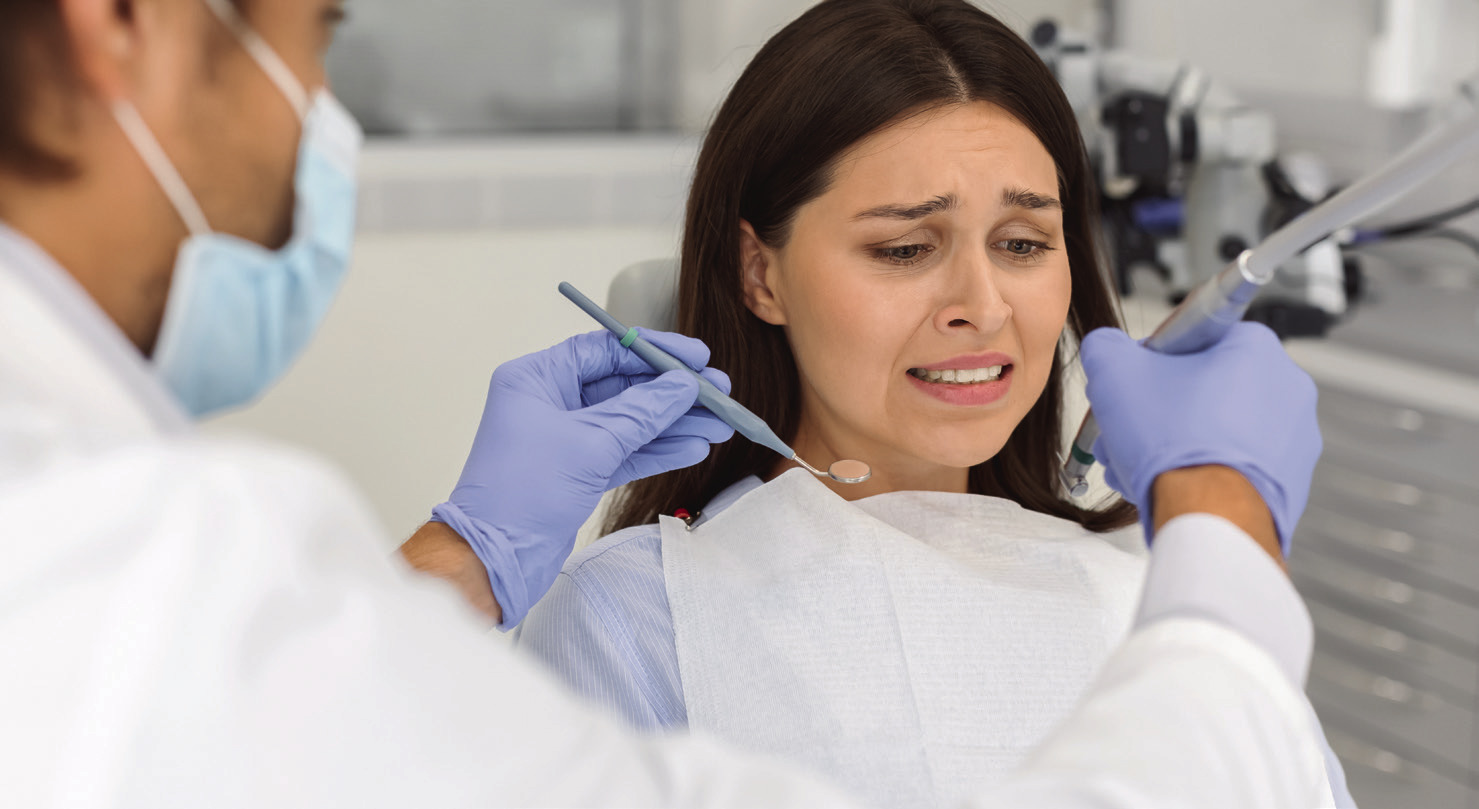
THERE ARE MANY PHOBIAS — defined as an uncontrollable, irrational, and lasting fear of a certain object, situation, or activity. Among them are arachnophobia(fear of spiders),ophidiophobia (fear of snakes), and astraphobia (fear of thunder and lightning).
But one of the most common fears involves a controlled setting in a clean, well-lighted place staffed by educated and trained healthcare professionals. It’s dentophobia, a fear of dentists. It’s one that can lead to poor physical health and low self-esteem. But it’s a phobia that’s treatable.
“People with this phobia feel anxious when they think about going to the dentist or actually visit the dentist,” said The Cleveland Clinic. “Past negative experiences, family history, or feeling a loss of control can lead to dentophobia.”
This is a relatively common phobia. The Cleveland Clinic said more than 35 percent of Americans fear dental treatment, with 12 percent having extreme fear. More women than men have dentophobia, the Clinic said.
Possible causes include:
• Family history, where a parent or relative has or had a phobia.
• Embarrassment, in which a person feels strange about having a dentist or hygienist being so close, or is worried about the appearance of teeth or bad breath.
• Helplessness, because lying in a chair and having your mouth open for an extended time can induce a loss of control.
• Modeling, when hearing someone talk about their fear of dentists can stimulate the same phobia in you.
• Negative experiences, in which having a painful or stressful dental visit even so far back as childhood stokes the phobia.
Things that trigger dentophobia are being in a dental office, hearing the whine of the dentist’s drill or seeing other instruments, lying in the dentist’s chair, or simply thinking about an upcoming visit.
Symptoms range from mild to severe, and include chills, dizziness and lightheadedness, excessive sweating, nausea, heart palpitations, nausea, shortness of breath, trembling, or indigestion.
This phobia, left unaddressed, can bring about poor oral health, which leads to decayed and missing teeth and gum disease. As oral health worsens, complications from diabetes, heart disease, and respiratory infections including pneumonia can develop. “Fear of dentists can also have a negative effect on your general well-being,” the Cleveland Clinic says. “People whose oral health has been impacted by dentophobia may become embarrassed about their teeth and avoid seeing friends or family.” Performance at work or school also can be negatively affected.
There’s hope because dentophobia can be treated, primarily through exposure therapy. “A mental health professional exposes you to situations and images that may trigger your symptoms,” the Clinic said. “This happens in a controlled setting where you can work through your responses. Most people with specific phobias see their symptoms improve after getting this type of psychotherapy.” Other ways to overcome dentophobia are:
• Acupuncture, in which hairthin needles are inserted at specific points to help relieve anxiety related to dental visits.
• Guided imagery, where the patient thinks of sights, sounds, and smells of a place that’s pleasing, creating a sense of well-being.
• Relaxation techniques, such as deep breathing and muscle relaxation to help lower stress and anxiety.
• Hypnotherapy, the use of guided relaxation techniques and focused attention to change the patient’s perception.
• Sedation, in which the dentist provides medication to help relax the patient during treatment.
Perhaps most importantly: Depend on friends. Ask someone you trust to recommend a dentist who understands dentophobia, and make an initial appointment to talk about your fears.
As the Clinic concludes, “Many techniques can reduce your anxiety and improve your quality of life.”
Dennis Bova is a freelance writer and editor. ✲