Cutting-edge therapies have revolutionized the field of cancer care. From precision medications tailored to individual genetic profiles to the latest immunotherapies that harness the body’s own defenses, innovative treatments are dramatically improving survivorship rates while enhancing patients’ quality of life throughout their treatment journey and beyond.
However, it’s important to understand that, even when the most advanced therapies are utilized, optimal outcomes for cancer patients often hinge on early detection and treatment of the disease.
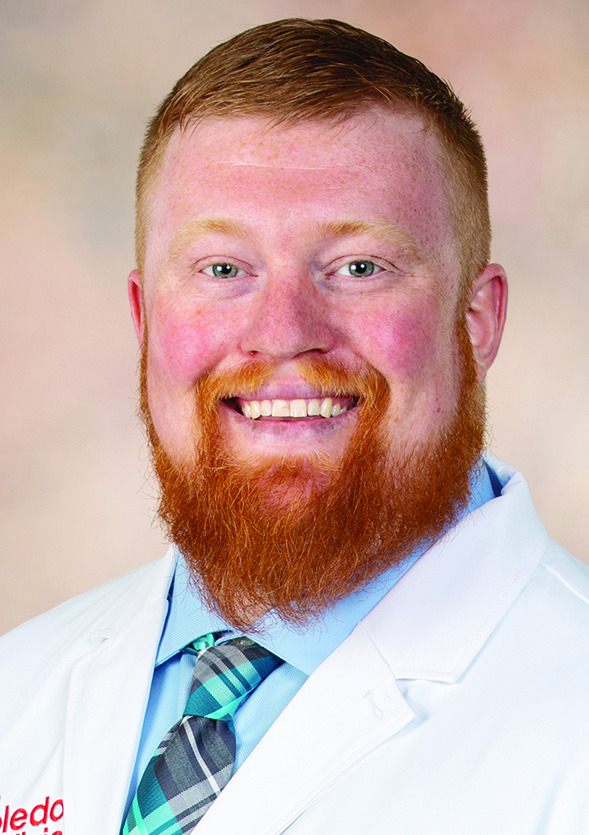
“Early cancer detection is so critical because it significantly increases the odds of successful treatment and overall survival,” states James Morlock, CNP, of The Toledo Clinic Cancer Centers. “In fact, multiple cancer types are curable if caught and treated early, for example breast, lung, testicular, and colorectal cancers. Identifying these and other cancers in their earliest stages depends on regular screenings and awareness of symptoms on the patient’s part.”
How are we doing as a general population when it comes to detecting cancers in their initial stages? According to Morlock, we’re about halfway there—approximately 50% of cancers are being diagnosed in their earliest, most treatable stages, while the other 50% are still being caught at an advanced stage, i.e. after they’ve already spread to other parts of the body. “So, we still have a lot of work to do in this regard,” he says. Morlock cites several potential obstacles that stand in the way of people seeking cancer screenings and other forms of preventive health care. “One is a simple lack of knowledge. People who’ve had close family members with cancer are usually more aware of their own risk and the importance of screening, but not everyone has this experience and understanding. Cultural attitudes can also play a role, such as the viewpoint that people should go to the doctor only when they’re sick or have obvious symptoms. Other obstacles might include insurance constraints, logistical issues such as the lack of reliable transportation or the lack of nearby medical facilities, or even fear of diagnosis. This last one is especially common when it comes to cancer. Some people just don’t want to know. Unfortunately, ignorance is bliss right up to the point that it isn’t,” he explains. Just as leading-edge therapies are changing the face of cancer treatment, major advances are being made in the realm of early cancer detection and prevention as well. Morlock notes that among these is genetic/molecular testing, or biomarker screening, which helps determine whether patients carry certain genetic mutations that can increase their cancer risk. The BRCA mutation, for example, is known to increase the lifetime risk of breast or ovarian cancer in women, as well as prostate cancer in men.
Another exciting recent development was the advent of liquid biopsy, a non-invasive test that analyzes bodily fluids (typically blood), rather than tissue, for signs of cancer. “Liquid biopsy isn’t as useful as traditional tissue biopsy in determining a definitive diagnosis, but it can help narrow down the possibilities when there’s ambiguity,” Morlock says. “It can also be used when there’s an established diagnosis to look for circulating tumor cells or tumor DNA, allowing us to track the status and progress of the cancer through serial blood draws.” Notwithstanding these and other recent advances in early cancer detection, Morlock emphasizes the importance of continuing to get established, tried-and-true cancer screenings as appropriate based on age, family history, and other factors—among them mammogram, Pap smear, PSA testing, colonoscopy, and low-dose CT scanning for lung cancer.
Looking to the future, Morlock is optimistic that artificial intelligence will further revolutionize the tools available for early cancer detection. He notes that AI software already in development will help pathologists and radiologists identify areas of potential concern that aren’t obvious to the human eye in imaging. “I also hope to see AI software evolve to the point where we can use our smartphones or other devices to detect changes in blood chemistry or bodily functions that could indicate the presence of cancer—much the same way a continuous glucose monitor tracks blood sugar. We hear a lot about the scary side of AI these days, but this technology could offer tremendous benefits in the field of oncology,” Morlock adds.
The Toledo Clinic Cancer Centers, located at 1200 Medical Center Parkway in Maumee and 4126 N. Holland Sylvania Road, Suite 105 in Toledo, also provides imaging, laboratory, chemotherapy, specialized pharmacy, and IV services. The cancer center consists of 10 physicians, now including a Rheumatologist, as well as 11 advanced practice providers. The cancer center also has satellite centers in Napoleon, Bowling Green, Wauseon, Bellevue, Oregon, and Monroe.
For more information, please call The Toledo Clinic Cancer Centers at 419-479-5605. ✲