HEARING LOSS CAN KEEP YOU FROM totally enjoying a concert, family gathering, TV show, or festive holiday meal. Alienation caused by hearing loss refers to the feeling of being disconnected or isolated from others due to difficulties communicating, often leading to social withdrawal and a sense of not belonging within social groups. Essentially, the inability to fully participate in conversations and social activities can make people with hearing loss feel alienated from those around them.
“Hearing loss is frustrating for those who have it and for their loved ones. But recent research from Johns Hopkins reveals that it also is linked with walking problems, falls, and even dementia,” states Johns Hopkins Medicine. In a study that tracked 639 adults for nearly 12 years, Johns Hopkins expert Frank Lin, MD, PhD, and his colleagues found that mild hearing loss doubled dementia risk. Moderate loss tripled risk, and people with a severe hearing impairment were five times more likely to develop dementia.
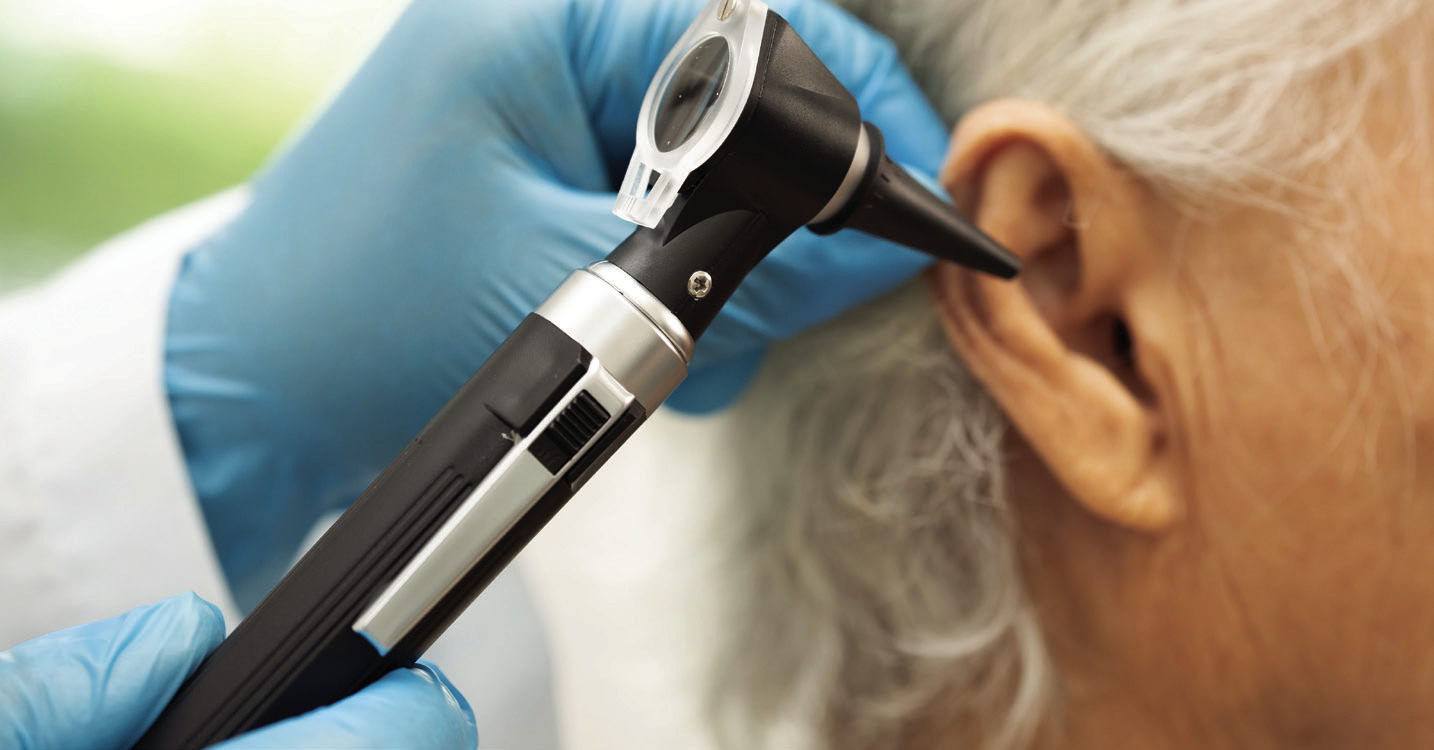
Like any medical symptom that happens in our bodies, it’s good to check out what’s going on if we feel our hearing is changing. Visiting an audiologist can give us the status of our hearing and can offer options that might help our hearing.
Can hearing aids reduce these risks? Lin hopes to find out in a new study, still in the planning stages. “These studies have never been done before,” he notes. “What we do know is that there’s no downside to using hearing aids. They help most people who try them. And in those people, they can make all the difference in the world—allowing people to reengage with friends and family and to be more involved again.”
Although nearly 27 million Americans aged 50 and older have hearing loss, only one in seven uses a hearing aid. If you think your hearing has diminished, it’s worth making an appointment with an audiologist for a hearing check, Lin says. If you have hearing loss, don’t let the following myths keep you from getting help:
“My hearing’s not that bad.”
Hearing aid users wait, on average, 10 years before getting help for hearing loss. But during that time, communication with loved ones becomes more difficult, and isolation and health risks increase. “Our findings emphasized just how important it is to be proactive in addressing any hearing declines over time,” says Lin.
“Wearing hearing aids means I’m old, and I’m not ready for that.”
It’s normal to feel worried that hearing loss means you’re aging— and to want to hide it. Plenty of people with a hearing impairment sit silently rather than joining in conversations and activities because they fear that hearing problems will make them seem helpless or less than competent. The truth: Connecting with others can help your brain stay younger and keep you involved with life.
“I don’t like the way hearing aids look.”
Forget the old days of big, whistling earpieces. Today’s hearing aids and cochlear implants are smaller (and less conspicuous) than ever before. Even celebrities (like former president Bill Clinton and football Hall of Famer Mike Singletary) are wearing them proudly.
“I heard that hearing aids are difficult to use.”
There is a breaking-in period as you—and your central auditory system and brain—adjust to life with hearing aids. That’s why most doctors and hearing centers include a trial period, so you can be sure the type you’ve chosen—whether it’s a miniature behind-the-ear model or one that fits into your ear—is right for you.
Of course, hearing aids can help us be more included in communication. You can use closed captioning on your televisions or computer screens. That’s because of the (1991) Americans with Disabilities Act (ADA) whose passage required all new TVs built after 1993 to have caption-decoding technology in them.
So, consider making a move to see an audiologist. It can be a good start to keep you involved in life. You can learn how to hear better and become more included in life!
Sister Karen Zielinski is the Director of Canticle Studio. Canticle Studio is a part of the Sisters of St. Francis of Sylvania, OH’s overall advancement effort and has a mission of being a creative center where artists generate works, products, and services in harmony with the mission of the Sisters of St. Francis. She can be reached at kzielins@sistersosf.org or 419-8243543.
✲