AM I GETTING ENOUGH PROTEIN? If you’re asking this question, you’re likely getting enough. How much you actually need to build muscle depends on your weight, activity level, and age.
Still, for many people, “protein” is the latest obsession. Cruise down any grocery store aisle, and you’ll see items like “protein cereal,” “protein pancakes,” “proteinnoodles,”and“proteincookies.” Even foods naturally high in protein, such as cheese and yogurt, are sold in protein-boosted versions.
The current protein craze is just the latest in a long line of similar trends. Remember the late 80s when we ate fat-free, and the 2000s when we ate low-carb “Atkins,” “Keto,” and “Paleo” style?Thenwedevelopedanunquenchable thirst for staying hydrated and water bottles abounded. Now we find ourselves in the “High-Protein” era.
Along with fat and carbohydrate, protein is one of the three macronutrients we can’t live without. Protein is essential as it contains nitrogen and nine amino acids—the building blocks of living tissue without which we cannot grow and reproduce. Protein supports our immune function and maintains muscle mass. Yet, many people struggle to get enough protein in their daily diet, especially the elderly.
People are inspired to eat more protein for various reasons. For some, it’s about losing weight; for others, it’s about building muscle. However, it’s important to keep in mind that more is not always better when it comes to protein. Eating more protein does not equal big muscles. Instead, muscle growth is a complex process that relies on adequate calories and protein, as well as hormones that the body naturally produces and a healthy dose of physical activity. Getting too little protein isn’t good either.
Eating a higher-protein diet has its pros and cons. On the upside, eating protein daily is necessary to get all the essential amino acids. Protein also aids in building muscle and maintaining muscle mass; promotes “satiety” (the feeling of fullness) and curbs hunger; aids in bone health; helps boost metabolism; promotes healthy hair, skin, and nails; and helps prevent blood sugar spikes.
On the downside, high-protein foods and drinks, e.g. smoothies and supplements, can cause nausea and gastrointestinal distress as well as contribute to irritability, weight 1 12/17/24 10:00 AM gain, kidney dysfunction, and fatigue if you’re not getting a balance of all the macronutrients.
How much protein is enough? That depends on many factors. The RDA (recommended daily allowance) is .37 grams per pound of body weight, but if you’re active, participating in sports, or strength training, your protein needs can be as high as .41 to .6 grams per pound of body weight. If you’re overweight, you will want to use your ideal body weight and not your current weight.
Alternatively, you can aim for at least five to seven ounces of lean protein per day—or potentially more depending on your age, activity, and weight. For the sake of illustration, a three-ounce portion looks like a deck of playing cards. A portion the size of two decks of cards equals approximately six ounces per day of lean, high-biological-value protein.
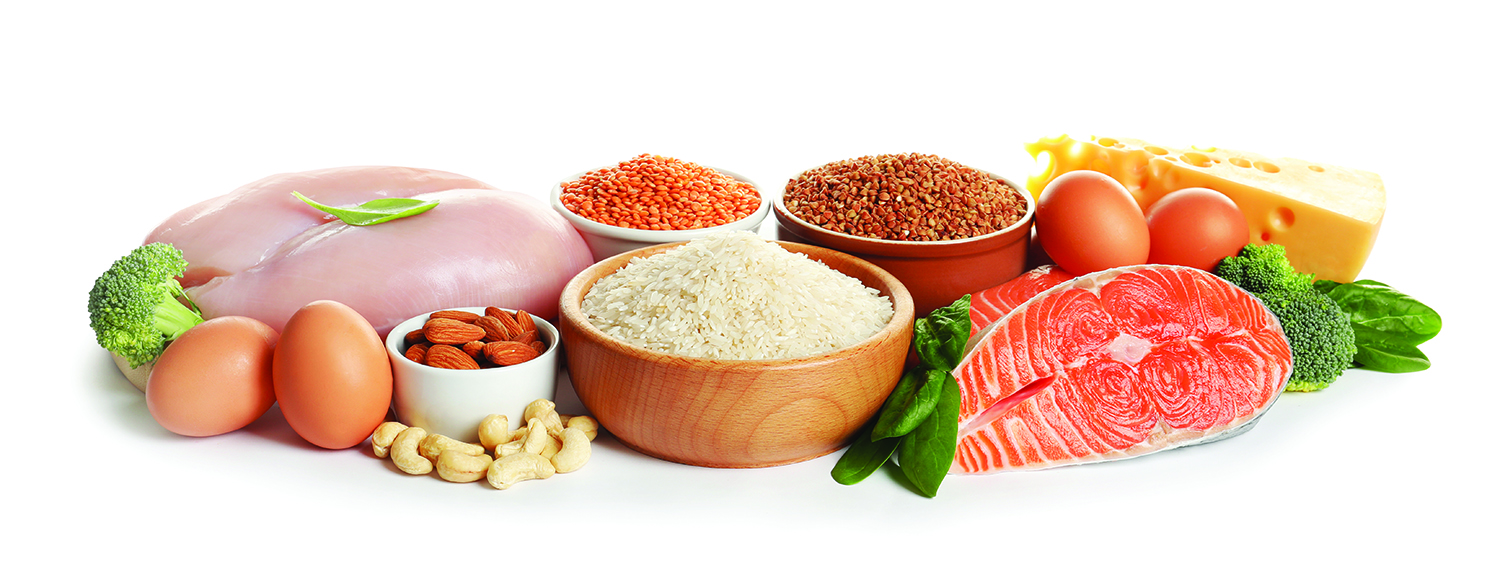
When eating a well-balanced diet, smallamountsofproteinfoundinbreads, grains, lentils, trail mix, vegetables, and tofu will help total up your grams of protein consumed. Foods that are high in protein include meat, poultry, eggs, fish and seafood, beans, nuts and seeds, and milk and other dairy products. Remember to choose lean meats and lower-fat dairy products, and avoid processed meats like bologna, salami, pepperoni, and hot dogs, which are high in saturated fats and sodium. Some examples of good protein snacks include Greek yogurt, cottage cheese, hardboiled eggs, and nuts.
Adding more protein to your diet does not need to be difficult. By making these simple swaps and additions, you can easily enjoy the benefits of a protein-rich diet without sacrificing flavor. However, while there’s no doubt that protein plays a vital role in a healthy diet, it’s important to look at what else your body is getting when you eat protein- rich foods. If you’re starting out 2025 with health and wellness top of mind, pay attention to your diet as a whole of ingredients—all of which are necessary for life—and avoid singling out and obsessing over specific nutrients. Well-balanced, nutritious meals and snacks are the key.
Happy New Year, and remember to enjoy the taste of eating right!
Laurie Syring, RDN/LD, is Clinical Nutrition Manager at ProMedica Flower Hospital. ✲