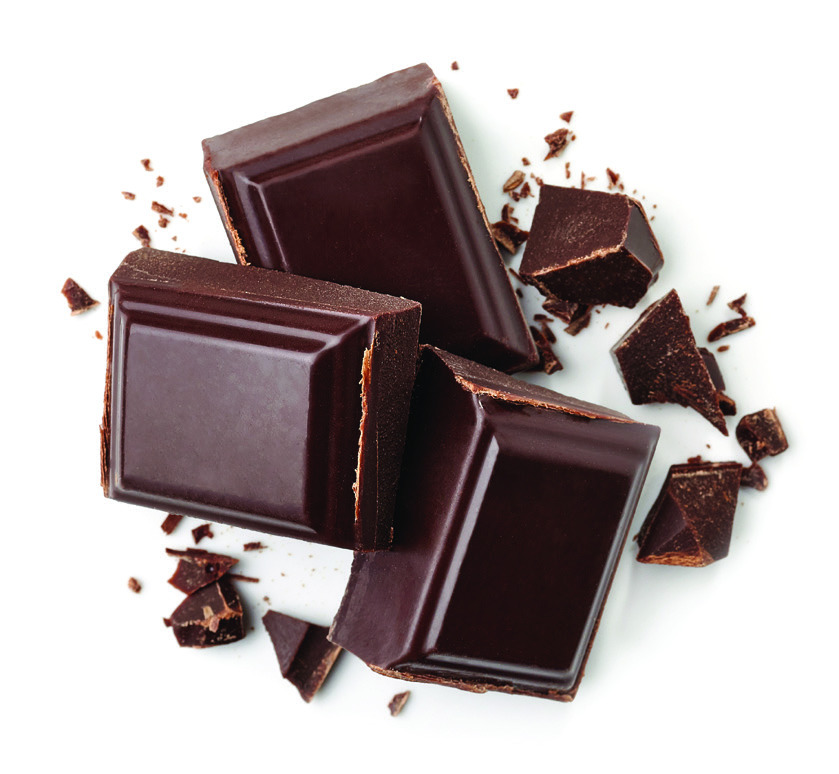
WITH EASTER ARRIVING this month, let’s all wish for dark chocolate bunnies in our basket! What better time of year to treat yourself, your loves ones, and your heart to this delicious and surprisingly healthful gift? Yes, you read that right. I’m actually encouraging you to indulge your sweet tooth with dark chocolate—within limits, of course.
A little background before I explain further: Chocolate dates back to 2000 BC, long before we knew of its medicinal qualities. The Mayans enjoyed it as a fermented drink mixed with spices and wine. Chocolate is made from the beans of the cocoa tree. Once removed from their pod, fermented, dried, roasted, and ground into cocoa liquor, the beans are processed into cocoa butter and cocoa powder. This chocolate liquor is combined with cocoa butter, sugar, and vanilla to make chocolate.
No matter how you enjoy it, chocolate brings joy, but is it healthy? Well, one could make that assertion about dark chocolate. When compared to other chocolates— milk and white— dark chocolate has lower sugar content and higher antioxidants and flavonoids. Dark chocolate must contain at least 60% cocoa solids, making it high in healthy flavanols. Flavanols in chocolate have been linked to many positive health effects, including benefits associated with the heart, diabetes, and mood.
One ounce of dark chocolate contains about 4gm of fiber, 19% of the recommended daily value of iron, and 16% of the recommended daily value of magnesium. Dark chocolate also contains zinc, copper, phosphorus, caffeine, and vitamin B12.
Research seems to support the assertion that eating dark chocolate is a healthy way to satisfy your sweet tooth. Many studies have linked dark chocolate to improved cardiovascular health. For example, a recent study found that dark chocolate improved triglycerides (though no other improvements in health outcomes were observed). Another study found dark chocolate to have prebiotic effects that impact the gut and may improve mood. Yet another study has shown that flavanols can protect skin from the harmful effects of UV rays and the antioxidants are beneficial in fighting cell damage related to aging.
On the other hand, some studies have shown that dark chocolate does not help high blood pressure as much as previously thought.
Keep in mind that not all dark chocolate is created equal when it comes to delivering health benefits. When shopping for dark chocolate look for a 70% or higher cocoa content. Ingredients should include cocoa butter, sugar, vanilla, and not much else. A serving size is 1-2 ounces, and, as with anything, moderation is key. More is not better! Include dark chocolate as part of a healthy diet—maybe not every day, but perhaps once or twice a week.
A potential downside to dark chocolate is that the darker it is, the higher its caffeine content, which in turn could exacerbate heartburn, or reflux. If you have a sensitivity to caffeine, you may want to stay away from dark chocolate.
Notwithstanding potential issues with the caffeine content, the benefits of eating dark chocolate in moderation certainly outweigh any drawbacks. Let’s face it, chocolate just makes everything better!
Laurie Syring, RDN/LD, is Clinical Nutrition Manager at ProMedica Flower Hospital. ✲