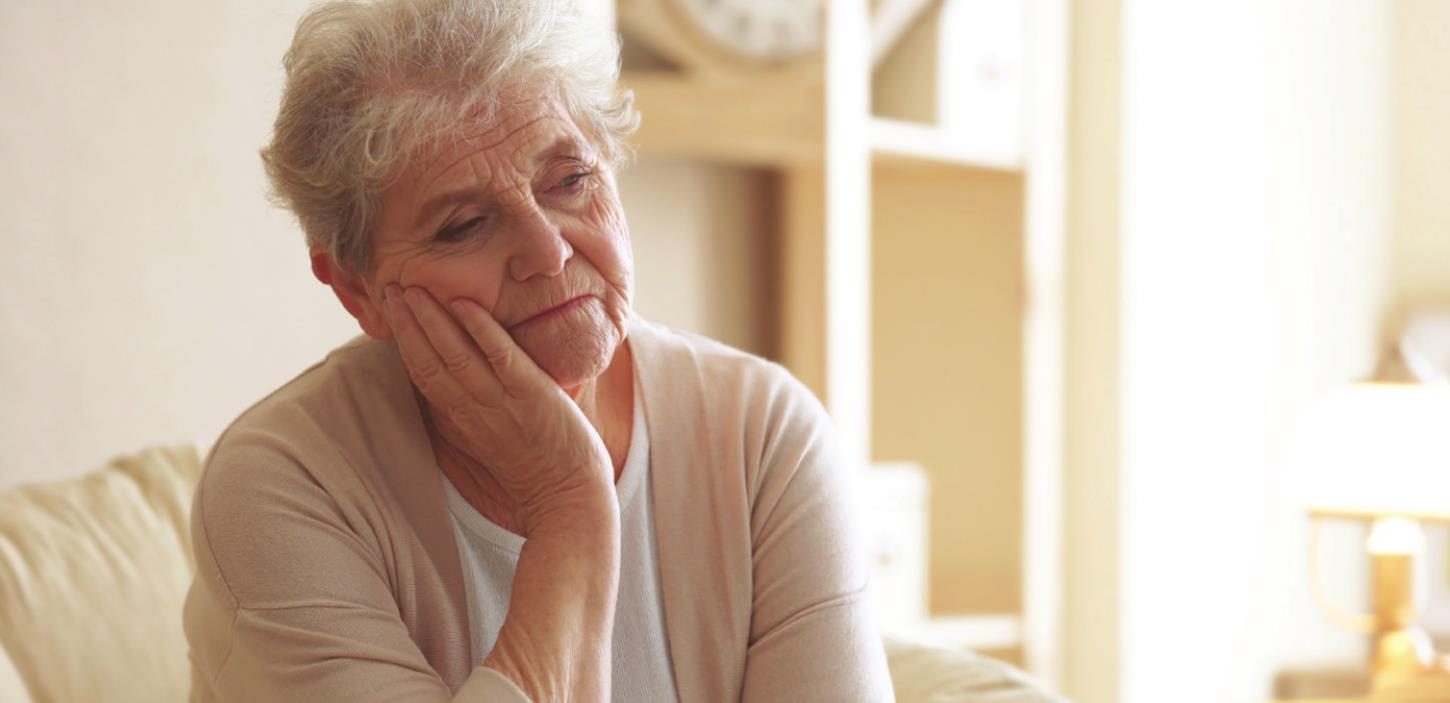
DEPRESSION IS A COMMON ISSUE among older adults that can have a dramatic impact on their health, well-being, and quality of life. Unfortunately, depression in this population is all too easily dismissed as “just a normal part of getting older” or mistaken for other age-related problems, such as dementia. What’s more, due to the long-term social isolation imposed by the COVID-19 pandemic, the rate of depression has been rising overall and taking an especially heavy toll on those ages 65 and older. However, it’s important to be aware that depression is not a normal aspect of the aging process and expert help is available in our community for those who experience it.
To appreciate what depression is, it’s helpful to understand what it is not. For example, depression is not synonymous with sadness, explains psychiatrist Dionis Kononov, DO, medical director of Senior Behavioral Health at The University of Toledo Medical Center. “Depression and sadness do not inherently go hand in hand,” he says. “Depression can feature sadness; however, depression itself is sadness on a whole new level. It’s a state that doesn’t just go away and is not dependent on an individual circumstance, conversation, life event, or memory. It’s persistent and doesn’t necessarily lift quickly.”
Depression is also not interchangeable with dementia, though both conditions can share certain features. As Dr. Kononov points out, “With depression, we oftentimes see problems with attention, concentration, and memory that can mimic dementia. In fact, in people that are advancing in age, we tend to see more cognitive symptoms of depression compared to people with earlier-onset depression. On the other hand, dementia as a whole is an abnormal rate of decline in cognitive abilities—the ability to think, reason, recall, remember, communicate, perceive the world around us. When we enter a significant enough state of depression, all those aspects can become impaired as well, but they tend to improve as the depression lifts.”
He further explains that people with dementia are often unable to acknowledge to themselves that they’re losing their memory and are unable to answer questions posed to them or recall what to do in a given circumstance. In contrast, people who have depression with cognitive deficits tend to be apathetic about answering questions and may not even try.
According to Dr. Kononov, some of the more common signs and symptoms of depression people should watch for in their older loved ones include:
• Pervasive (lasting all day, every day) sadness.
• Loss of pleasure in activities or hobbies the individual once enjoyed.
• Decrease in energy—staying in bed more frequently and not wanting to get up and go through the day.
• Changes in appetite—such as eating more carbohydrates or high-calorie foods or exhibiting a loss of appetite.
• Impairment of attention and concentration, which can mimic early dementia.
• Difficulty falling asleep and often waking up too early— for example, waking at 5:00 a.m. when the individual typically gets up at 9:00 a.m., then being unable to fall back asleep yet not wanting to get out of bed.
• As the depression progresses, beginning to regret living or feeling life is unbearable to the point of considering suicide or creating situations with the potential to cause loss of life.
Exactly why depression arises in older adults is a very complicated question, and Dr. Kononov notes that multiple factors can come into play. “For example, the underlying issue might be a chronic medical illness that is getting worse or harder to manage medically, the loss of control over life overall, changes in living environment, the loss of loved ones who have either moved or passed away, social isolation, or any combination of these factors. Social isolation has been especially problematic for older people during the COVID-19 pandemic, with lockdowns depriving them of in-person contact with loved ones. Depression can even develop when no predisposing factors are present,” he says.
Dr. Kononov’s advice to anyone with a senior loved one who may be suffering with depression is, first and foremost, to listen. “Listen to the messages they are giving you, the non-verbal cues. Observe how they are living, and pay close attention to any changes from how they used to live. Are they hoarding? Are they neglecting their appearance? Are they eating? Are they more withdrawn? Are they less interested? Are they avoiding family gatherings? Are they avoiding communicating with you when they would previously communicate routinely?
You know your family members and loved ones better than anyone else. So, first pay attention to any signs that something isn’t right, and then engage in conversation with your loved one and listen to what they say and even how they say it. Is there a lack of excitement? Is there a lack of connectedness to you as the loved one?”
Observing signs of depression can be difficult when COVID-19 is still limiting in-person contact, but, as Dr. Kononov emphasizes, we can still reach out and connect via telephone, text, Zoom, or other technologies. “Sometimes receiving a text message from a loved one can be the difference between life and death. It can create the feeling that someone cares, that someone is listening, that someone is out there they can turn to,” he says.
Most importantly, if there is any concern that a senior loved one is experiencing depression or other mood problems, professional help from a primary care physician, psychiatrist, or psychologist should be sought as soon as possible. Don’t try to deal with it alone, and don’t wait until the condition becomes severe.
Senior Behavioral Health at UTMC is poised to help seniors who are struggling with depression. “We can help you through this process by first and foremost determining what kind of assistance is needed. Is the problem so severe that it would warrant coming to the hospital and having some time away from the stressors of life, or is this something that is better treated by setting up a visit with our outpatient psychiatrist or our outpatient therapist and counselors? Is this just something that may require an enhancement in social services or perhaps a change in living and safety arrangements at home? We can help delineate where the assistance should come in and in what capacity. With appropriate determination, we can work to treat your loved one—your family member—and improve the state they are in,” Dr. Kononov says.
For more information or to contact Senior Behavioral Health at The University of Toledo Medical Center, please call 419-383-6128 or visit utmc.utoledo.edu/clinics/seniorbehavioralhealth/index.