IF YOU’RE A current or former smoker age 50 or older, getting a yearly lung cancer screening at The University of Toledo Medical Center could save your life.
Lung cancer is by far the deadliest cancer in the United States, accounting for nearly one-quarter of all cancer deaths. The nation’s third most diagnosed cancer, it claims more lives annually than breast, prostate, and colorectal cancers combined. However, with early diagnosis and expert treatment, a cure can be possible.
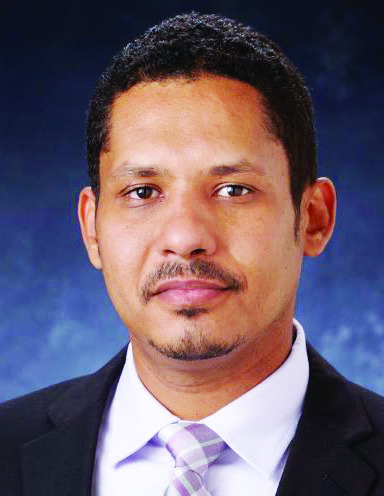
“One of the reasons lung cancer is so deadly is that it’s often not diagnosed until it has reached an advanced stage and spread beyond the lungs. At that point, the prognosis can be poor,” said Dr. Mohamed Omballi, an interventional pulmonologist at UTMC. “That’s why annual screenings are so important for current or former smokers, who are at a much higher risk of developing lung cancer.”
Smoking is far and away the largest risk factor for lung cancer, with smokers 20 times more likely to be diagnosed than non-smokers.
Early last year, the U.S. Preventive Services Task Force widened its guidance to recommend yearly lung cancer screenings using low-dose CT scans for anyone age 50 to 80 with a smoking history equivalent to at least a pack a day for 20 years. Those screenings, combined with the cutting-edge diagnostic technology available at UTMC, can identify cancer earlier and significantly lessen the risk of dying from lung cancer. Because early lung cancer rarely causes symptoms, Omballi said, annual low-dose CT screening is the best and sometimes only way to identify cancer at a treatable stage.
Covered by Medicare, Medicaid, and many private insurers, the scans are quick, low-risk, and require no special preparations by the patient. “It’s a very easy process to get screened,” said Amy Overmyer, a registered nurse who works as a patient advocate and care manager at The Eleanor N. Dana Cancer Center at UTMC. “You can get your order through your primary care physician or nurse practitioner; we’ll get it scheduled and that’s it. There’s no fasting, no contrast, no IVs. It’s a simple test that can make a huge difference.”
The current guidelines are based on a smoking history of 20 pack years, meaning someone who smoked a pack a day for 20 years, two packs a day for 10 years, or a half-pack a day for 40 years. If the low-dose CT scan identifies any suspicious nodules, patients will be referred for additional testing. Previously, very small nodules were monitored by scheduling frequent follow-up scans to watch for changes and see if the abnormal growth has become large enough to biopsy. However, many of those small growths can now be biopsied right away at UTMC using high-tech robotic-assisted bronchoscopy—eliminating the stress of waiting and allowing for much earlier treatment if the nodule turns out to be cancerous. “Robotic bronchoscopy is a game changer,” Omballi said. “If lung cancer is detected early enough, it can be cured. With regular screening and our ability to biopsy very small, difficult-to-reach nodules that were previously inaccessible, we can absolutely save lives.”
Whatever the next step following the identification of an abnormal growth, UTMC’s team of oncology experts and patient advocates is with you all the way.
Overmyer, the nurse navigator, is involved from the moment someone has a scan that sends up a red flag. She can help patients schedule and prepare for various follow-up appointments, coordinate transportation, connect them with resources and support available through UTMC, and serve as a key point of contact for any questions that might arise. “A new cancer diagnosis is scary and overwhelming,” she said. “The physician may have gone through the treatment plan with them step by step, but sometimes there’s so much information it can be difficult to follow. We’re trying to streamline that process as best we can to ensure nothing is missed and that the patient’s voice is being heard.”
UTMC also offers the latest in individualized cancer care, no matter what stage the cancer is when diagnosed.
Overmyer also helps to advocate for the importance of taking that first step of getting screened. “If we can be proactive with patients and help them understand the importance of this, we can find cancer earlier,” she said.
Individuals with questions about low-dose CT screening, including eligibility, can call Overmyer at 419-383-5183.
Tyrel Linkhorn is a communications specialist at The University of Toledo. ✲