OWING TO FACTORS SUCH AS EARLIER DETECTION, state-of-theart treatments and technologies, and greater supportive care, more and more cancer patients today are joining the ranks of long-term cancer survivors. While there’s no question that the increase in survivorship is a positive development, this phase of the cancer journey can also present a variety of challenges to patients and their loved ones.
Cancer survivors often grapple with a wide range of physical, emotional, social, financial, and spiritual issues stemming from their disease and treatment. For example, they may have lasting or late-onset side effects or struggle with functional impairments and the loss of mobility. These and other lingering issues, both physical and emotional, can adversely affect their relationships, job performance, ability to manage daily activities, ability to interact socially, and overall sense of wellbeing. Of course, ever present in the back of their minds is the fear that the cancer will recur.
Recognizing that cancer patients’ care needs and concerns extend long beyond the initial treatment phase, Mercy Health offers a comprehensive, dedicated Oncology Survivorship Program at Mercy Health – Perrysburg Cancer Center, which addresses the broad range of physical, psychosocial, and financial issues associated with survivors’ specific cancer and treatment regimen while providing the education and resources they need to achieve and maintain the best possible quality of life.
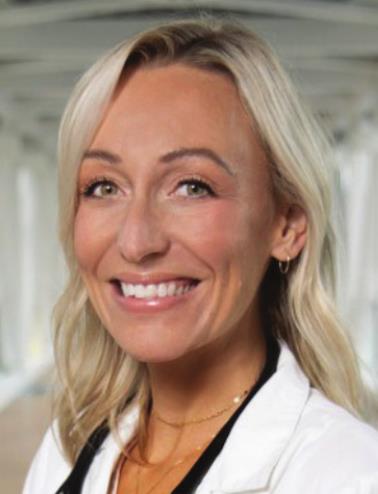
Amanda Dove, MSN, APRN, NP-C, AOCNP, Mercy Health – Cancer Centers Toledo Survivorship Program Coordinator, explains that survivorship is a relatively new term—and a relatively new subspecialty that is continuing to grow along with the population of cancer patients in general. Dove defines a cancer survivor as anyone with cancer, from the time of diagnosis, through treatment, and for the remainder of their life, and notes that survivorship consists of three different phases—acute, extended, and permanent. “Our program is focused on the extended phase, from the end of initial treatment through several months after. Typically, the survivorship education session is scheduled for a one-time visit at least six weeks after their treatment has ended,” she says. Most cancer patients expect to experience at least some form of side effect specific to their treatment—whether their regimen involved surgery, chemotherapy, radiation, or some combination thereof. What they often fail to an ticipate is the possibility of experiencing long-term side effects or late side effects that can occur five to 10 years down the road, such as issues affecting the cardiovascular system. “Oftentimes, patients feel they can jump right back into the same activities and the same health status, but that’s not necessarily going to be the case,” Dove states.
According to Dove, the most common lingering physical side effect, regardless of the patient’s cancer type or treatment regimen, is fatigue and generalized weakness, which can make it very challenging for cancer survivors to resume normal activities. Another side effect that many cancer survivors experience is lymphedema, or the swelling of soft tissues that can occur when the lymphatic system is damaged due to the cancer itself or treatment, for example when lymph nodes are surgically removed. However, the Oncology Survivorship Program team has the specialized expertise and resources to help survivors overcome these challenges. “We have an oncology rehab program with physical therapists certified specifically in oncology, as well as certified lymphedema therapists, who can help patients significantly with these and other physical side effects,” Dove says.
In addition to the potential for lingering physical side effects, psychosocial concerns are a major issue for many cancer survivors. Among these are anxiety, depression, fear of recurrence, and even survivor’s guilt, to list but a few. The Oncology Survivorship Program addresses these concerns as well. “I always ask patients whether they’re seeing anyone for therapy,” Dove remarks. “If they’re not, I can refer them to our licensed independent social worker for counseling to help them with any specific issues related to their cancer diagnosis.”
The Oncology Survivorship Program team is also poised to help cancer survivors overcome the financial hardships that often go hand in hand with cancer and its treatment due to factors such as mounting medical bills, lost time at work, or the inability to return to work at full capacity. “Survivors in our program who are struggling with financial issues can be referred to a patient financial advocate, who can connect them to resources that assist with the cost of treatment,” Dove says. “We also have social workers who can help survivors overcome other financial barriers, such as difficulty affording groceries or accessing transportation to and from appointments.”
Dove emphasizes that the Oncology Survivorship Program is not a one-size-fits-all approach to survivorship care. In fact, every survivor who participates in the program is empowered with a survivorship care plan tailored to their specific cancer and treatment. Survivors can expect their individualized care plan to include:
• A treatment summary
• Cancer diagnosis information
• A list of healthcare team members
• Genetic testing results (if needed)
• Ongoing treatment (if needed)
• A follow-up care plan, such as oncology follow-up visits and surveillance testing
• Potential long-term and late effects of treatment
• Symptoms to report
• Healthy lifestyle promotion with diet and exercise
• Recommendations to their primary care provider to screen for new primary cancers
• A comprehensive physical exam and review of systems to test for cancer- or treatmentrelated side effects
• Referrals to address any residual side effects from the cancer or its treatment
• A list of available resources and upcoming events.
To ensure every member of the survivor’s care team is kept properly informed, a copy of the care plan will be sent to the individual’s primary care provider and all other providers involved in his or her cancer treatment. “We also encourage cancer survivors’ loved ones and caregivers to accompany them to survivorship visits so they can have their questions and concerns addressed and to help eliminate any gaps in communication,” Dove says.
As part of Mercy Health’s standard of care, cancer patients who complete treatment are automatically referred to the Oncology Survivorship Program as appropriate. Patients can also call 419-407-2345 to learn more about the program and determine whether they’re eligible to participate. ✲