UTERINE FIBROIDS ARE BENIGN SMOOTH MUSCLE TUMORS that grow on the uterus and are typically diagnosed through ultrasound or a physical examination. While fibroids rarely develop into cancer, they can cause a variety of adverse symptoms that significantly impact women’s health and well-being, including pelvic pressure or pain, heavy or irregular bleeding, and even infertility.
Factors that put women at higher risk of developing uterine fibroids include having a family history of fibroids, advancing age (older women are at higher risk), and being overweight. Also, African American women tend to develop more and larger fibroids at an earlier age.
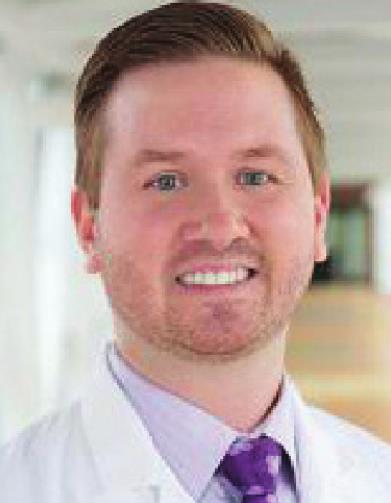
Mercy Health OB/Gyn physician John Roost, DO, explains, “While uterine fibroids are benign—meaning they’re generally no concern from the standpoint of malignancy—they can be very impactful in a negative way on patients’ quality of life.”
The encouraging news for women in our community is that Mercy Health, which has been designated by the American Association of Gynecologic Laparoscopists as a Center of Excellence in Minimally Invasive Gynecology, now offers the Third Generation Acessa® ProVu System at both Mercy Health – St. Vincent Medical Center and Mercy Health – Perrysburg Hospital. This minimally-invasive, outpatient laparoscopic procedure utilizes radiofrequency energy to destroy fibroids both outside the uterine cavity and within the uterine walls, which alleviates the pain and discomfort associated with uterine fibroids without the need for major surgery.
According to Dr. Roost, traditional treatments for fibroids included options such as medications that help shrink the fibroids and reduce bleeding, intrauterine devices (IUDs) to help with bleeding, and various surgical approaches, including hysterectomy. However, with traditional open surgery, it’s necessary to make a large incision that weakens the uterus. “What’s great about the Acessa ProVu system is that instead of making a large incision, you go in laparoscopically through two very small incisions and use radiofrequency to ablate the fibroids. The uterus remains intact so it’s hopefully strong enough to allow for a subsequent pregnancy,” he adds.
Dr. Roost further explains that during the procedure, an ultrasound probe connected to a monitor is inserted through one of the small incisions to map the location of fibroids and guide treatment. Then, a probe with a small needle array on its tip is inserted through the second incision and used to deliver controlled radiofrequency energy to the targeted fibroids. No adjacent healthy uterine tissue is harmed during the procedure.
“The potential benefits to this procedure are that there’s less blood loss compared to traditional surgical techniques, patients usually go home the same day, and recovery time is quick. There is usually some cramping and pelvic discomfort afterward, but nothing severe, and most patients are back to their normal activities in about five days to a week,” he says.
The Acessa ProVu system also allows the surgeon to visualize and treat more fibroids. Clinical studies have shown that this leading-edge technology can locate 1.5 to 2 more fibroids than MRI or transvaginal ultrasound, allowing for patients to receive treatment for fibroids that may have previously been undetected. “In addition,” states Dr. Roost, “this procedure can be performed simultaneously with treatments for endometriosis, so it’s a really nice, minimally-invasive adjunct treatment for intractable pelvic pain and heavy bleeding from endometriosis and fibroids.”
Dr. Roost notes that when determining the appropriate course of treatment for women with uterine fibroids, the question in the past was essentially whether to use a “band-aid” approach to get by or do something more invasive. But doctors now have another alternative in Acessa ProVu. “Minimally-invasive laparoscopic radiofrequency ablation is a very creative, smart way to deal with a problem that affects women in a very significant way. It’s conservative, but it provides definitive, long-term results,” he says.