EVEN PEOPLE WHO HAVE KNOWN US FOR A LONG TIME still have difficulty grasping how we can drive “all that way” to Wherever. How long does it take to get there? The question implies that the trip is to be made in a straight shot the way you can say it takes an hour to get to Detroit or two hours to reach Cleveland.
Our next-door neighbors had a condo overlooking Charlotte Harbor in Punta Gorda, FL. In the fall, they loaded up their Buick, including her beloved house plants, and drove 660 miles to Atlanta for the first night and another 550 to Punta Gorda the next day. They did this every year even when they were both in their 80s. What was the hurry? They were going to be in Florida from Thanksgiving until Easter, so there was no need to rush there in two days. The short answer is to keep those house plants from dying before they arrived. Everyone is entitled to their own priorities.
Before retirement, our travel time was limited, so we focused on making the most efficient use of it. If we were taking the kids to Yellowstone, there was no time to mess around between here and there. Now our focus is on the trip itself, so we pay attention to what might be interesting along the way to and from Wherever.
At least that was the case before Covid. You may think that the pandemic is over, but some key changes from those days are still in effect, especially in the national parks. Before Covid, we could show up and register for a campsite with a ranger or self-register with an “iron ranger”— the metal container in which you placed your payment envelope. Showing up has been replaced by online registration, and iron rangers have taken early retirement.
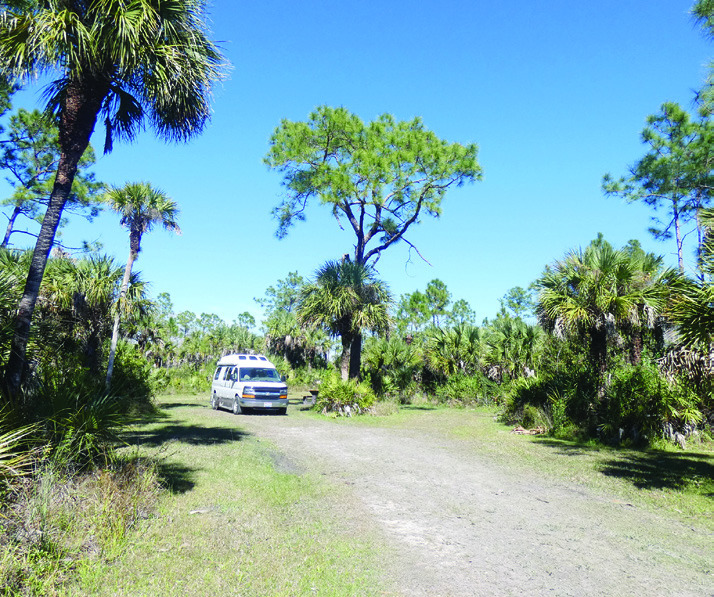
We came very close to learning this the hard way when we headed to Bear Island CG in Florida’s Big Cypress National Preserve. The campground is 25 miles north from the Tamiami Trail on a pot-holed gravel road that takes about an hour to drive. Fortunately, we stopped at the park visitor center. The ranger asked where we were going. When I told her, she said that the iron ranger had been removed and that we had to log on to recreation.gov to register—if there were any sites available. Fortunately, there were. There is no cell coverage at Bear Island, so driving an hour there and an hour back would not have left me in a pleasant frame of mind.
You have probably never heard of Bear Island. For that matter, you probably haven’t heard of Big Cypress. Most visitors don’t get any farther into the Preserve than pullouts along the Tamiami Trail that runs between Naples and Miami across the southern tip of Florida. It is not what you would consider a major destination though Shirley and I like it a lot. It is isolated, peacefully quiet, and far enough south to have reliably warm, sunny winter weather.
The national parks that you have actually heard of now require reservations that become available six months in advance. We mark our calendar because popular destinations can book up right away. Yellowstone now takes reservations 13 months ahead. Reservations will get you in, but they also dramatically limit travel flexibility and spontaneity. Historically, if we really liked a place, we could stay a few more days. If the weather was unfavorable, we could move on. Now, if we leave, we have to find a place to stay until our reservations begin at the next place.
One option is boondocking— camping without a campground. There are literally thousands of such places where you can spend the night for free. If we are on an interstate, our first choice is Cracker Barrel, but there are also Walmarts that get favorable reviews on our camping app. We also enjoy wildlife refuges and national forests where you are allowed to camp for an extended period just about anywhere. In Alaska, there are long, wide pullouts along the highways where you are allowed to spend the night. On Padre Island in Texas, we boondock right on the hard-packed sand of the beach lulled to sleep by the surf 10 or 20 feet away depending on the tide. In Langtry, TX, we asked at the Judge Roy Bean home and Jersey Lilly Saloon where we might camp. The host said to go across the road and stay at the community center. The place is unoccupied unless an event is scheduled. Some towns have parks where you can stay free or inexpensively with water and electric hookups as their way to promote local businesses. There is also the opposite strategy. Some towns prioritize protection of area commercial campgrounds with regulations against boondocking.
This long preamble is just my way of saying that our winter Sunbelt tour now requires much more detailed planning. Still, the plan retains some degree of flexibility. Attentive readers will have noticed that the title refers to this as Part I. It will take more than one installment to recount how long it takes to get from Everglades National Park at the tip of Florida to Death Valley National Park in California. That’s about 2,700 miles by the most direct route and takes only about 40 hours driving time. Doesn’t that sound like fun?
We don’t think so either. Besides, you have to add the 1,300 miles and 20 hours from Toledo to the Everglades. It is I-75 all the way to Miami, but until we reach the Florence Y’All watertower, we don’t see that as part of the actual Sunbelt tour. There is so much to see and do in the Sunbelt that we divide every trip into easily manageable segments. You can’t squeeze it all into a single winter unless you just wave at the attractions as you drive by. Which is why this is a compilation of experiences from several trips.
This installment begins with Everglades NP and continues north and over to Gulf Islands National Seashore at Pensacola. Next month, we’ll continue across Texas and after that New Mexico, Arizona, and California. Then, as Shirley says, we’ll gradually work our way home. There are as many stops returning as we made going. It will take a few issues of Healthy Living News to get through this, so please be patient. It could take as long to tell about it as it does to actually do it.
On our first visit to Everglades NP, Shirley accompanied me on a business trip to Miami and we took the rental car the short distance to the park. We thought the wildlife was simply spectacular. Winter is called the dry season in Florida. With less precipitation, much of the swamp dried up, so animals congregated where there were pockets of water. They were forced to tolerate the presence of people. From 2005 to 2015, the park was our primary winter destination. Those were very good years. But things changed.
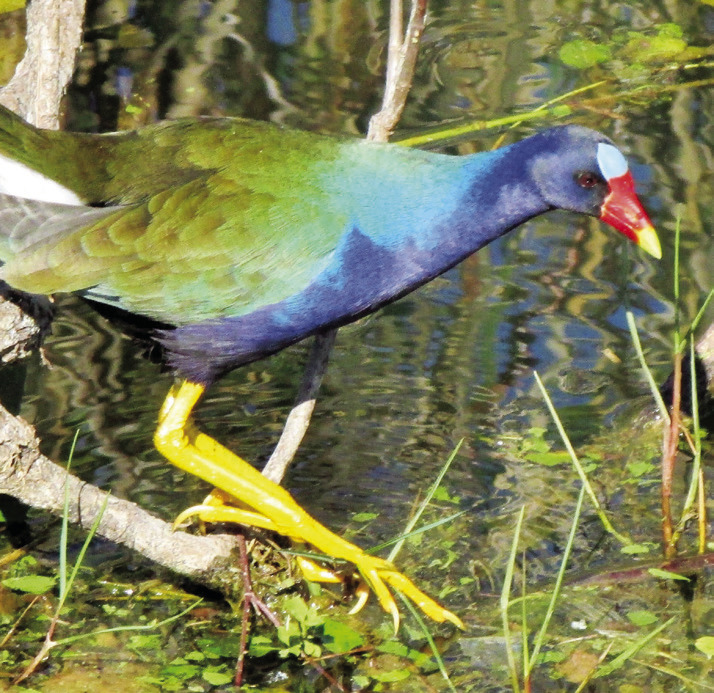
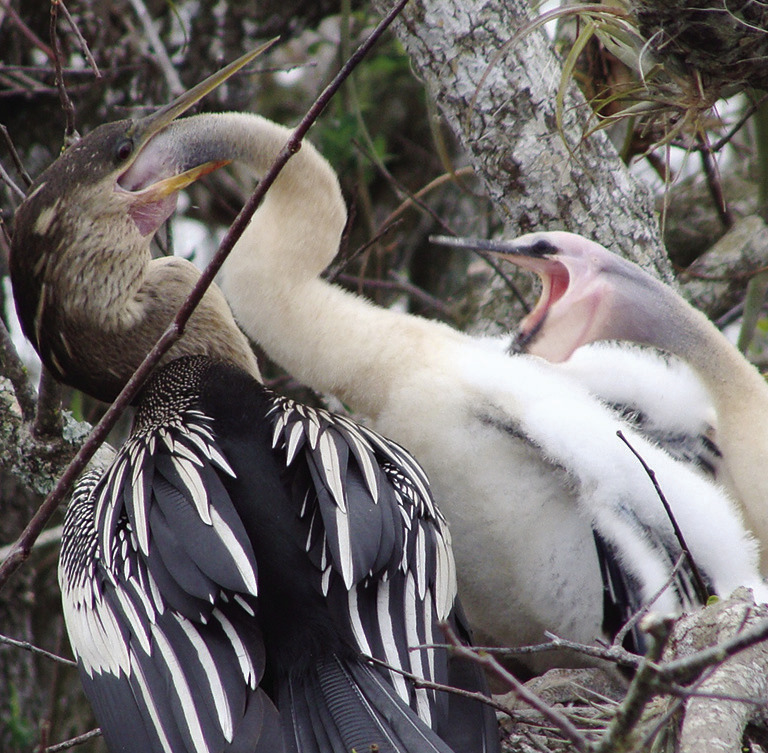
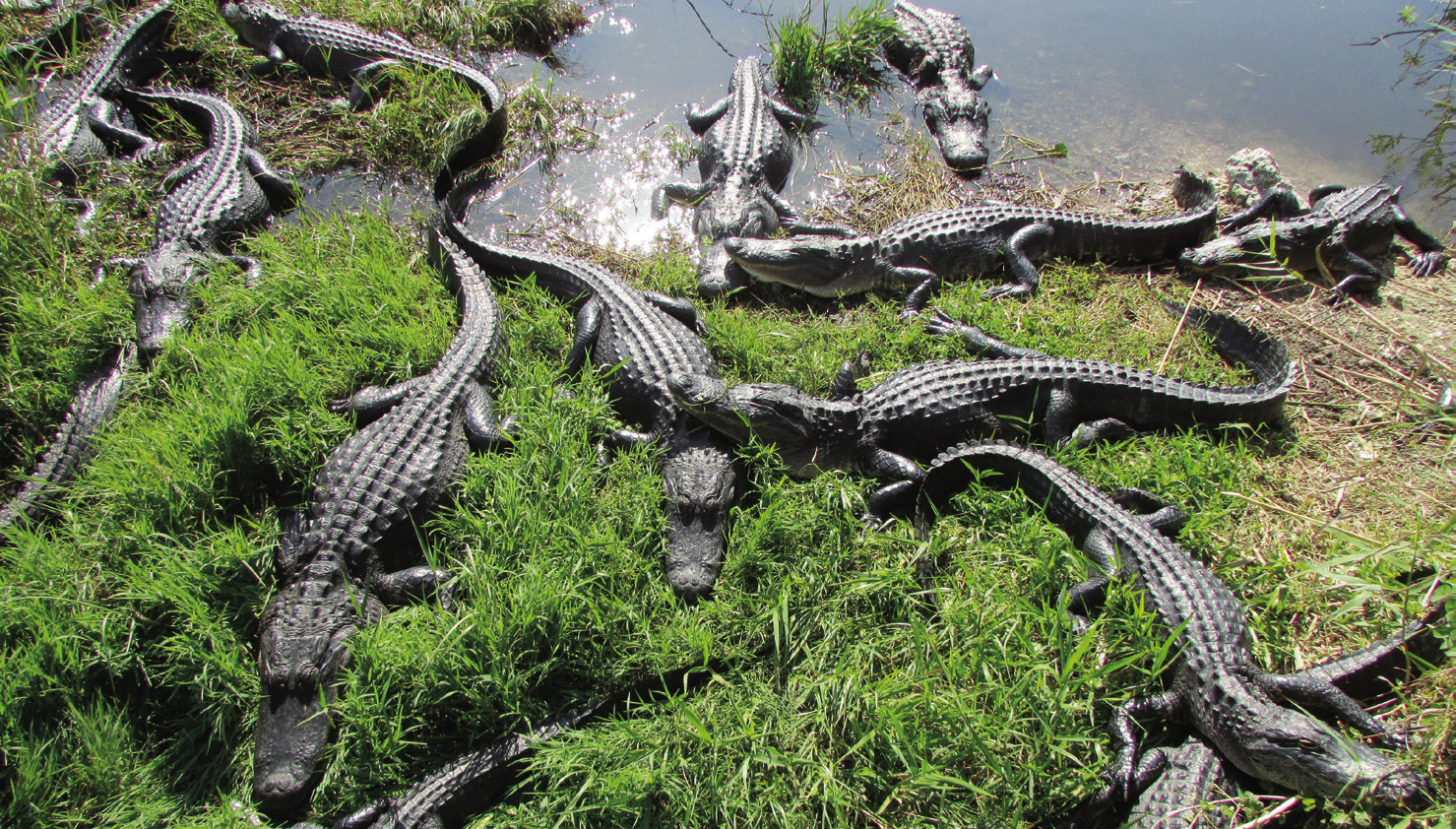
The good news: We walked the Anhinga Trail every day to see six kinds of herons, three kinds of egrets, white and glossy ibises, roseate spoonbills, grebes, limpkins, cormorants, and wood storks fishing in the shallows. There are bitterns so well camouflaged that you may not see them even when looking directly at them. Can’t forget Shirley’s favorite—the purple gallinule. Ospreys, hawks, and pelicans hovered overhead and made dramatic dives to snatch fish. There used to be two to three dozen alligators lounging in the sun at the Wisconsin Hole. The bull gators announced their presence to the ladies and warned the competition by bellowing. Sometimes they came to blows. One February fourteenth, we enjoyed the mating dance of great blue herons. We remember the specific date because it was Valentine’s Day. Anhingas built their nests in pond apple trees just a few feet from the boardwalk so we could watch their chicks being fed and grow to the size of their parents even before they had any real feathers.
Theoretically, the stay limit in Long Pine Key Campground was 14 days, but it was not enforced. First, the place never filled up except on Martin Luther King weekend, so they preferred to get $10 a night from me instead of $0 from Mr. Nobody. We became friendly with the staff, and they encouraged us to stay as long as we liked.
Two things put an end to all that. First, the state and federal environmental departments decided to spend $15 billion restoring historic natural waterflow through the glades. The swamp had been drained by building canals that diverted water to the Atlantic and the Gulf. As historic water levels were restored, wildlife could find habitat where they were no longer forced to tolerate the presence of humans. Our primary motivation for going to the park literally got up and went away. In addition,
is not subject to personal relationships. The app won’t let you register for more than 14 days no matter how charming your wife happens to be. Ironically, even without all the wildlife, Long Pine Key CG that never filled is now fully booked during the season. You can camp for free in the summer, but even the rangers leave when the skeeters become intolerable.
Long Pine Key is at the south edge of the park. From there, we took day trips down to Key West with stops at Marathon Key for conch chowder or hogfish. (Sounds horrid but tastes delicious.) Headed north from Long Pine, we usually stopped at Shark Valley on the Tamiami Trail and Midway or Monarch Lake or the aforementioned Bear Island. When Everglades NP lost its charms, we started rotating between four Ocala National Forest campgrounds just north of Orlando.
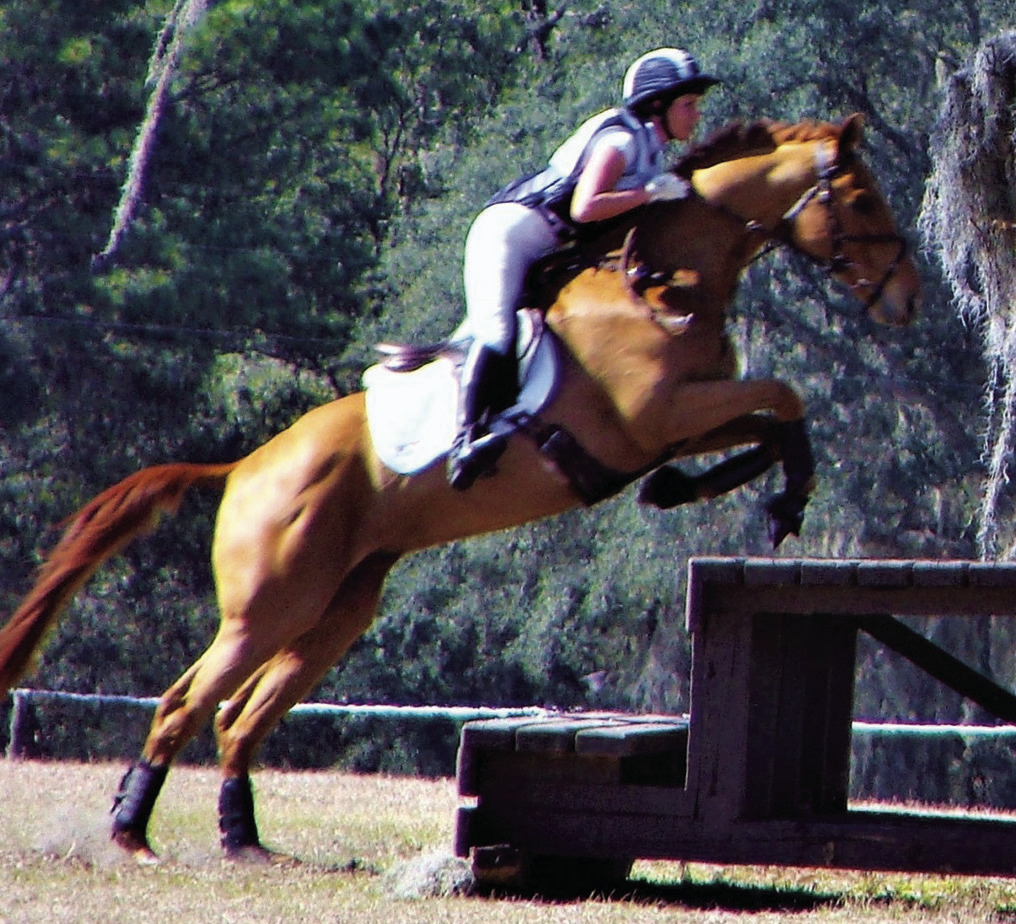
Alexander Springs is the most rustic with the deepest well head that attracts snorkelers and scuba divers. Water temperature at the springs is about 70 degrees yearround, so it feels warm in the winter and cool in the summer. During one scuba class, a curious gator swam by. Class was promptly dismissed. On Mermaid Mondays, swimmers in colorful costumes gather to practice their skills or pose for promotional photographs. The maids never seem fazed by the occasional little gator. We always schedule our stay at Alexander Springs for a week during the nearby Winter Horse Trials.
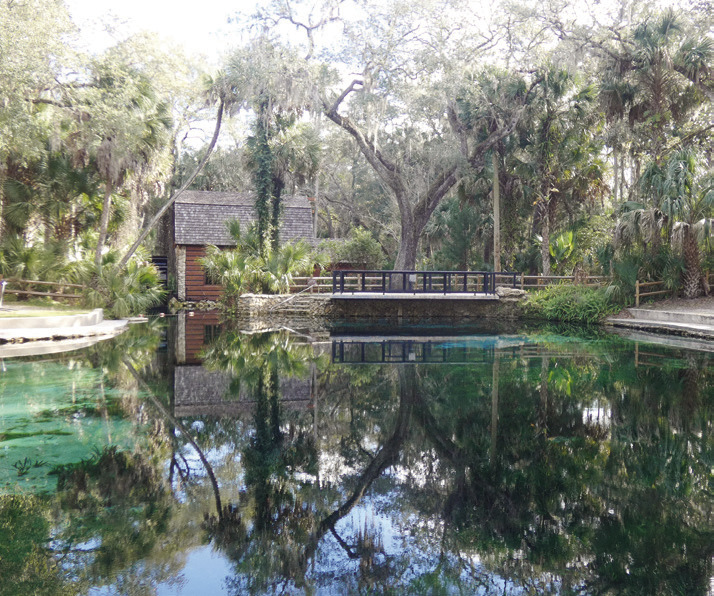
Additional weeks are spent at Juniper Springs, Salt Springs, and Clearwater Lake. These two springs are more civilized with concrete walls around their swimming areas. Salt Springs has full hookups, so it is quite popular with RVers who demand that level of service. (We appreciate the hookups but most of the time are quite content without them.) There are regular visits by manatees just outside the cordoned-off pool. Neither of these springs has gators in the swimming area, so there is relatively little entertainment provided by panicked swimmers. An exception just occurred to me. At Salt Springs we heard a woman with a British accent exclaim that she saw a shark. At Clearwater Lake the main attraction is a mile-long trail around the lake with a good chance to meet up with raucous sandhill cranes.
Regular snowbirds recognize that these stops are not typical, but there are numerous other places to visit. We have enjoyed St. Augustine going and/ or coming, the magnificent gardens at Washington Oaks, and celebrated Edison’s birthday at the Edison & Ford estates in Ft. Myers.
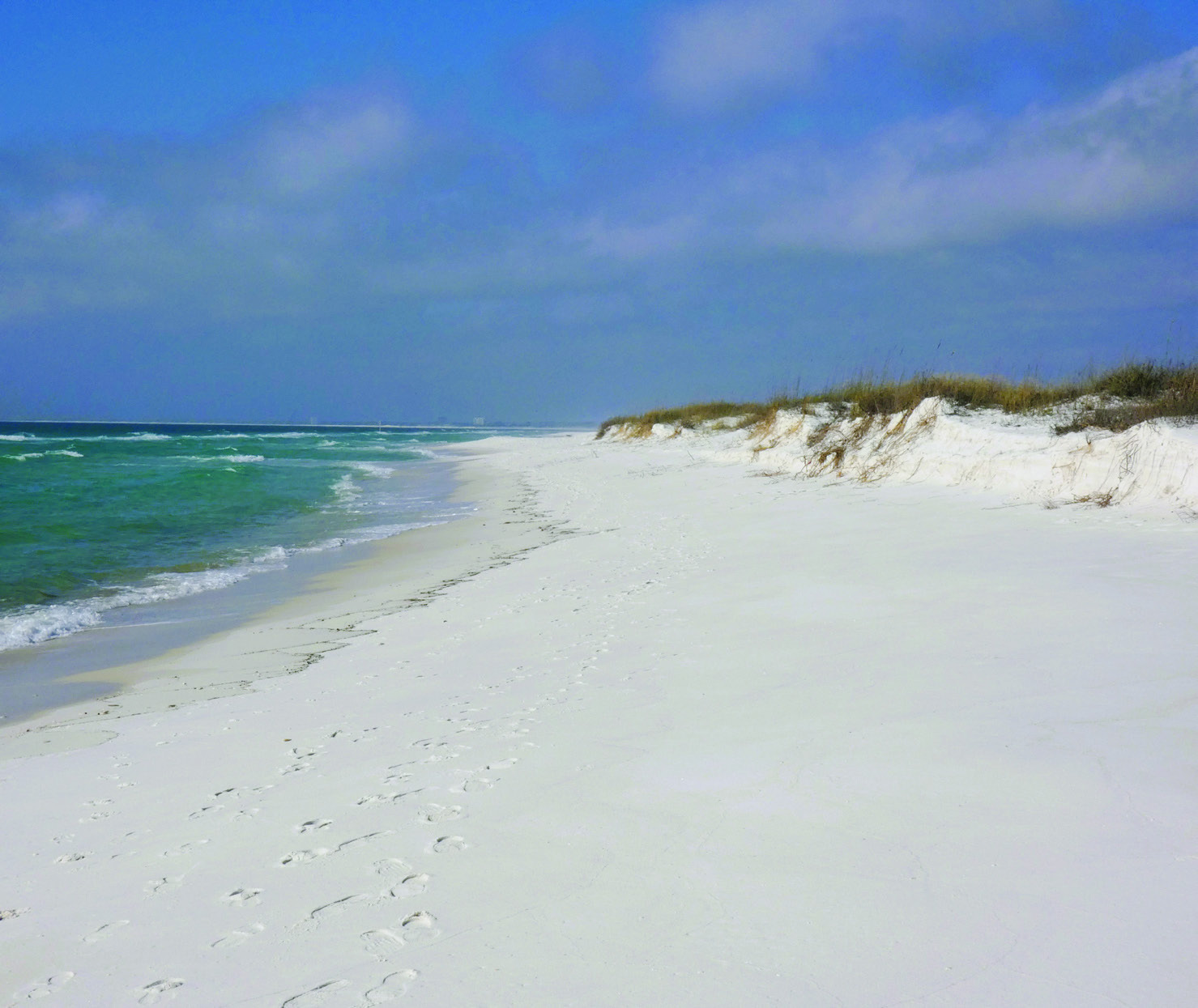
As we have done for several years, this year we started our Florida excursion at Fort Pickens Campground in Gulf Islands National Seashore. Some years, we both start and finish there. Fort Pickens is on Santa Rosa, a barrier island just a few feet above sea level. The feature attractions are the gorgeous powder-sugar beach and the historic fort. When the wind and surf pick up, that beautiful soft, white sand tends to blow across the park road cutting off access. On three occasions, this resulted in the cancellation of our reservations. This year, we were required to evacuate because a storm was expected. But, wait, there’s more. January also brought a totally unheard of 8 inches of snow to the Pensacola area. Whacky weather in Florida this year. On several days it was warmer in Toledo than it was at Orlando.
In 2012, we left the Everglades and headed to Fort Pickens. Then we decided to continue 200 miles to New Orleans because we were in the neighborhood. From there, we kept adding a few miles at a time until, eventually, we ended up in California. That may sound like “all that way,” but, taken in small increments, it was just a walk in the park.
LeMoyne Mercer is the travel editor for Healthy Living News. You might want to see more of his stories and photos at AnotherWalkinthePark.blogspot.com.
✲