
Artificial intelligence (AI) is anticipated to revolutionize many critical areas of medicine, including the realm of cancer research. Once integrated into the field of oncology, it’s hoped that AI’s ability to harness vast datasets—which is expanding at a staggering rate—will greatly enhance and streamline cancer detection, diagnosis, drug/therapy development, treatment planning, prediction of disease progression, and many other aspects of cancer care.
Perhaps what’s most significant with respect to the advent of AI’s profound capabilities in the realm of oncology research is that it won’t occur in some remote, misty future. The revolution is right over the horizon—if not here already.
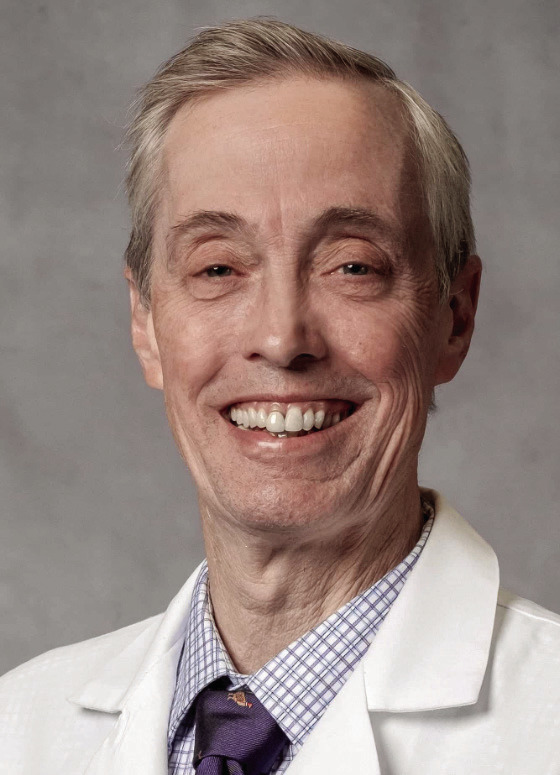
According to Rex Mowat, MD, of The Toledo Clinic Cancer Centers, it’s likely that AI will very soon streamline the identification of patients who are eligible to participate in cancer clinical trials. “IDing trial participants involves determining who is eligible, which trials are appropriate for them, and which trials are closest to them.“
“There are a lot of inclusion/exclusion criteria to sort through. Right now, all of this is done by people, and it’s very labor-intensive. If AI can take over that process, humans won’t have to be involved in the legwork at all and the results will be expedited dramatically.”
Dr. Mowat also acknowledges the possibility that AI will reassess and streamline the criteria used to determine clinical trial eligibility, which have essentially been the same for several decades, thereby shortening the process even further. “AI could very well go through those criteria and determine that some are completely unnecessary because there’s no data to support them,” he states.
Limiting the time necessary to identify eligible patients for a clinical trial will be a tremendous boon to the pharmaceutical industry, as well. Dr. Mowat notes that it currently takes about a year and a billion dollars just to set up a study to evaluate the safety and efficacy of a new drug, adding, “Imagine how much time and money the pharmaceutical companies would save if they could speed up the process and get all the study participants they need lined up in just a few months using AI.”
Another positive development that Dr. Mowat anticipates AI could bring about in relatively short order is a reduction in unnecessary diagnostic testing. He observes that when doctors are attempting to pin down a diagnosis, they have a natural tendency to think, “Maybe it could be this or that [unusual diagnosis], so I’d better order a test for it just in case.” In contrast, drawing on incredibly large datasets, AI could, for example, suggest the top three likely diagnoses, thereby eliminating a lot of time-consuming and costly lab work.
Of course, some of the benefits AI offers are already here and making an important difference in the provision of healthcare services. “For example, we’re already using it in our office for transcription,” Dr. Mowat explains. “You simply open a phone app and start talking to the patient. The app captures the conversation so the doctor doesn’t have to spend the whole office visit typing information into a computer, which makes it possible to spend more quality time with each patient. Having less busy work to do actually enables us to see more patients while still giving each patient the time he or she deserves. With this model, it could be possible in the future for providers to charge patients less but actually increase their revenue.”
Dr. Mowat expects AI’s role in cancer care to continue expanding as more and more utility is found for it, and he hopes to see it integrated into providers’ common daily practice. “I find the prospect really exciting,” he states. “As AI speeds up medical discoveries and decisions, it will improve patient outcomes and care—so everybody wins.”
The Toledo Clinic Cancer Centers, located at 1200 Medical Center Parkway in Maumee and 4126 N. Holland Sylvania Road, Suite 105 in Toledo, also provides imaging, laboratory, chemotherapy, specialized pharmacy, and IV services. The cancer center consists of 12 physicians, now including a Rheumatologist, as well as 11 advanced practice providers. The cancer center also has satellite centers in Napoleon, Bowling Green, Wauseon, Bellevue, Oregon, and Monroe.
For more information, please call The Toledo Clinic Cancer Centers at 419-479-5605.
✲
