A doula, from the ancient Greek, meaning “female slave,” is a non-medical professional who provides guidance for the services of others and who supports another person (the doula’s client) through a significant health-related experience such as childbirth, miscarriage, induced abortion, or stillbirth, as well as non-reproductive experiences such as dying. A doula might also provide support to the client’s partner, family, and friends.
The doula’s goal and role is to help the client feel safe and comfortable, complementing the role of the healthcare professionals who provide the client’s medical care.
Unlike a physician, midwife, or nurse, a doula cannot administer medication or other medical treatment or give medical advice.
The contributions of doulas during reproductive experiences and end-oflife care have been studied and have been shown to benefit their clients. For example, a birth doula providing support during childbirth might increase the likelihood of vaginal birth (rather than caesarean section), decrease the need for pain medication during labor, and improve the perception of the birthing experience.
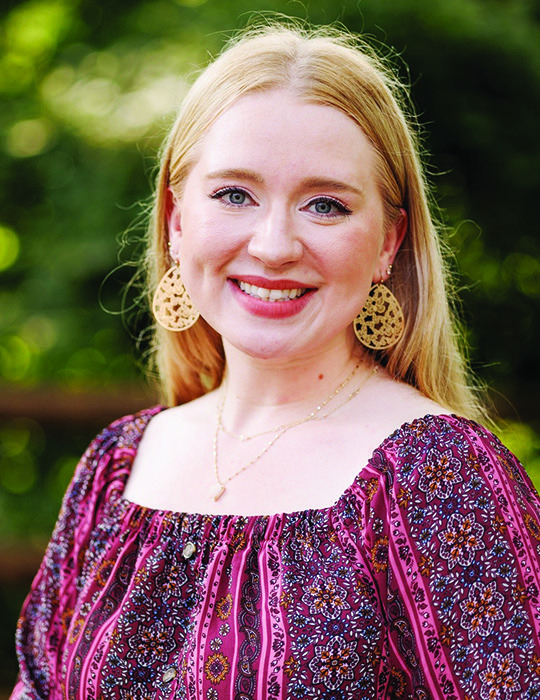
I recently interviewed Hannah Tansel, a local birth and postpartum doula. When I asked her, “What is a doula?”, she responded, “A doula is a trained professional whose goal is for you (the client) to have the birth you want to have—not just a healthy baby and mom, but a healthy memory too.” Her goal is to make the client feel safe and comfortable. “Birth trauma is very real, and I want my clients to feel loved, supported, and cared for,” she said. Hannah is a graduate of Sylvania
n Southview High School and Owens Community College, having studied early childhood education. She also took doula training in Toledo and Ann Arbor. Hannah has a medical background, having worked as an STNA and a home health aide while completing her studies. Stating, “The future is wide open,” Hannah wants to further her training and work experiences.
Doula care is coming back in popularity due to a renewed interest in natural childbirth. “I have always been interested in pregnancy and natural childbirth. I was fortunate to see my sister born when I was ten years old. She was the first birth I ever saw, and my becoming a doula has been a long time coming,” said Hannah.
There are few doulas in the Toledo area, and Hannah is promoting her business through social media, networking, and community involvement. Her typical client may be a first-time mother wanting a beautiful and happy childbirth experience, or a repeat mother who may have had a bad birthing experience the first time around.
If you’re considering working with a doula, ask yourself these questions: What do I want to get from doula care? How much is the doula’s support worth to me? How much can I truly afford to spend? Once you’ve answered these questions, begin to look for your doula. Try moms’ groups, your circle of friends, or local professionals such as your OB, your family doctor, or another medical professional.
Interview your doula. Remember, this person will be seeing you through an incredibly intimate event in your life and must be someone you trust. Look for experience, consider the “vibe” you have with the doula, and ask questions such as, “What inspired you to become a doula?” Also, tell them your biggest fear or concern and ask how they will help you with that.
Best wishes.
Hannah Tansel, birth and postpartum doula, can be reached by email at hannahtansel@gmail.com, or by phone or text at 567-249-7538. Daniel J Jachimiak, BA, is a writer and speaker. Dan can be reached at djachimiak@bex.net or 419-787-2036.
✲