AS EVERY SCHOOL CHILD KNOWS, the “Star Spangled Banner” was written by Francis Scott Key when he saw the flag still waving after the British had subjected Fort McHenry to the rockets’ red glare, the bombs bursting in air.
That was during the War of 1812 when the British succeeded in attacking Washington, DC and setting the White House on fire. President James Madison escaped, and his wife, Dolly, packed the entire National Archives in her purse and accompanied him. At least that’s the way I remember it from fourth grade.
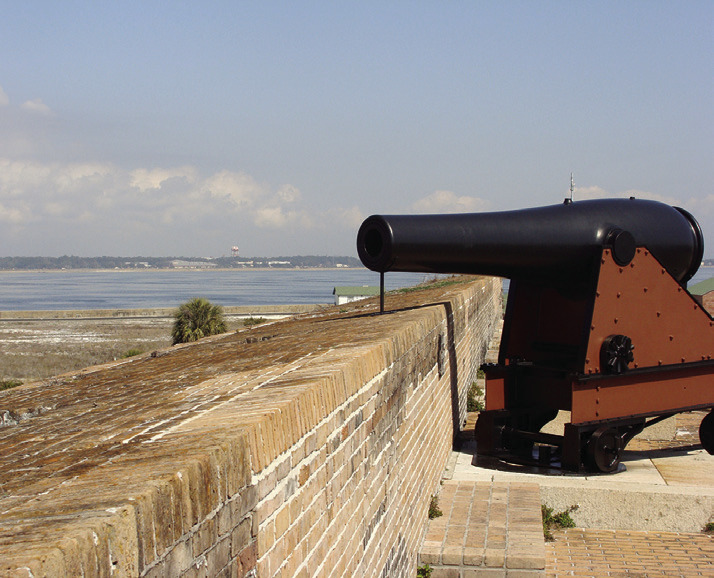
Another key event in the war, so to speak, was the Battle of New Orleans in which Andy Jackson’s much smaller forces defeated a larger, better-trained British army, veterans of the Napoleonic Wars, invading from the south. The lesson that James Madison learned from these two battles was that thousands of miles of undefended coastline made the US highly vulnerable. An extensive range of coastal fortifications was planned, but relatively few forts were completed. The development of military munitions made much faster progress than fortress architecture. That is, increasingly powerful and more accurate cannons could knock down stone or masonry walls from ever-increasing distances.
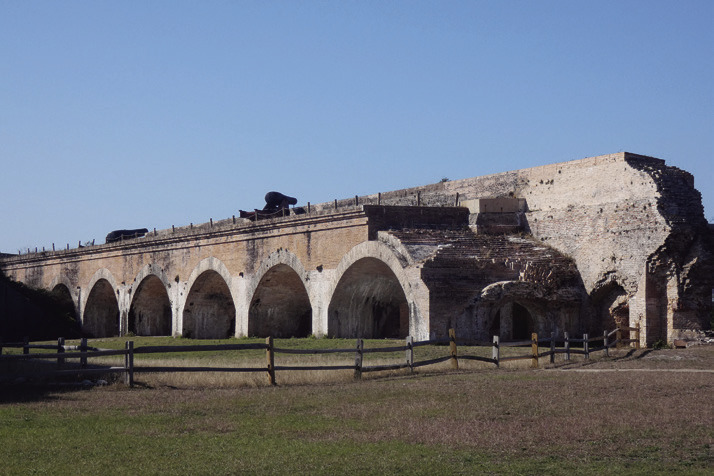
That is my usual verbose way of saying that Shirley and I were at Fort Pickens at the beginning of the year. More specifically, we were at Fort Pickens Campground in Gulf Islands National Seashore near Pensacola, FL. We had reservations there from Dec. 30 to Jan. 6 before continuing farther south into Florida. Fort Pickens was one of those obsolete forts built to protect a vital location—the entrance to Pensacola Bay. In 1825, President Monroe established a naval base in the Bay and the fort was built to guard access to it. The fort was so successful that, although deep in Confederate territory, it remained in Union hands throughout the Civil War despite several assaults.
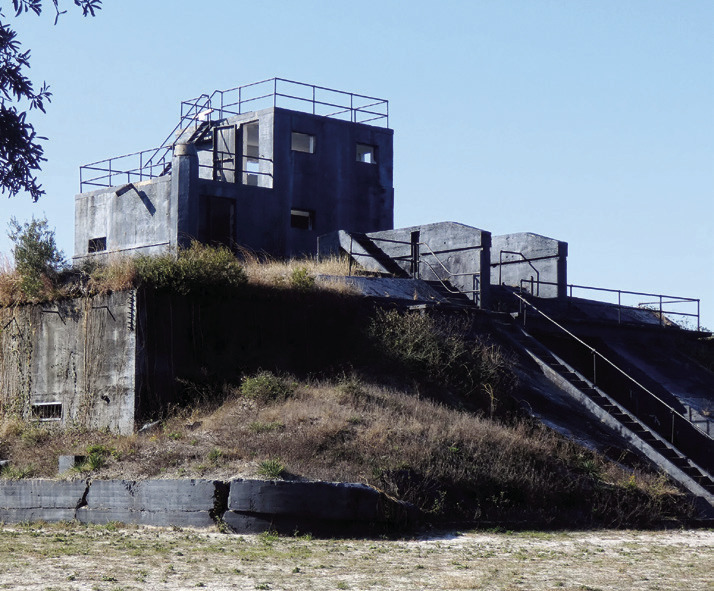
During the World Wars, the fort was strengthened by more modern cannon batteries to protect against German naval warfare. Battery Worth, for example, housed eight 12-inch mortars that could lob 7,000-pound projectiles seven to nine miles. The high arc of mortar fire meant that the shells would descend almost vertically onto the decks of attacking ships. Battery Langdon was a low but massive concrete structure (10-feet-thick walls and 17-feet-thick ceiling) camouflaged by sand and vegetation to protect it from aircraft bombardment. Its guns could reach out as far as 17 miles. A battery, by the way, is an emplacement holding two or more big guns.
Thus, the fort site evolved over time to include more recent fortifications within the footprint of the original. Not that it mattered. The only destruction ever caused was when the powder magazine of the
n original fort exploded, knocking down a huge segment of the walls. Friendly fire, as it were.
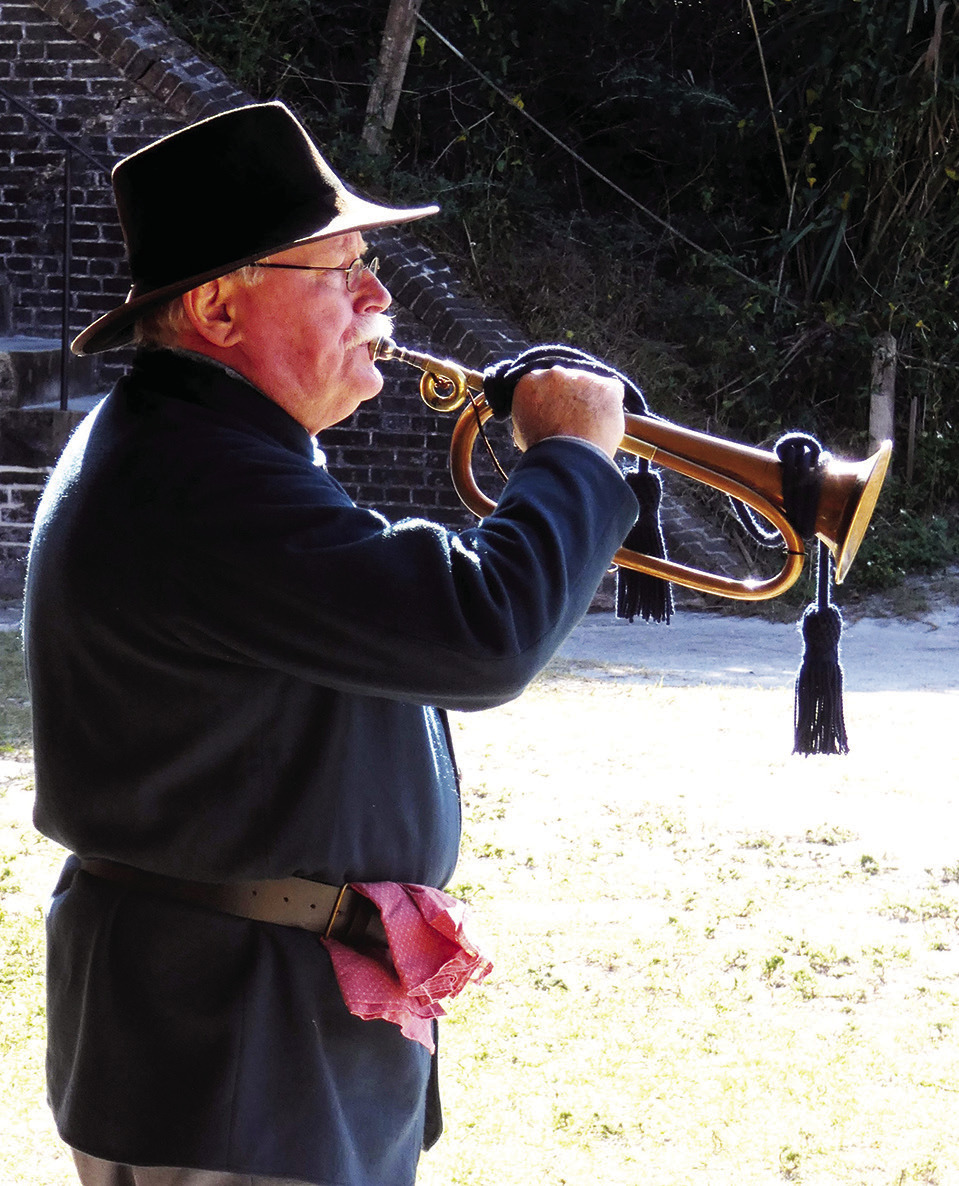
Today, there are still significant military installations at and near Pensacola. We are reminded of this every morning when reveille echoes across the bay from the Naval Air Station. This is followed by the national anthem and then by the roar of jets hitting the afterburners as they head out over the Gulf on training exercises. In addition to the usual naval aviators, the Blue Angels are at home there when they are not traveling the country doing spectacular air shows. The Angels were home when we were at Fort Pickens.
The most famous historical figure associated with Fort Pickens was probably the Apache leader Geronimo who was held there after his surrender in 1886, ending the Indian Wars. Geronimo was on his way to imprisonment in St. Augustine when he was waylaid by the city fathers of Pensacola. They charged 50 cents each to tourists who wanted to come out to gawk at him. Geronimo may actually have been better off being kept at Fort Pickens where he was not held in a prison cell. The fort is on Santa Rosa Island, and there were no bridges in those days, so he was free to roam around. No place to go.
That is no longer the case. Gulf Islands National Seashore occupies the west end of Santa Rosa. The east end is the resort community of Pensacola Beach with all the usual touristy attractions: pastel-colored condos, high-rise hotels, bars and restaurants, marinas, dive shops, amusement parks, gift shops. There are plenty of places that are likely to appeal to every member of the family. Shirley and I don’t spend much time in resort communities, but your preferences may differ.
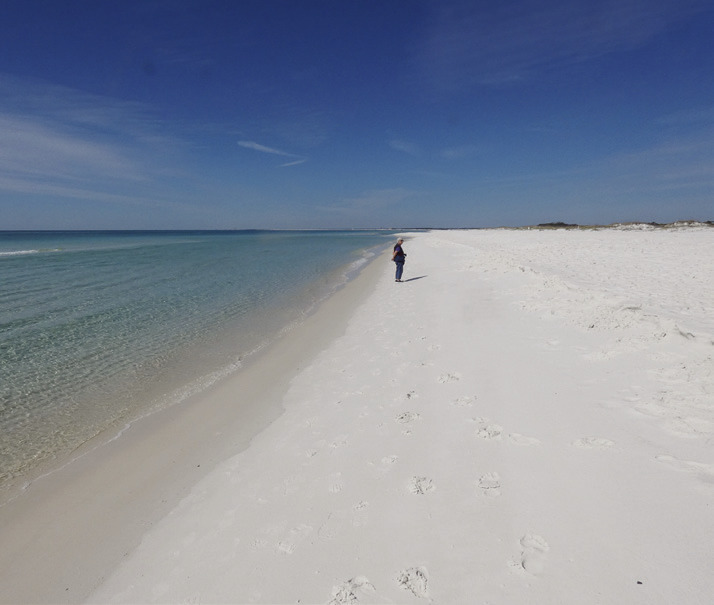
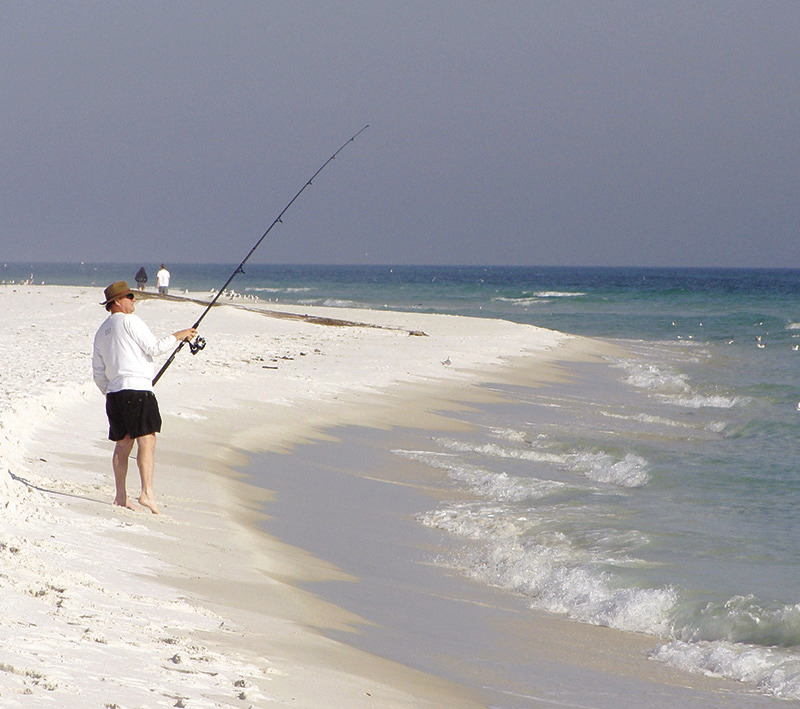
Santa Rosa is a very narrow, low-lying island that can be walked from the Gulf side to the Bay in a matter of minutes. The sand along the Gulf shore is the color and texture of powdered sugar. The beach is gorgeous, but, within the boundaries of the park, we are accustomed to having it mostly to ourselves. The exception is when we happen to be there during Spring Break on our way home from Southern Florida or Arizona. Which is what we will be doing again in late March this year. A walk on the beach typically involves occasional encounters with other geezers looking for shells or fishers surf casting or folks admiring the seabirds and shorebirds.
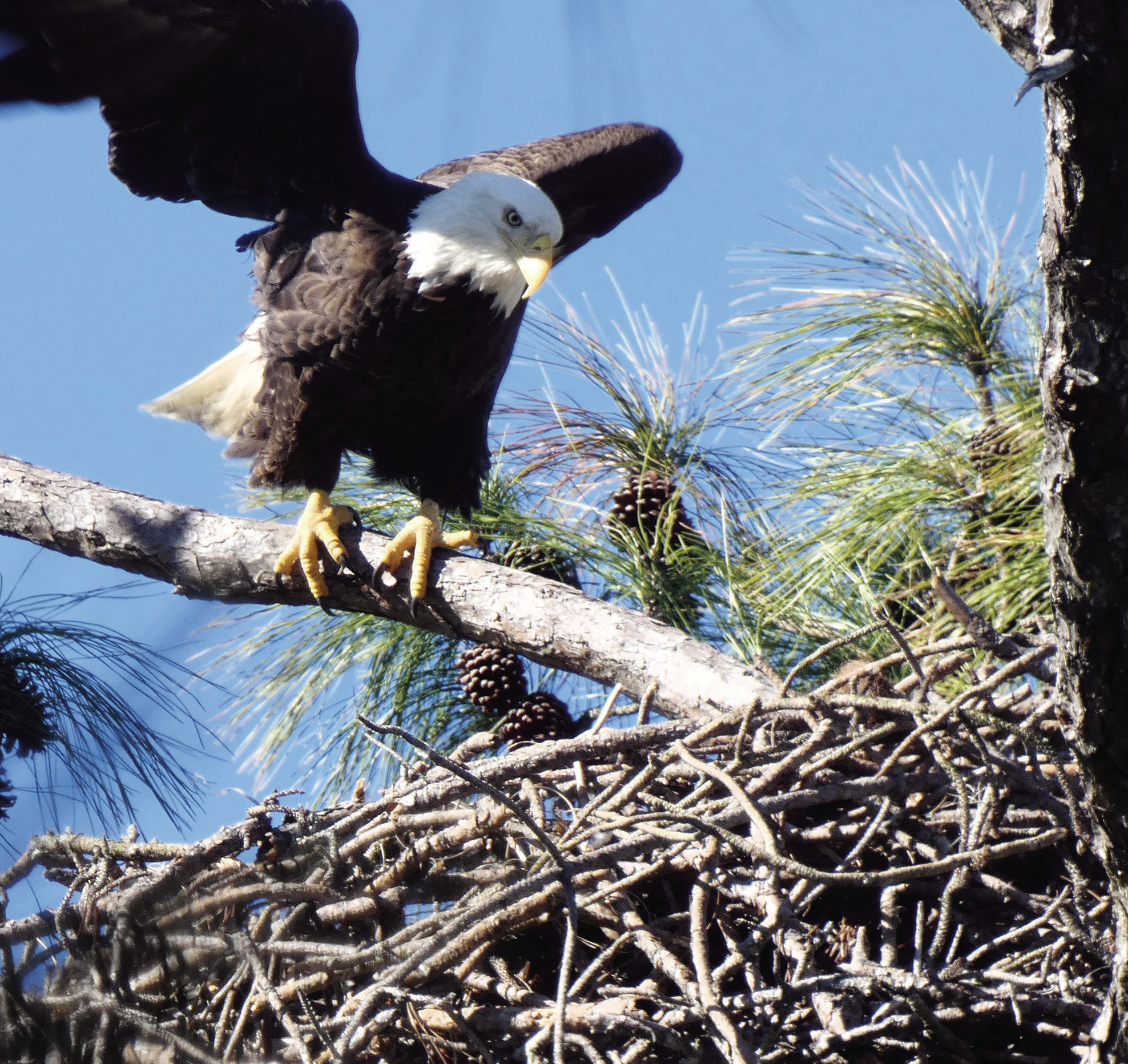
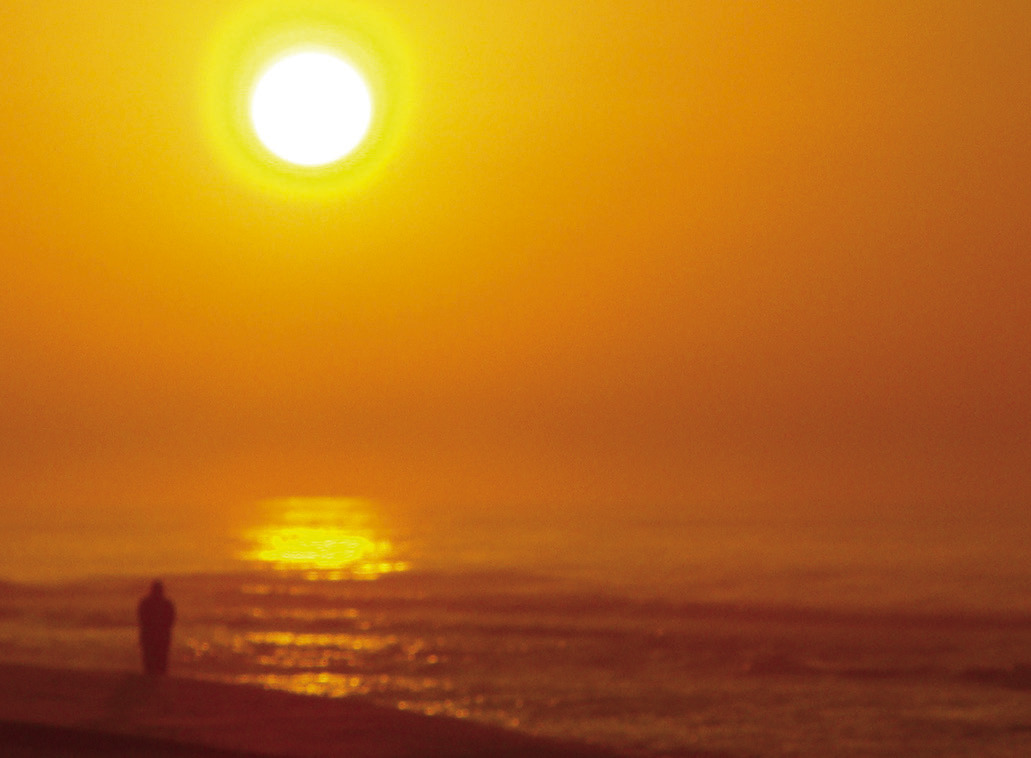
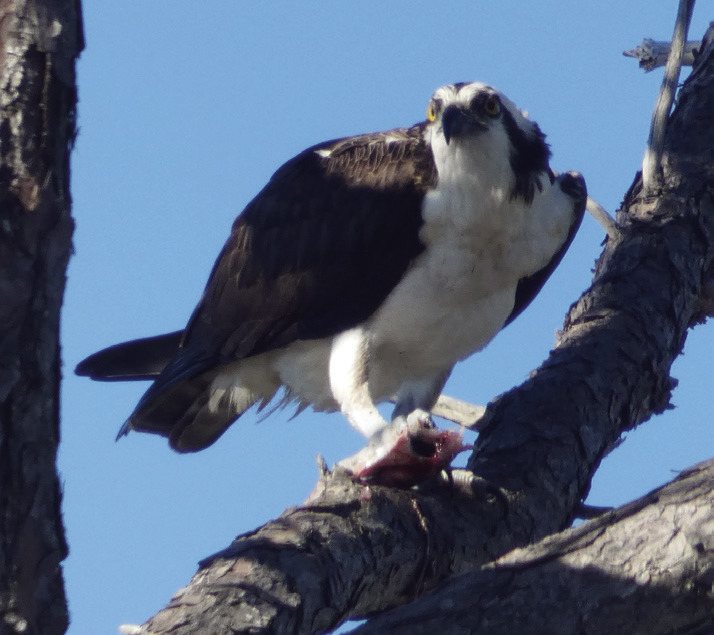
Because Santa Rosa runs east-west, it is a great place to enjoy sunrise or sunset. Or both. But there are hiking trails as well. Along the one-mile walk from the campground to the fort, we enjoy the short spur trail that connects to the Bay through a small forest of slash pines and live oaks. The main reason to take that trail is not the Bay, but that there are usually eagles, ospreys, and hawks nesting in the taller trees. This year did not disappoint. The eagle nest was home to two adults, a juvenile, and an undeterminable number of hatchlings.
At the east end of the campground is a nature trail that loops through a marsh. Ospreys nest out there as well, but this year we did not spot a nest in the usual place. Still there were wild flowers and lots of Yaupon holly with bright red-orange berries all along the trail.
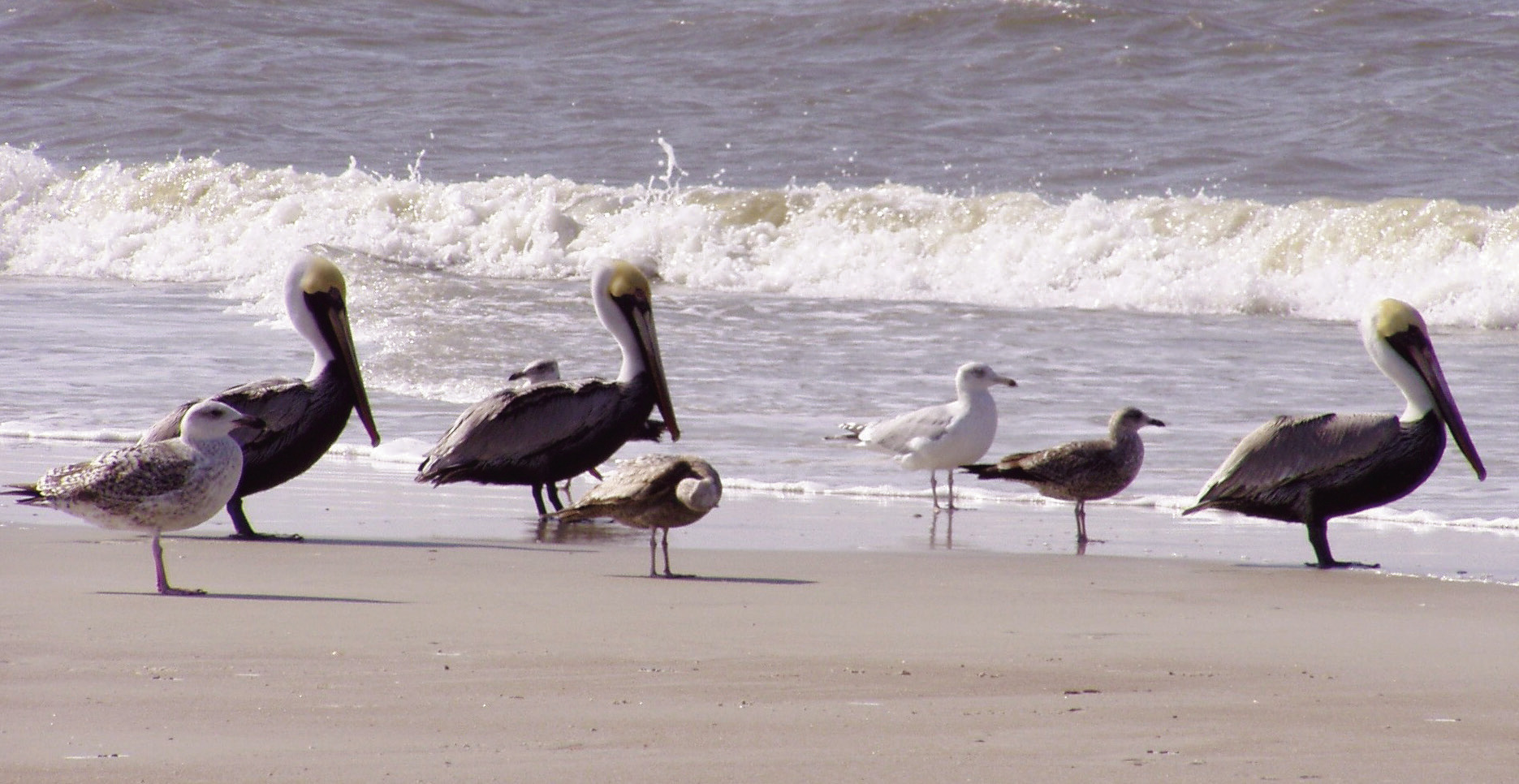
Still, for us the main attraction at Fort Pickens are the beaches with their seabirds and other forms of wildlife. There are several kinds of gulls, terns, and shorebirds of all kinds. Little plovers scurry in and out at water’s edge to snatch anything that might be tossed up by the waves. Sandpipers, willets, godwits, curlews, and sanderlings poke around for snails and small crustaceans and mollusks. Sometimes small fish.
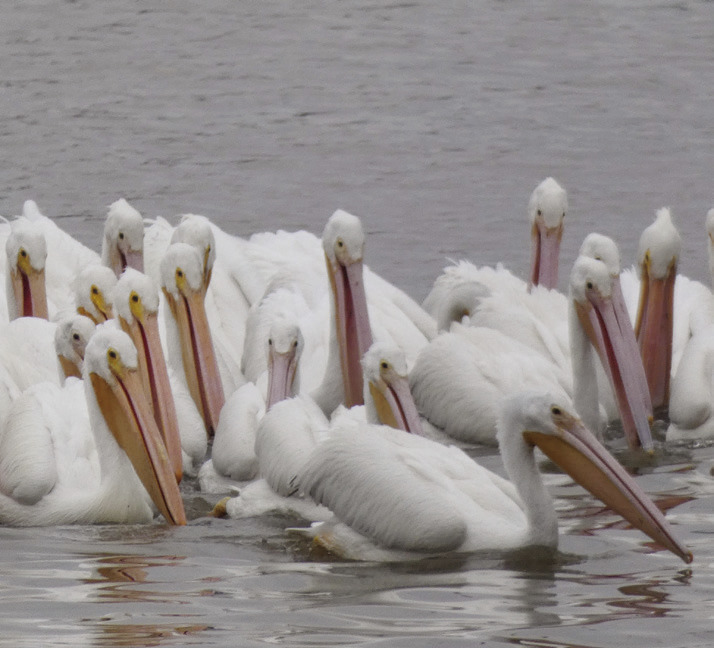
Bigger birds catch bigger fish. Shirley’s favorite is the pelican because his beak can hold more than his belly can. They come in brown or white but differ in more than color. White pelicans have a wingspan of eight or nine feet and feed by swimming together in a sort of synchronized ballet with their beaks submerged to catch fish. Brown pelicans are somewhat smaller and do their fishing by cruising over the water then plunging from above. Both can be rather entertaining.
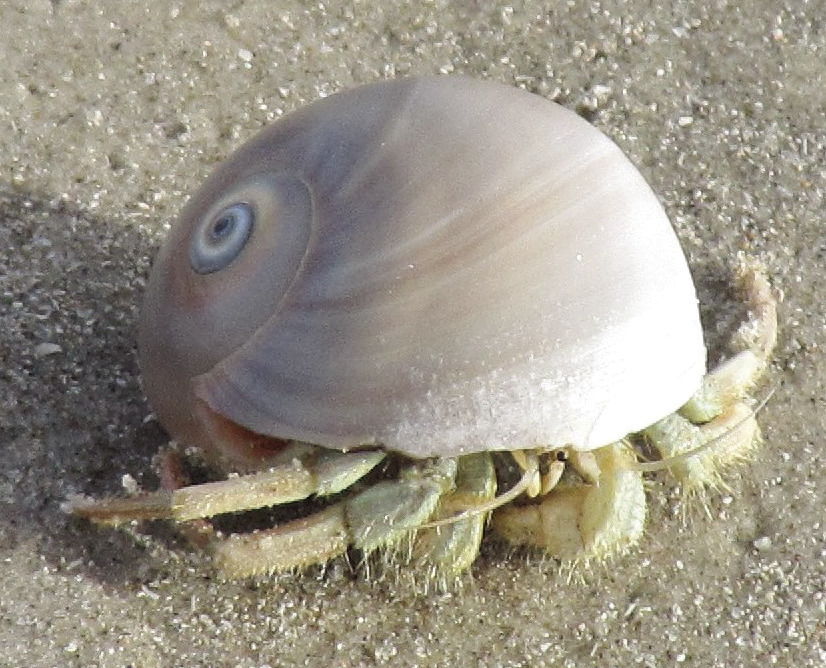
Also entertaining is the occasional glimpse of little ghost crabs. They are close to the color of the sand and blend in almost perfectly. Or there may be a Man o’ War washed up on the beach. These you don’t want to mess with. Even when dead, their stingers still work. Children should be taught this. What children are universally taught is how to build sand castles, and there is more than enough building material.
Though the Gulf-side beach is significantly better, we always walk over to the Bay to see what might be going on there—Coast Guard cutters coming or going, small sailboats and fishing boats in the calmer, more sheltered waters.
Sheltered waters can be important. On Jan. 5, we received a text message advising us that the campground was going to close because of high winds. Shortly later, a park volunteer knocked on our door to reinforce the message. The park road out to Fort Pickens is only a few feet above sea level. High winds and surf can push enough sand and water to close the road. From Northerners’ point of view, road clearing itself can be interesting because they use snow plows. This was the fourth time our stay has been canceled or shortened. Fortunately, this time we were scheduled to be out on Jan. 6 anyway and had reservations down at Alexander Springs. Had to find a place to stay for only one night.
Many veteran RVers are aware that Cracker Barrels welcome us to stay overnight. Lake City CB was a good place to stop. Here’s a tip for frugal geezers: Shirley buys CB gift cards when Kroger is offering four times the fuel points. Pay for the gift cards with a credit card that gives cash back. Get up to $1 a gallon off gasoline. Pay for the gasoline with the card that gives you cash back. It ain’t quite the land of the free, but it can be the home of the brave. If you don’t weaken.
Meanwhile, from Alexander Springs we are headed to Juniper Springs, Salt Springs, and Clearwater Lake. Rinse and repeat until it is time to head back to Fort Pickens in March. Shirley and I are inclined to think that the routine is just a walk in the park.
AnotherWalkinthePark.blogspot. com. ✲