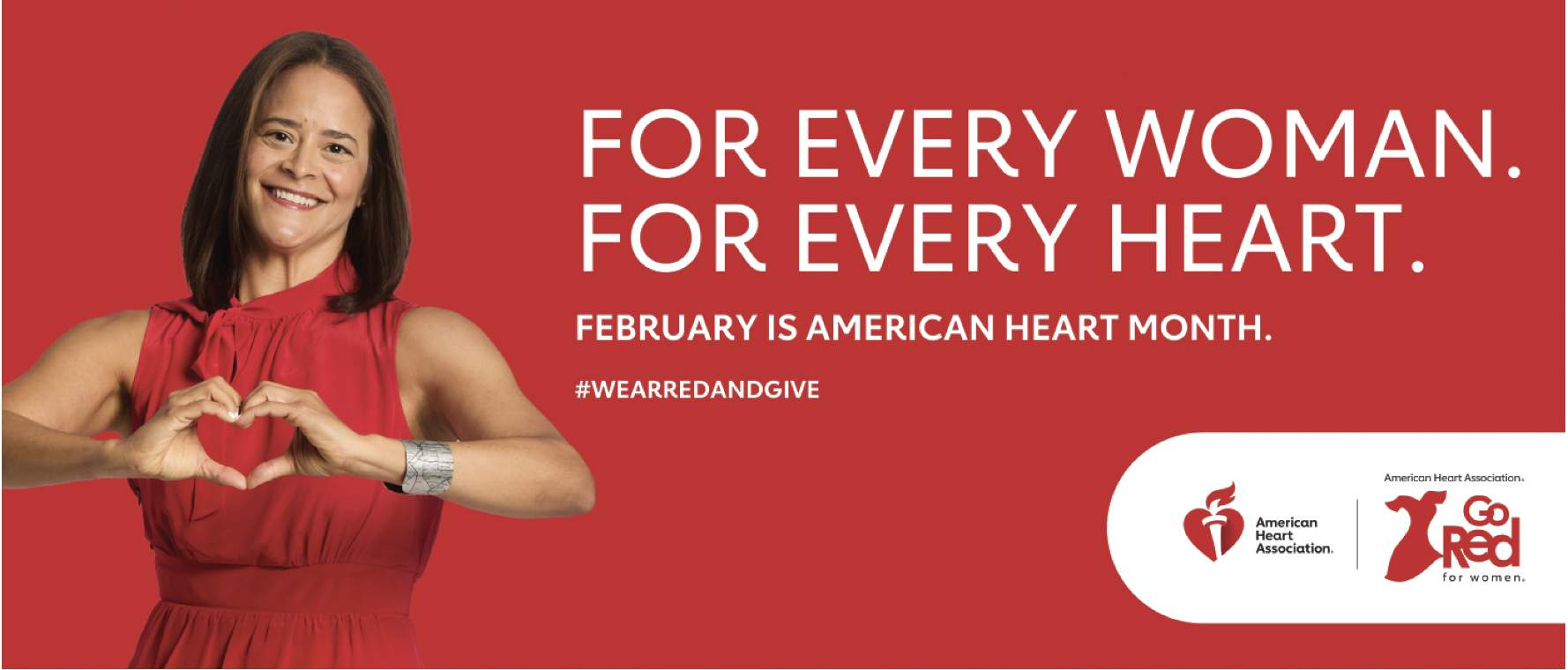
THE COLOR RED REPRESENTS passion, yet also danger—both of which apply to the message of the American Heart Association’s annual Go Red for Women campaign throughout February.
The danger is that women in particular are threatened by heart disease; the passion is that the Heart Association devotes this month to highlight the message that women should take better care of themselves—and this year has an additional request.
“Heart disease is still the number one killer of women in the country,” said Mindy Hartwick, executive director of the American Heart Association in Toledo. “We continue to put a huge focus on women’s health. As women, we tend to take care of everyone around us and put ourselves last.”
The Heart Association said only 44 percent of women are aware that cardiovascular disease is their leading cause of death, and that among women 20 years old and older between 2017 and 2020, nearly 45 percent had some form of cardiovascular disease.
To help drive home its message, the Heart Association will have its annual Go Red for Women event on Thursday, February 27, from 11:00 a.m. to 1:00 p.m. at the Glass City Center in downtown Toledo.
Hartwick said a record number of more than 500 attendees have registered to hear a panel of experts talk about heart health, see a fashion show by heart-attack and stroke survivors, take part in a live auction, undergo medical screenings, visit with local vendors, and enjoy a lunch.
“Go Red for Women brings women together to support other women,” Hartwick said.
Not that well know is that the symptoms of a heart attack for women are different than for men. “Women’s symptoms are nausea or vomiting; jaw, neck, or upper back pain; sometimes chest pain—that’s a symptom for men, not always for women; shortness of breath; fainting spells; feelings of indigestion; or extreme fatigue,” Hartwick said.
The Heart Association said that stroke is the number-three cause of death in women, that one in five women will have a stroke, and that women are more likely to have a stroke than men are.
“Women often don’t acknowledge their symptoms. Sometimes they get dismissed by their doctor,” she added.
“We’ve identified that women are underrepresented in cardiovascular research, treatment, and funding,” Hartwick continued.
The Heart Association said less than 40 percent of research participants are women. “There are significant biological differences between men and women, and clinical trials have not always adequately enrolled women or analyzed sex-specific differences in the data,” the Heart Association said in a statement. “For too long, women have been underrepresented in research.”
The Heart Association added that its Research for Red initiative strives to address gaps in research.
In addition to focusing on women’s health, the Heart Association has an additional goal for 2025. “We want at least one person in every household to be trained in hands-only CPR,” Hartwick said of cardiopulmonary resuscitation without administering breaths. She added, “We want to make sure that every parent knows CPR because we’ve seen an increase in kids experiencing cardiac arrest.”
There is a women’s facet to the CPR focus. The Heart Association said, “A woman is less likely to receive CPR from a bystander than a man. Too many women die from cardiac arrest— partly because people are afraid to touch them.” The association explained, “Rescuers often fear accusations of inappropriate touching, sexual assault, or injuring the victim. Many people believe that women are less likely to have heart problems and overdramatize incidents. It’s these fears and myths that lead to women being less likely to receive the lifesaving CPR help they need.”
Go Red for Women promotes training people to feel confident in performing CPR on females.
Details on hands-only CPR training are available at heart.org/nation. Information about Toledo’s Go Red for Women is available by calling Hartwick on her office direct line, 419-740-6016.
“We have to take control and stop ignoring our bodies,” Hartwick concluded. “If something doesn’t feel right, we have to talk to our doctors and make lifestyle changes to live longer, healthier lives.”
Dennis Bova is a freelance writer and editor.
✲