MY FRIEND STOPPED IN THE bathroom after shopping at a local mall. When she joined us at our table in the restaurant, she told us, “I’ve got to remember this place— they have a pretty good accessible bathroom!”
Someone in our group asked her why the bathroom was “pretty accessible” but not completely accessible. She mentioned that she saw a grab bar in the bathroom and thought that meant the bathroom was remodeled for those who had mobility challenges.
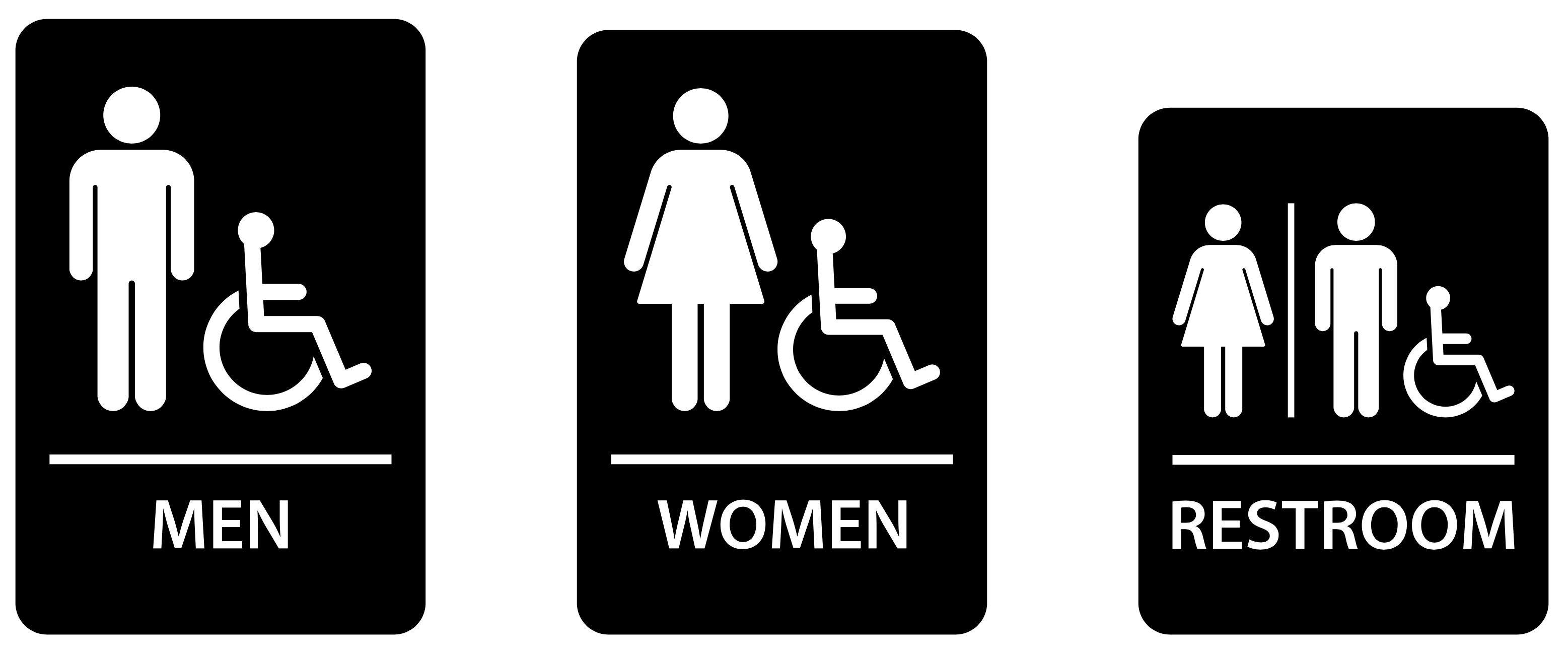
Where do we begin explaining why we need accessible bathrooms and what makes a bathroom accessible? First of all, just because a bathroom is marked with the little blue person and has a grab bar doesn’t mean it’s accessible.
The “one-size-fits-all” size in clothing doesn’t apply to accessible bathrooms. Every person’s mobility challenge can be different. For a person who has weakness in their arms—perhaps they had a badly broken arm or a stroke, which greatly weakened one side or both sides of their body—a grab bar might not help them stand up. This is especially true if a grab bar is on their weakened side. A friend had nerve damage on her right side, and many grab bars were on her right side in the bathroom stall.
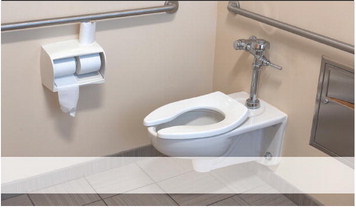
When it comes to standing up to get to the toilet, the actual toilets are low, making it more challenging to get to the toilet. Another challenging aspect of accessibility is the size of the stall itself. When people enter a handicapped stall, the space might be so small that they can barely get in. They might use a walker, electric cart, or wheelchair. Think of having to turn around in limited space. They might just leave the door open to park their vehicle.
There is also the challenge of opening a heavy door and getting into the stall. Sometimes the angle you have to turn in is quite challenging. Some doorways are narrow and often get nicked. Also, doors in many bathrooms open into the stall. That’s nice getting in, but try getting out. You have to pull the door toward you while sitting in a wheelchair and hope you can get out before it closes on you. There are also some small door handles that, with arthritic hands or any hands, add minutes to your bathroom visit.
When my friend mentioned that the bathroom was pretty accessible, I asked her what could make the bathroom more “user friendly,” and she said that if the size of the stall were bigger, it would help.
Having accessible bathrooms is the law—a federal law. It started with the Americans with Disabilities Act back on July 6,1990. The Americans with Disabilities Act (ADA) is a federal civil rights law that protects people with disabilities from discrimination in many areas of public life:
• Employment: The ADA protects the rights of both employees and job seekers.
• Transportation: The ADA applies to transportation.
• Public accommodations: The ADA applies to public and private places that are open to the general public.
• State and local government: The ADA applies to all programs and services.
• Telecommunications: The ADA requires that telecommunications services be accessible to people with hearing and speech disabilities.
Accessible bathrooms fall under the public accommodations section of the ADA law. The idea is to make stores, parks, entertainment venues, and public venues more inclusive of people with disabilities.
So, what is an ADA-compliant bathroom (ADACB)? According to the ADA, the main requirement for an ADA-compliant bathroom is accessibility for those who might encounter difficulty moving around. Any facility that serves the general public is required to comply with the ADA. Further, since the ADA also concerns itself with the rights of persons with disability with regards to work, employee restrooms must also be ADA-compliant. After building codes have been taken into consideration, ADA requirements must then be followed.
One of the ADA’s demands is a toilet stall for each gender. But the ADA guidelines are not exclusive to the number of toilets or the measurements of the finished floor and toe clearance. Some of the bathroom requirements for ADA compliance include these standards to ensure that people with disabilities can use the bathroom without difficulty:
• Clearance: There should be enough space for people to maneuver around. The minimum size for an accessible bathroom is 60 inches wide by 56 inches deep.
• Doors: Doorways should be wide enough to accommodate wheelchairs. The door should not swing into the minimum required area for wheelchairaccessible toilet compartments.
• Sinks: Sinks should be easy to use and reach. The basin should be shallow enough to leave space for knees and toes, and the user should be able to reach the bottom of the sink comfortably.
• Toilets: The toilet seat height should be between 17 and 19 inches. The centerline of the toilet should be between 16 and 18 inches from the sidewall.
• Grab bars: Grab bars should be installed in the shower, bath, and next to the toilet.
• Toilet stalls: There should be at least one wheelchair-accessible stall in multi-user restrooms. If there are at least six toilets or urinals, there should also be at least one ambulatory accessible stall.
• Flooring: The flooring should be slip-resistant.
ADA compliance is required for any establishment that serves the general public, including hotels. Failure to meet ADA bathroom requirements can result in significant fines.
It costs to convert bathrooms to accessible ones. Area hardware and home-improvement stores not only have supplies, but lists of what needs to be done. Sometimes we get weary of people asking for accessible bathrooms, but if you or a loved one needed one for safety, you would probably agree that is important. And everyone needs a bathroom.
Sister Karen Zielinski is the Director of Canticle Studio. Canticle Studio is a part of the Sisters of St. Francis of Sylvania, OH’s overall advancement effort and has a mission of being a creative center where artists generate works, products, and services in harmony with the mission of the Sisters St. Francis. She can be reached at kzielins@sistersosf.org or 419-8243543.
✲