
January in Northwest Ohio is a challenge to both body and spirit. With the holidays behind us, it seems all we have to look forward to until spring is biting cold, gray skies, and serial snowfalls. Not to mention, with the cold and flu season in high gear, our bodies can really take a beating during this bitter month.
While it might be tempting at this time of year to give in to the craving for high-calorie comfort foods and just plop ourselves on the couch until spring, we’re much better off eating invigorating, healthful foods that are fresh, zesty, and flavorful while providing a shot in the arm to the immune system. Oranges provide just such a blend of invigorating flavor and health benefits.
As most people are aware, oranges are rich in vitamin C. In fact, one orange provides approximately two-thirds of our daily requirement of this vital antioxidant. Oranges are also high in fiber, making them the most filling fruit per calorie (one orange contains only about 64 calories). In addition, they provide 21 percent of our daily folate requirement and contain potassium, calcium, and magnesium. Even the white skin under the peel (called the pith), which contains bioflavonoids, is good for you! Oranges also offer a nutritional bonus in the form of citrus limonoids, which have been shown to help fight skin, mouth, lung, breast, stomach, and colon cancers.
The different orange varieties fall under two broad categories: oranges and mandarins. The oranges most people are familiar with include navels, Valencias, and bloods. Mandarins include the popular clementines, tangerines, and satsumas.
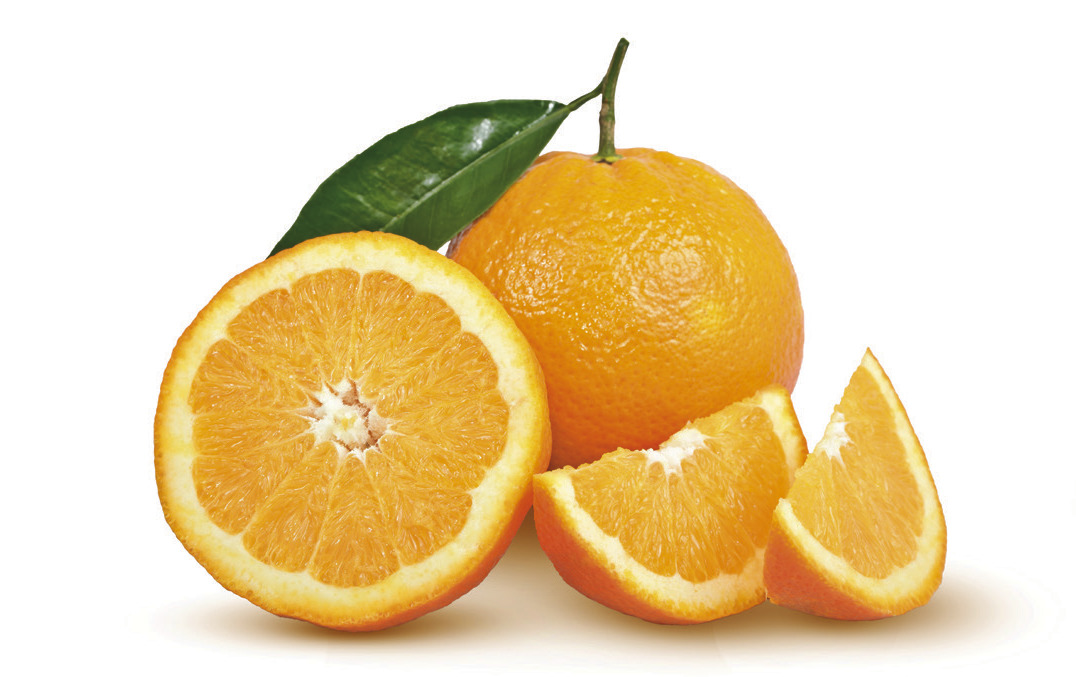
When choosing oranges, look for fruits that are heavy for their size, which indicates they are full of juice. Lighter oranges, on the other hand, have less juice, more skin, and drier pulp. A solid orange color is not necessarily an indicator of quality as some oranges are dyed and others have natural green spots or other discolorations (even when ripe) that in no way detract from the quality of the fruit. However, avoid fruits that have soft spots, wrinkles, cuts, or blemishes, or those that have begun to mold. When buying navel oranges, choose fruits that have small-sized navels, as larger navels are a tell-tale sign that the fruit was picked overripe.
If you plan to eat oranges within a few days of purchase, you can store them outside of the refrigerator in a cool place. For longer storage periods, you can refrigerate them in a plastic bag or in your refrigerator’s vegetable crisper. In addition to eating by hand, oranges are a great way to enliven a salad or spice up vegetables, entrees, and desserts. The following recipes will give you a few ideas for enjoying these exceptional, zesty fruits:
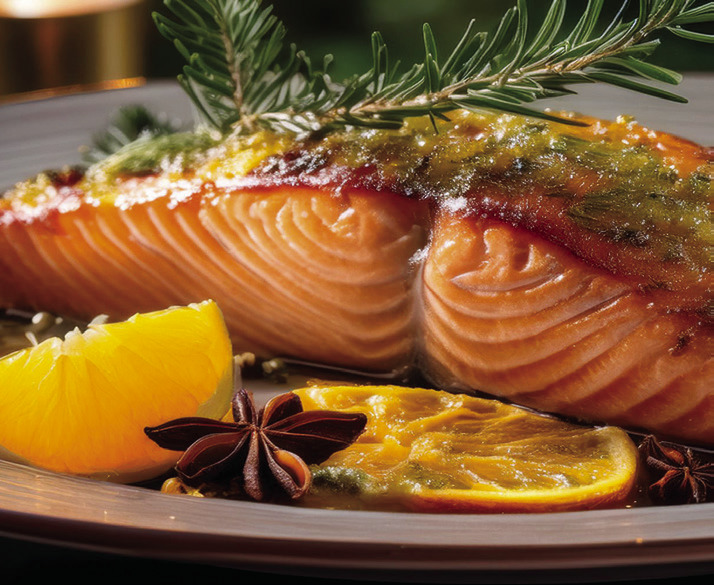
Roasted salmon with orange-herb sauce
1 large orange, unpeeled, sliced 1 large onion, halved, thinly sliced 1-1/2 Tbs. olive oil 6 3-ounce skinless salmon fillets 3 Tbs. chopped fresh dill 1/2 cup orange juice 1/4 cup thinly sliced green onions 1-1/2 Tbs fresh lemon juice Additional unpeeled orange slices Preheat oven to 400°F. Place orange slices in single layer in 13x9x2-inch glass baking dish. Top with onion slices. Drizzle with oil. Sprinkle with salt and pepper. Roast until onion is brown and tender, about 25 minutes. Remove from oven. Increase oven temperature to 450°F.
Push orange and onion slices to side of baking dish. Arrange salmon in center of dish. Sprinkle with salt, pepper, and 1-1/2 tablespoons dill. Spoon orange and onion slices atop salmon. Roast until salmon is opaque in center, about 8 minutes.
Meanwhile, mix orange juice, green onions, lemon juice, and remaining 1-1/2 tablespoons dill in small bowl. Transfer salmon to platter. Spoon onion alongside; discard roasted orange slices. Pour orange sauce over fish. Garnish with additional orange slices.
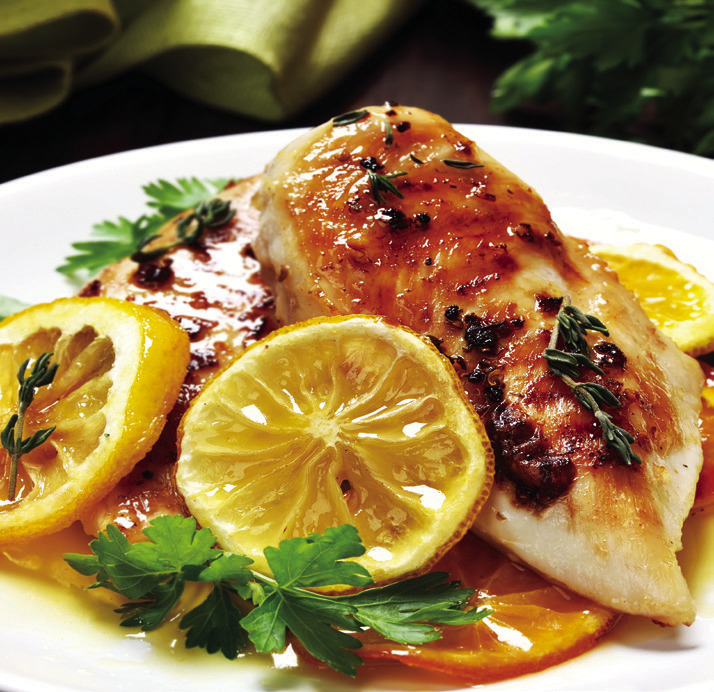
Orange and ginger chicken 2 chicken breasts 1 orange (rind) 1 garlic clove 1 glass white wine Fresh ginger Handful of cashew nuts Some mushrooms Rub the chicken breasts with a mixture of the orange and ginger rind. Heat the oil in frying pan and add the chicken. Remove chicken and place in a casserole dish. Fry the mushrooms in the pan with fresh crushed garlic and the cashew nuts. Add 1 glass of white wine and pour this over the chicken. Bake the chicken for 20 minutes.
Best served with creamed potatoes, rice or pasta, and a salad.
Orange rice pilaf
1 cup celery, diced 3 Tbs. onion, chopped 1 Tbs. grated orange peel 1/4 cup butter or margarine 1/2 tsp. salt 3 Tbs. orange juice 1-1/3 cups water 1-1/2 cups uncooked instant rice In a 3-quart saucepan, saute celery, onion, and orange peel in butter until tender but not brown. Add salt. Combine orange juice and water; add to celery mixture. Bring to a boil. Stir in the rice. Remove from the heat; cover and let stand for 10 minutes. Fluff with a fork. Makes 4-6 servings. ✲
