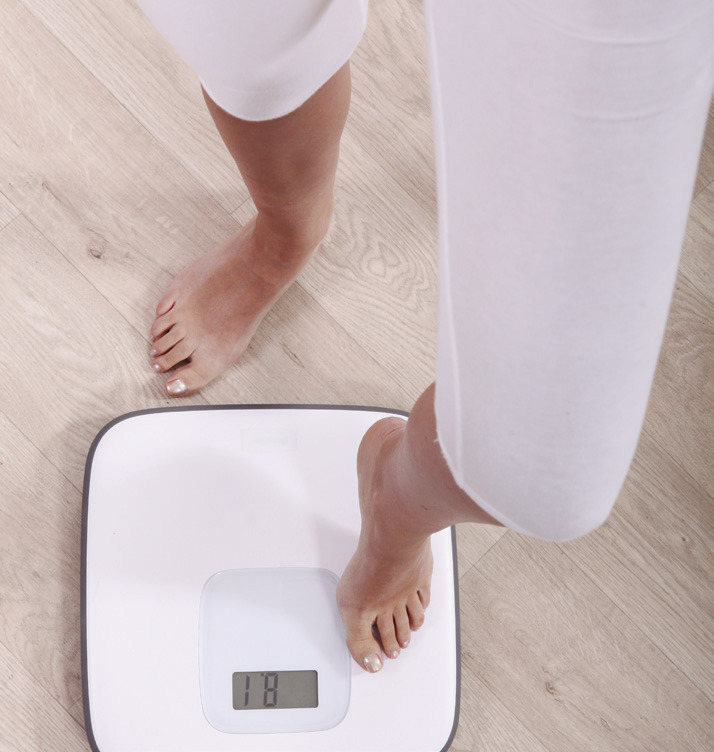
You’ve increased your intake of fruits and veggies, foresworn high-fat foods, said “sayonara” to sweets, and added a three-mile brisk walk to your list of daily activities. Still, you’re seeing no results on the scale—or, worse, you’re actually gaining pounds. What gives? Are you the victim of a slow metabolism? More likely, your weight-loss efforts are being sabotaged in some sneaky ways. Keep an eye out for the following:
Portion distortion
Weighing and measuring foods has become passé in recent years, but it’s important to do this for at least a week when you begin a healthy eating regimen in order to get an accurate sense of portion sizes. After all, even healthy foods can lead to weight gain if you eat them in oversized portions.
For example, brown rice may be healthier than white rice, but whatever its color, eating two cups of rice rather than the recommended serving size of one cup (prepared) will still add around 500 calories to your daily intake.
Death by a thousand strokes Just because you aren’t filling up a plate or bowl with food doesn’t necessarily mean you aren’t taking in a lot of extra calories. A sample here and a sip there may seem harmless, but do it often enough throughout the day, and those calories can really add up. Even your coffee creamer can make a difference (each two-tablespoon serving of half & half is worth 35 calories). Watch those incidental calories that can combine to equal extra pounds!
Falling for the fat-free fallacy Many food manufacturers offer low-fat versions of their products for weight-conscious consumers. Trouble is, “low-fat” does not necessarily equal “low-calorie.” Sugar is often added to low-fat foods so they still taste good. So, if you’ve been munching on low-fat cookies and chips or dousing your salad with low-fat dressings, thinking they’re better for you than the original products, you might be unwittingly packing on the pounds. Read those food labels carefully. Better yet, choose foods that are naturally low in fat and calories yet rich in nutrients, such as fruits and veggies.
It’s a common misconception that exercising regularly makes it acceptable to eat more because any extra calories consumed will just be burned off. This notion has arisen because we tend to overestimate how many calories we actually burn when exercising. For instance, let’s say you burn 350 calories jogging. That’s great, but if you decide to reward yourself with a couple scoops of ice cream afterward, you’ll completely negate that effort by replacing most, if not all, of the calories you burned.
Perhaps the sneakiest form of weight-loss sabotage can be found in the beverages we drink, and sweetened sodas are among the biggest offenders. Think drinking soda doesn’t make that much difference? Consider the fact that a 12-ounce can of non-diet soda contains about 150 calories. Multiply that by two or three cans a day, and you can expect to gain a pound per week.
What about beverages that are supposed to be good for you, like orange juice or grapefruit juice? Well, those can be a sneaky source of calories, as well. In fact, an eightounce serving of fruit juice is worth about 100 calories.
Being undermined by loved ones
In some cases, friends or family members can sabotage your weightloss efforts by cooking irresistible but fattening meals, tempting you to eat seconds, or bringing home treats that tempt you to fall off the wagon. If you find yourself in this predicament, frank, assertive communication will be your best ally. Explain to your loved ones what you’re trying to accomplish and ask for their help in reaching that goal. ✲