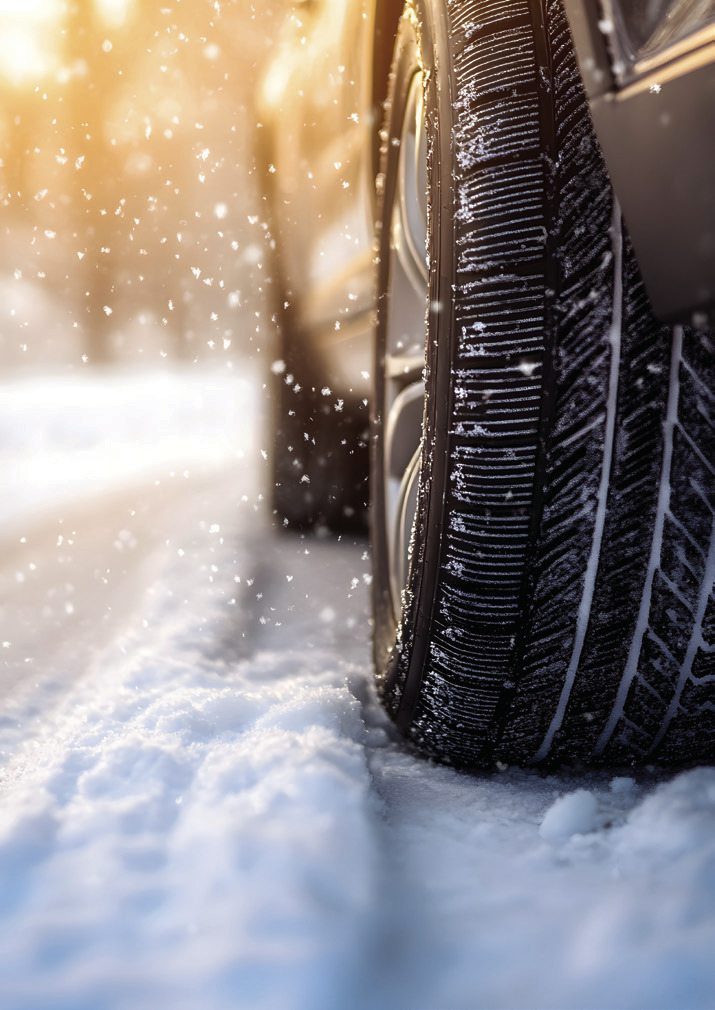
ANOTHER NORTHWEST OHIO WINTER is upon us, and that means area drivers will soon be contending with frosted car windows, slippery roads, reduced visibility, shorter daylight hours, and greater wear and tear on vehicle components. The time to prepare your vehicle for winter’s worst is now, not after the snow starts to fly. Not sure how? Here are some helpful hints:
Get your vehicle professionally inspected A vehicle breakdown is bad enough when it’s warm outside, but when you add icy roads, swirling snow, and bone-chilling temperatures to the equation, a roadside stranding can become downright dangerous. Ask a trusted mechanic to inspect and service all your vehicle’s systems and components, including the tires, brakes, battery, cooling system, alternator, oil, belts, hoses, windshield wipers, lights, heater/ defroster, radiator, exhaust, and ignition, to make sure they’re ready to tackle the harsh winter conditions ahead.
Monitor your tire pressure
The fluctuating air temperatures typical of our local winters can cause corresponding fluctuations in your vehicle’s tire inflation pressure. Whether too high or too low, improper tire inflation can result in compromised tire performance and safety. It’s important to check your tire pressure regularly with a pressure gauge so you can maintain it at the level recommended by the vehicle manufacturer.
Don’t confuse the vehicle manufacturer’s recommended tire pressure with the pounds-per-square-inch (PSI) pressure number branded on the sidewall of the tire. That number is the maximum cold inflation pressure that the tire is rated to hold. Most tires can be used on more than one vehicle, and the appropriate tire pressure varies by make and model. The inflation pressure that will produce the best possible performance from the tires on your vehicle will be listed on a placard located either on the driver’s-side doorjamb or on an inward-facing surface near the driver’s seating position.
Maintaining a proper motor oil level and getting regular oil changes will minimize wear and tear on your vehicle’s engine, which can be especially harsh in wintertime. Check your oil level every time you fuel up your vehicle, and be sure to schedule oil changes at the vehicle manufacturer’s recommended intervals. Also, consider switching to synthetic motor oil, which will retain its flow at much lower temperatures than conventional motor oils can.
In addition to getting your vehicle professionally inspected and monitoring your tire pressure and oil level, you’ll need to make sure it is stocked with a winter roadside survival kit. After all, accidents do happen, and even a well-maintained vehicle can get stuck in deep snow.
Your kit should include the following items at a minimum:
• A window scraper and brush
• Extra windshield washer fluid
• A blanket
• Jumper cables
• A tow chain
• A small shovel
• Rock salt, sand, or kitty litter for traction on ice
• Road flares and a brightly colored cloth for signaling
• Heavy boots and warm clothing
• A fully stocked first-aid kit
• A cellular phone and charger
• A flashlight with batteries
• Non-perishable food and water.
Invest in a roadside-assistance plan Perhaps the best step you can take to prepare your vehicle for winter’s worst is to make sure you’re equipped with a roadside-assistance plan, available through various companies and insurers. ✲