Sponsored by Wood County Park District
IN A RECENT ISSUE I talked about planning a fall color tour to Shenandoah National Park then down the Blue Ridge Parkway to the Smokies. The mountains in autumn can be simply spectacular. This year, Hurricane Helene made the area spectacular in a particularly devastating manner. Flooding. Landslides. Highways washed out. Homes and businesses totally destroyed. Thousands of lives disrupted—or lost altogether.
So, when Recreation.gov refunded the cost of our reservations (most of it anyway), Shirley and I were disappointed. Still, we were fully aware that the disruption of a couple weeks vacation is not at all comparable to what the real victims experienced. Perspective is important.
With that said, we had other travel options. One of our favorites, in either spring or fall, is the Natchez Trace. People who know we travel tend to look quizzical and ask the same question: “Um, what’s that?” There is a two-part answer because if you never heard of Natchez, you probably don’t know what the Trace is either.
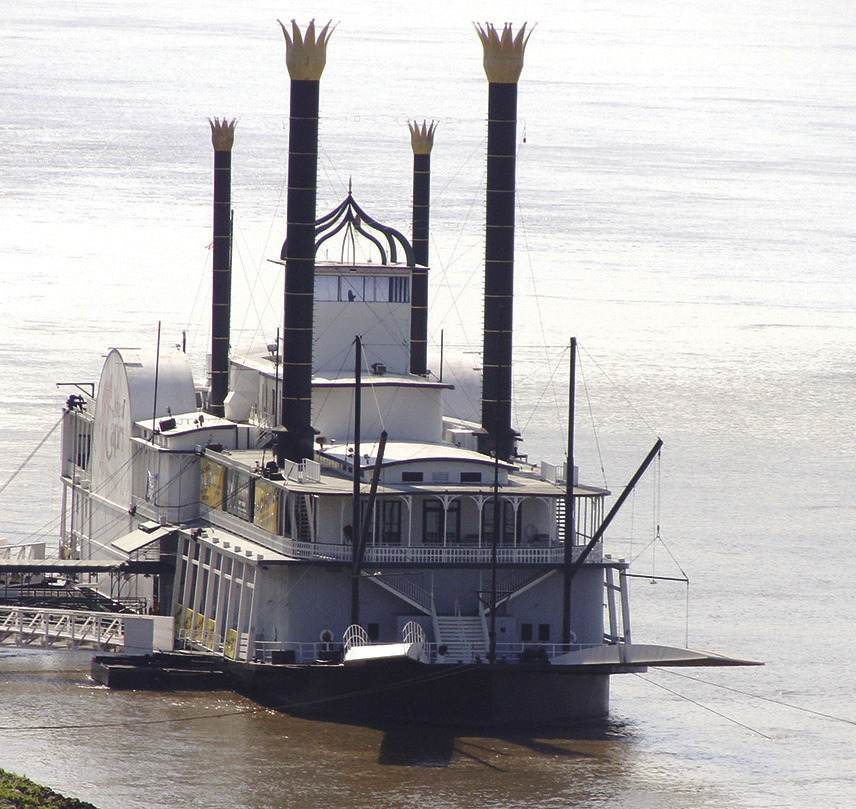
In the early 1800s, before there were railroads and steamboats, people living west of the Appalachians had no easy way to get their crops or other produce over the mountains to markets in the East. Roads were primitive and difficult. They got even worse just when, after harvest time, deteriorating weather became an additional challenge. One solution was to load things on flatboats and float them down the Ohio and Mississippi Rivers to where they could be further shipped to anywhere in the world.
A popular destination was Natchez, situated on high bluffs over the Mississippi. From Natchez, the next challenge for flatboaters was getting home. Flatboats could float with the current but could not be paddled upstream. The solution was to disassemble the boat, sell it as lumber, and then walk or ride horseback north. The dominant route was based on a trail, or trace, established by migrating animals, beginning with prehistoric mastodons and giant buffalo, that ran 444 miles up to Nashville. From there, roads could get travelers back to their points of origin.
Like the Blue Ridge Parkway, the Trace is a long, narrow national park. The BRP runs generally along the crest of the mountains, so the vistas are spectacular. On the Trace, there are hills but no mountains, so the road winds through much more gentle grades and curves. Sometimes it passes through dense forest where the canopy of trees forms a shady tunnel. Elsewhere, farm land runs right up to the edge of the road. The traffic, as on the BRP, is limited to non-commercial vehicles, but unlike the BRP, it is very light. The Trace is designed for what we used to call “Sunday drivers,” not in any hurry but out to enjoy the ride for its own sake.
Many enjoying the ride are bicyclists. Some are going just a few miles, but there are five cyclist-only campgrounds along the way for those seeking a more extended experience. There is also the 64-mile Natchez National Scenic Trail and 15 shorter nature trails plus numerous opportunities for hikers and backpackers to take a walk on the Old Trace.
Our friend Tom asked if there were RV campgrounds along the route. I told him that we have stayed at all three national park campgrounds, the Grand Gulf Military Monument, at three state parks, in a national forest, and at a Corps of Engineers camp. There are also numerous commercial campgrounds in towns just off the Trace, so you have numerous options and a wide choice of amenities ranging from none whatsoever to full hookups with whatever additional inducements the operators can think up.
Driving the Trace is pleasant, but, from our point of view, the main attractions are historical and architectural. History is represented by ancient Indian mounds that go back a couple thousand years. You would need to be a highly trained archeologist to recognize them. Most look like the little bumps on a golf course, but Emerald Mound is the second largest in the US. It rises 35 feet and covers eight acres. You gain an appreciation for the amount of human labor required, over the course of 300 years, to carry millions of baskets of earth by hand. The more you did, the higher the climb and the harder it became. Eventually there was an elevated plaza for ceremonies and games as well as wooden structures plastered with clay. On top of the primary mound is a 25-foot secondary mound that we were once allowed to ascend. The stairs have been removed, and signage now instructs visitors to stay off. Archeologists have also identified what used to be six other smaller mounds up there. Along the Trace there are five other sites with multiple mounds at each.
Most of the history as we know it was recorded by people of European origin. While exploring what is now the Southeastern US, Hernando DeSoto is said to have discovered the Mississippi River. He spent the winter of 1540-41 at what is now Mile Post 243 on the Trace. School children used to learn about DeSoto, and he was so widely known that Chrysler named a car after him. (You have to be really, really old to remember this stuff.) For perspective, Jamestown, the first English colony in America, was not established until 1607.
The Spanish claimed what is now the American South, but they failed to maintain a presence. So, Louis XIV of France sent his own explorers down from Canada to take advantage of that. LaSalle explored the Great Lakes area and paddled down the Mississippi to the Gulf. Louis’ ambition was to create a great imperial territory by connecting the Great Lakes with the Gulf. In 1682, LaSalle met and traded with the Natchez Indians. Later the French built Fort Rosalie on the site that became Natchez, MS. LaSalle called the area La Louisiane after his king. Like DeSoto, LaSalle was once so famous that Toledo had a department store named after him. At least that’s the way I heard it.
My favorite French explorers, obviously, are Pierre and Jean-Baptiste LeMoyne. Pierre discovered the Pearl River at what is now Mile Post 120 just north of Jackson and founded Mobile, AL. His brother, Jean-Baptiste LeMoyne, founded New Orleans.
In 1803, when Napoleon needed funds to support his wars in Europe, he sold La Louisane to Thomas Jefferson as the Louisiana Purchase. Jefferson sent Meriwether Lewis and William Clark with the Corps of Discovery in 1804-06 to explore the new territory and find a way to the Pacific coast. On the return trip, Lewis was shot in the behind by Pierre Cruzatte, another French connection, while hunting elk. Cruzatte was blind in one eye and near-sighted in the other. (The Lewis and Clark journals don’t explain why he was allowed to touch a rifle in the first place.) It was painful and embarrassing for Lewis, but no permanent harm was done.
But, wait, there’s more. As reward for his leadership of the Corps, in 1809 Jefferson named Lewis the governor of the Upper Louisiana Territory. (Ironically, Lewis never set foot in what is now the state of Louisiana.) On a trip from St. Louis to Washington, DC, he took the Natchez Trace and stayed at Grinder’s Stand, what we would call an inn. During the night, two shots rang out and Lewis was found dead. Was it suicide or murder? Still controversial, but Lewis must have been highly motivated to shoot himself twice with a single-shot hand gun. His grave, a reproduction of the stand, and a national park campground named for him are at the site.
Just a few miles north of there is Jackson Falls where Andrew Jackson mustered his troops for the march down to Natchez and then, by boat, to deal with the British at the Battle of New Orleans. In the fall, when the stream is running low, the falls are not very impressive. For that matter, they aren’t much more than a splash during the spring rains. It’s a nice walk in the park but not a major reason to follow the Trace.
If, however, you are a history buff, there are two major Civil War attractions along the general route as well as several minor battlefields. Just west of the Trace is the Shiloh National Military Park where, up to that time, the bloodiest battle of the Civil War was fought. Consider taking the self-guided audio tour for insights into how the battle unfolded. Shirley and I have toured quite a few Civil War battlefields and find that actually standing in famous places increases our appreciation for the courage and sacrifices made by both sides. It takes about two to three hours depending on your level of interest.
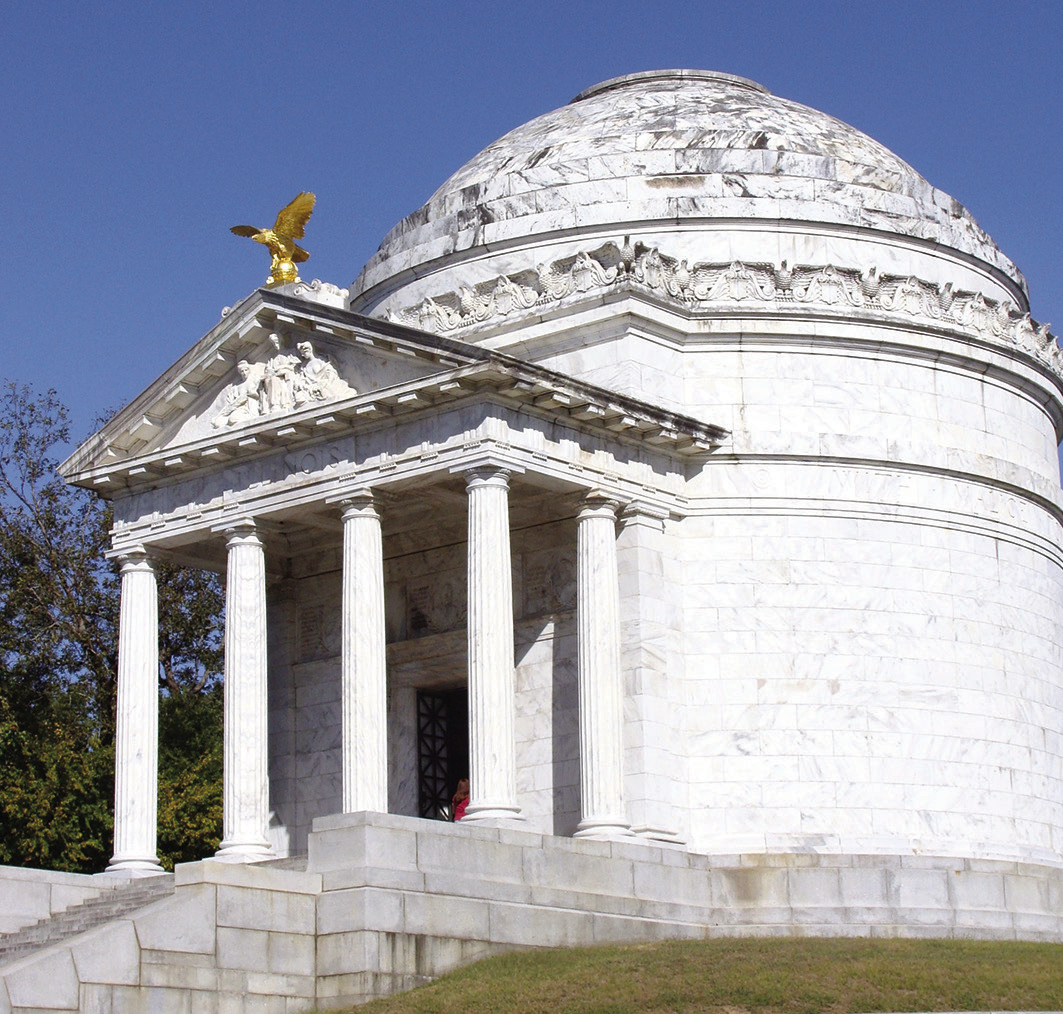
Likewise, the Vicksburg National Military Park is impressive for the number and quality of monuments and memorials. There are 22 giant state monuments like that of Illinois as well as 284 regimental monuments. Ohio is represented by 39 of these. Statuary and placards identify places where significant actions took place during the 47-day siege of Vicksburg. The siege ended with the Confederate surrender on July 4, 1863—The Glorious Fourth—that coincided with the Union victory at Gettysburg. I believe these military parks are worthy of further discussion in later installments of this column. Consider yourself warned.
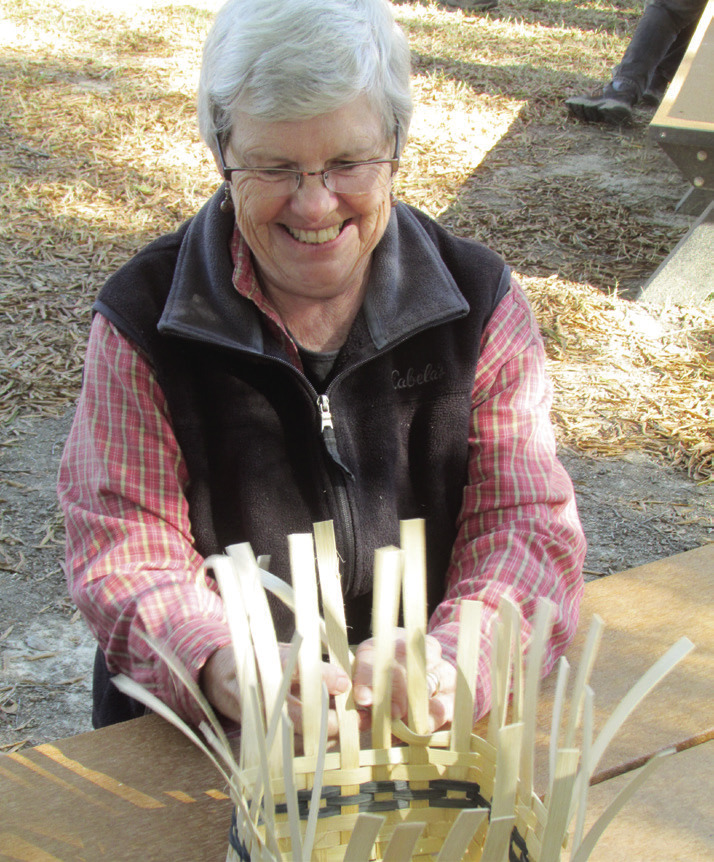
There are other ways to get your ration of history along the Trace. The park service sponsors Pioneer Days the last Saturday of each month at their headquarters near Tupelo. People in period costumes demonstrate crafts such as quilting, weaving, and basket making. Musicians perform on historic instruments such as hammered dulcimers, banjos, and fiddles. Hunters show muzzle-loading firearms and the pelts of fur-bearing animals.
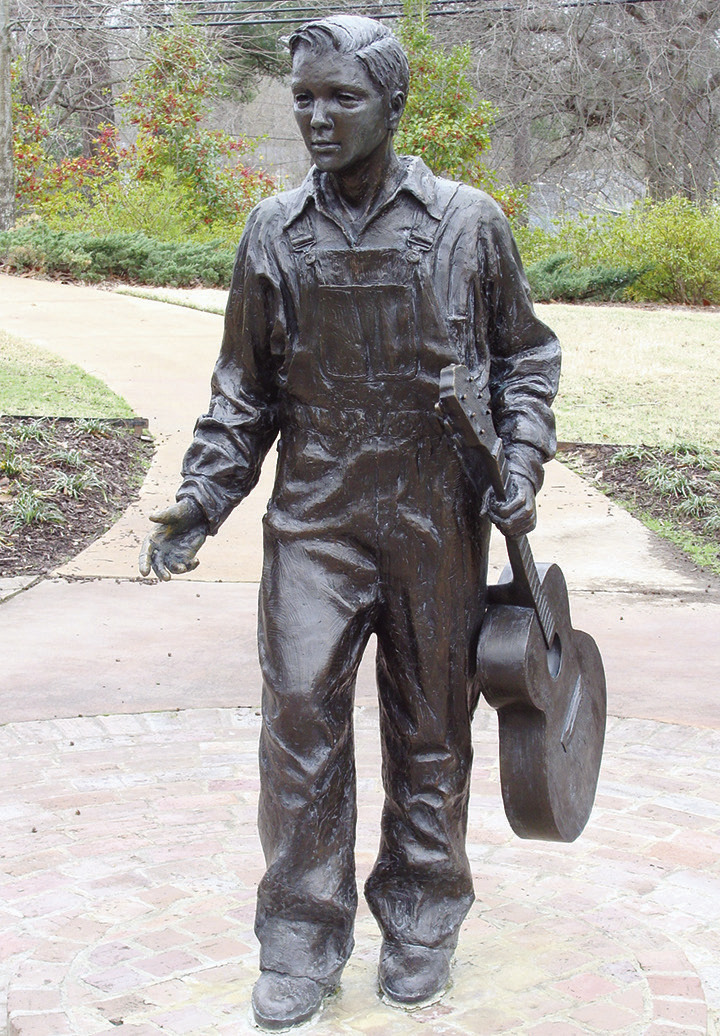
While you are at Tupelo, you might want to visit the birthplace of Elvis Presley and the church where he sang the gospel music he later recorded. The very modest house ain’t no Graceland.
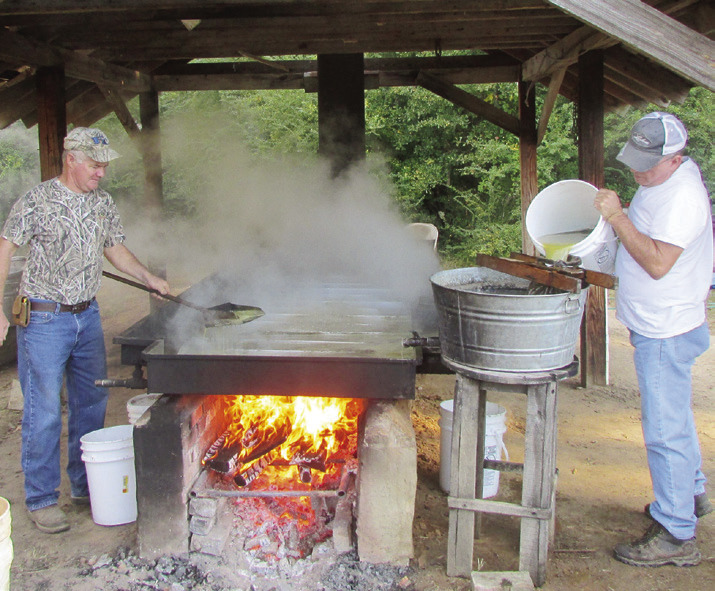
In addition to Grinder’s Stand, there are several other historic stand sites along the Trace. Most of them are identified only by signage because the buildings have long since disappeared. Among our favorite exceptions is French Camp where there is now a residential school for kids from disturbed and dysfunctional families who get a chance to learn and grow in a safe, nurturing environment. Shirley insists that we always stop there to support the efforts of the Academy and stroll through the Historic Village. The second weekend in October, their Harvest Festival includes sorghum making. The process is similar to maple sugar making except that the sugar source is sorghum canes rather than maple trees. It is called French Camp because Louis LeFleur established it as a stand and trading post with the Choctaw Indians in 1780.
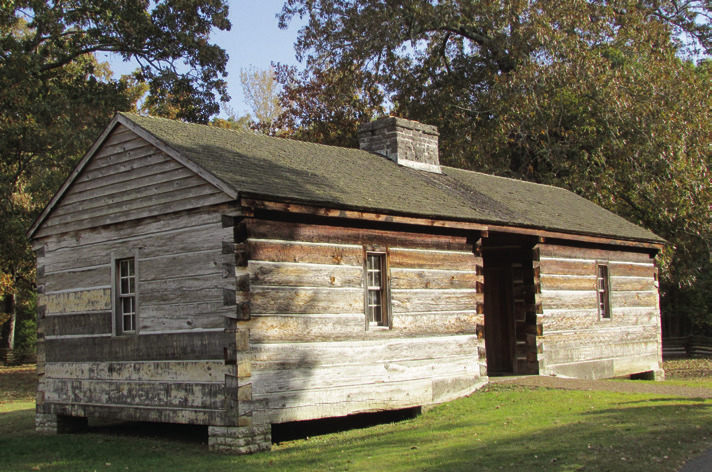
We find Mount Locust Stand fascinating because years ago we met Ranger Eric Chamberlain there. He was born in the stand as a fifth-generation descendant of the original owners. We thought this was pretty impressive, not only because his heritage went back more than 200 years, but because being born in the stand would be about as crude and unsanitary as you can imagine. This year we asked if he was still there. He is. In a manner of speaking. Chamberlain now sleeps with his ancestors in the family cemetery in a corner of the property. We walked out to pay our respects.
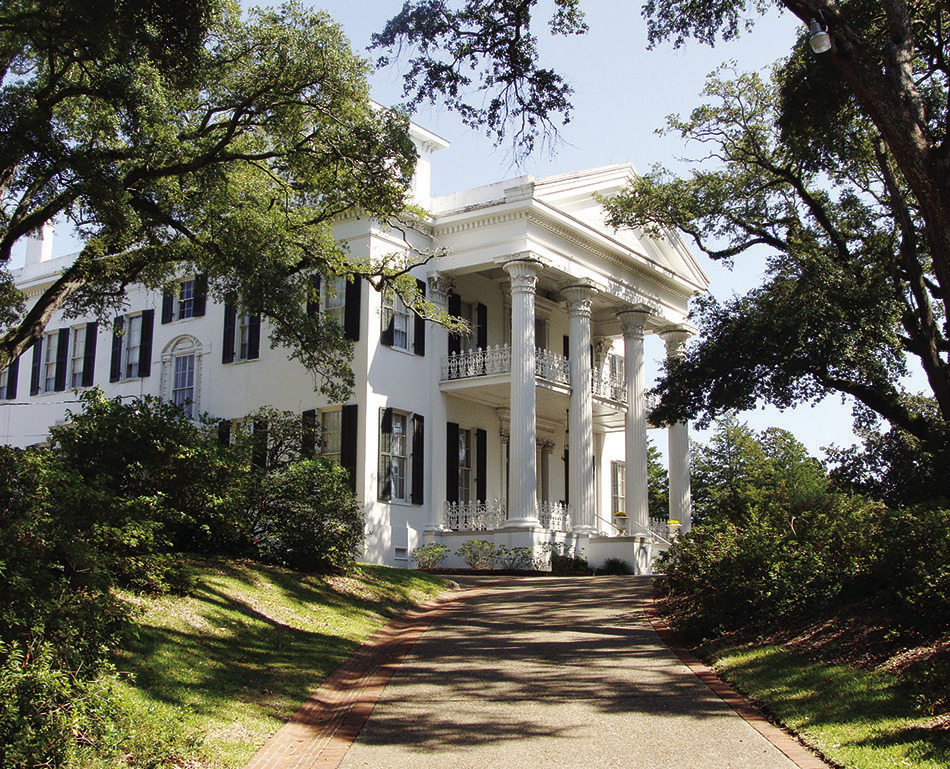
At the other extreme of accommodations are the opulent mansions of Natchez. None of the people who ask us about Natchez have any idea that it was once home to half the millionaires in the country. Their great wealth was based on cotton, which, in turn, was dependent on slave labor. Another little-known fact, as they say, is that 85% of the “free people of color” in the South lived in Natchez. They were of mixed race, typically the children of white plantation owners. In freedom they became prosperous skilled artisans, shop owners, and property owners themselves. One even became mayor of Natchez.
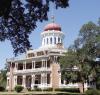
Fortunately for tourists today, the war that destroyed Vicksburg did not touch Natchez because the city had surrendered to Admiral Farragut after the fall of New Orleans. There are now opportunities to tour some especially magnificent places during the Spring and Fall Pilgrimages. Melrose, at Mile 0 of the Trace, is national park property and open year-round. Some are now upscale B&Bs that offer tours. Others are now private residences open to the public only during the Pilgrimages. Access to about a dozen mansions and their gardens is available through ticket packages that include three or four at a time. Architectural splendor, historical perspectives, and gracious hosts make the experience just a walk in the park.
You might want to see more of his stories and photos at AnotherWalkinthePark.blogspot.com. ✲