THIS SUMMER, SHIRLEY AND I spent two weeks in Yellowstone and then headed down to Grand Teton National Park. The two parks are connected by the 27 miles of the Rockefeller Memorial Parkway, which is also National Park property. I heard a tourist complain that Rockefeller bought up a lot of land in the area—as if that were a bad thing—evidently under the impression that it was for his personal use. In fact, John D. Rockefeller, Jr. was a major benefactor of the National Park Service. In addition to his donation of the 24,000 acres of land through which the parkway runs, he also bought 34,000 acres in Jackson Hole to help establish Grand Teton NP and made significant donations to Acadia NP, Great Smoky Mountains NP, and Virgin Islands NP. But I digress.
When asked to name our favorite park, I am inclined to say Yellowstone— the world’s first national park and still the best—because of its glorious scenery, thermal features, and wildlife. Shirley, however, claims it’s Grand Teton National Park. So, in my unending quest to mollify her, we are required to include the Tetons in every trip to Yellowstone. Please don’t throw me in that briar patch.
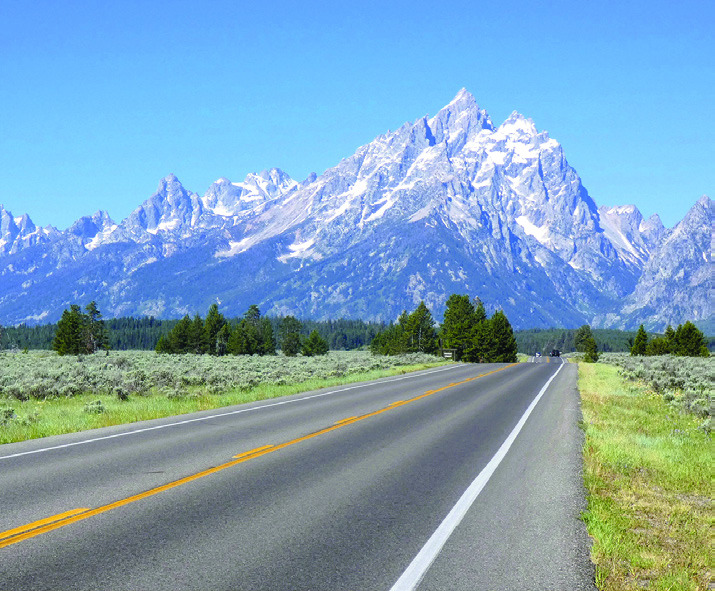
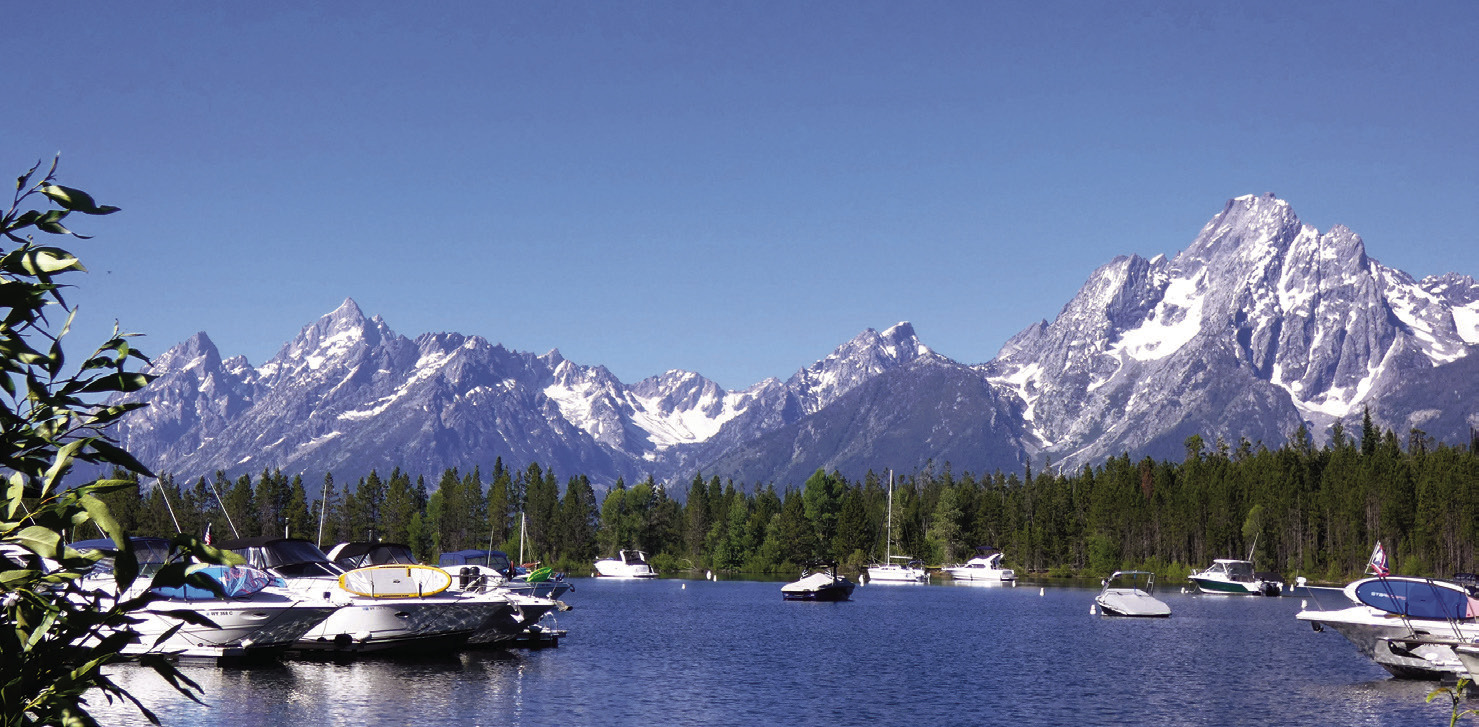
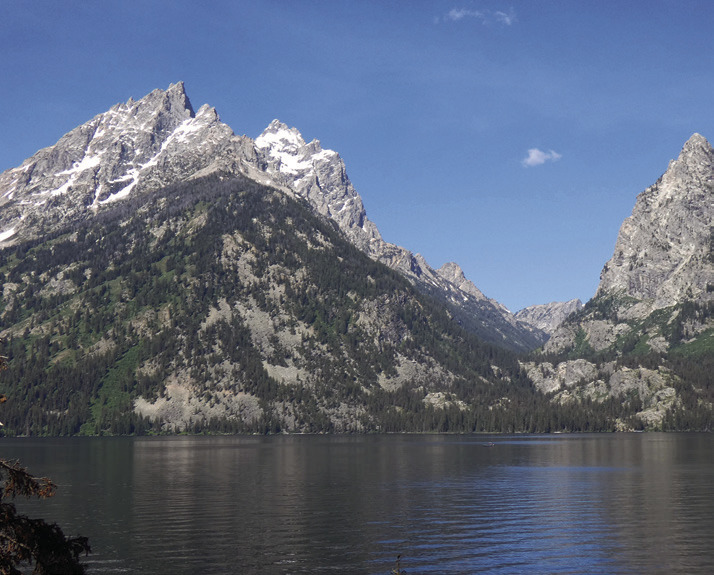
The spectacular scenery in the Tetons stems from the absence of foothills in front of the mountains. They rise directly from the floor of Jackson Hole like a great trumpet blast. (For those not offended by pedantry, Jackson Hole is the valley; Jackson is the town at the south edge of the park.) The mountains themselves are the main attraction but not the only one. There are picturesque lakes, waterfalls, and the Snake River meandering through the Hole. Wildlife includes bison, moose, elk, pronghorns, black bears, and grizzlies. You can have a perfectly satisfying visit without getting more than a few feet from your vehicle on the 42-mile scenic loop. Half of that distance is on the Teton Park Road on the west side of the Snake. On the east side is US Route 26 running parallel and connecting with Park Road in the north and south to form the loop.
Theoretically, you could see the Tetons without paying the park entrance fee of $35 per vehicle by taking Rt. 26 from Jackson to Moran. But that would be a foolish way to economize. If you plan to include Yellowstone with the Tetons, it makes much more sense to buy an America the Beautiful Pass. For $80 you get access to more than 2,000 federal recreation facilities for a year. If you are 62 or older, it gets even better. For $80 you can get a lifetime of access plus half off camping. The investment can easily pay for itself on your very first trip.
There are numerous pullouts on the Teton loop where, after you catch your breath, you can pose for photos in the required manner. Your photographer must capture you leaping wildly in the air, hands waving over your head, while you grin rapturously. Everyone under the age of 85 must, according to park rules, do it this way. Those using aluminum walkers can secure an exemption from a park ranger, but some with walkers can’t resist trying it anyway. Visitors from foreign lands manage to master the technique after only a couple practice jumps.
Pullouts provide numerous opportunities to see the same thing from various perspectives, all of which are magnificent. You should also take the short detour from the loop on the one-way Jenny Lake Scenic Drive with views across the lake to the mountains. Park literature says you can do Scenic Drive in 15 to 30 minutes. That is just one more thing that is theoretically possible but foolish.
In addition to gawking at the mountains, you might consider a range of other activities. Some of you, like us, are campers who will appreciate one or more of the five campgrounds in the park. All five require advance reservations through Recreation.gov and, since COVID, tend to book up six months ahead. Fortunately, there are commercial and national forest campgrounds just outside the park. Many visitors prefer to stay in the lodges or the Triangle X dude ranch, Flagg Ranch on the Roosevelt Parkway, or hotels in Jackson or over the ridge in Idaho.
But don’t assume the sizable number of alternatives means they won’t book up. Begin planning well in advance.
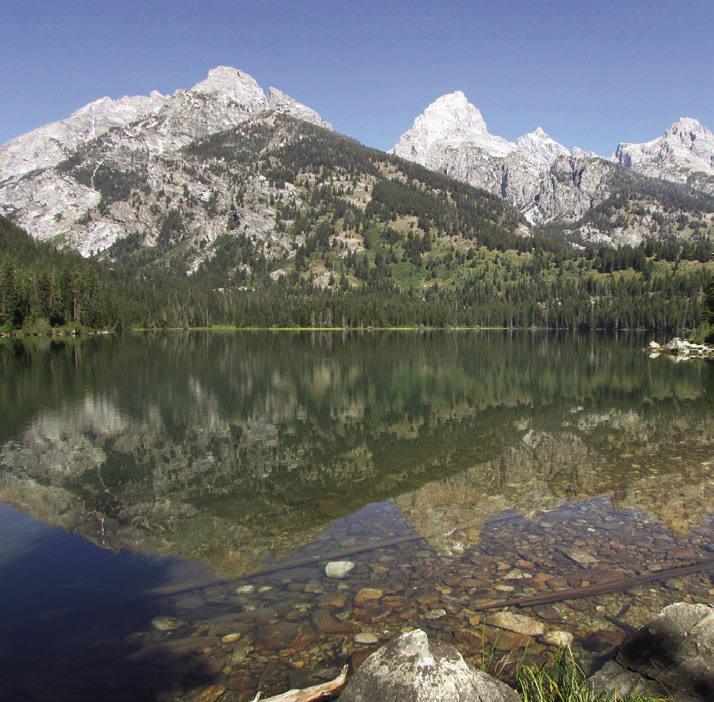
Once you have a place to stay, what are you going to do? There are more options than you might think. After you have enjoyed the vistas from the loop road, you might want to take a little walk in the park. There are more than 250 miles of trails of various difficulty and length. Our favorite is to Taggart Lake, which was created when a glacial moraine on the mountainside formed a natural dam. You could just walk the total of three miles up and back, but we prefer to continue around the end of the lake and circle back down via the Beaver Creek Trail for a total of about five miles. The trail follows the stream through meadows of wildflowers and provides still more vantage points from which to see the same thing.
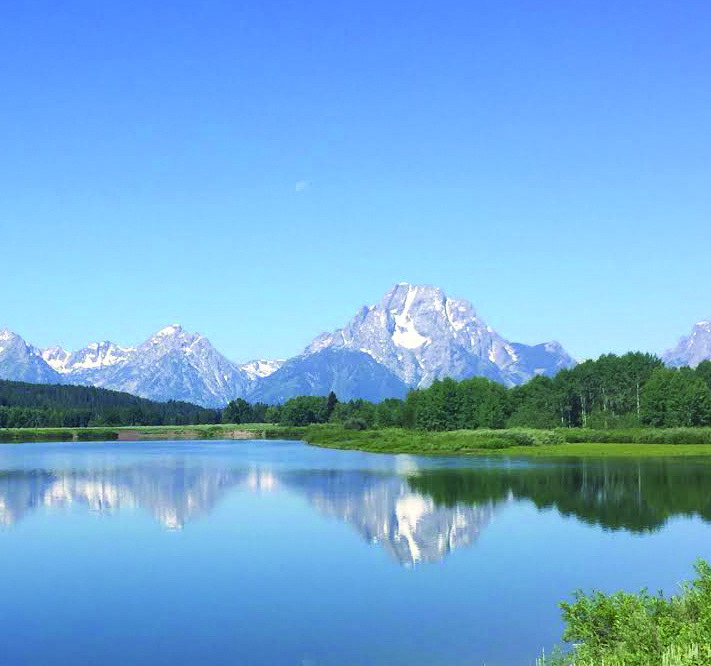
For years, our tradition was to hop out from the shore to our “lunch rocks” in Taggart Lake to enjoy our trail bars and fruit in peaceful solitude. That ain’t happening anymore. This year, the parking lot was full and vehicles lined both sides of the road for .7 mile by actual measurement. Don’t let this discourage you. Start early. Our neighbors Beth and Pat went to the Tetons for the first time this summer. Beth, a professional photographer, said it was their favorite hike as well and returned with a marvelous photo of the mountains reflected in the lake.
A bike path, very popular with families, runs parallel with the park road. If you didn’t bring your own, both regular bikes and e-bikes are available for rent in Jackson and at Dornan’s inside the park. There are also guided bike tours for those who prefer to have someone explain what they are looking at.
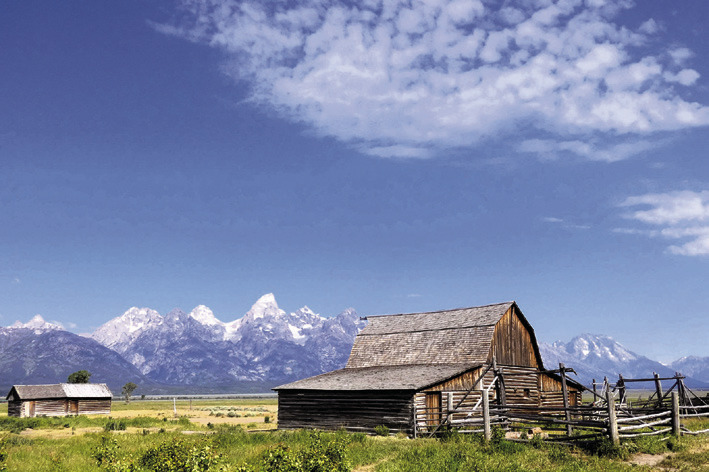
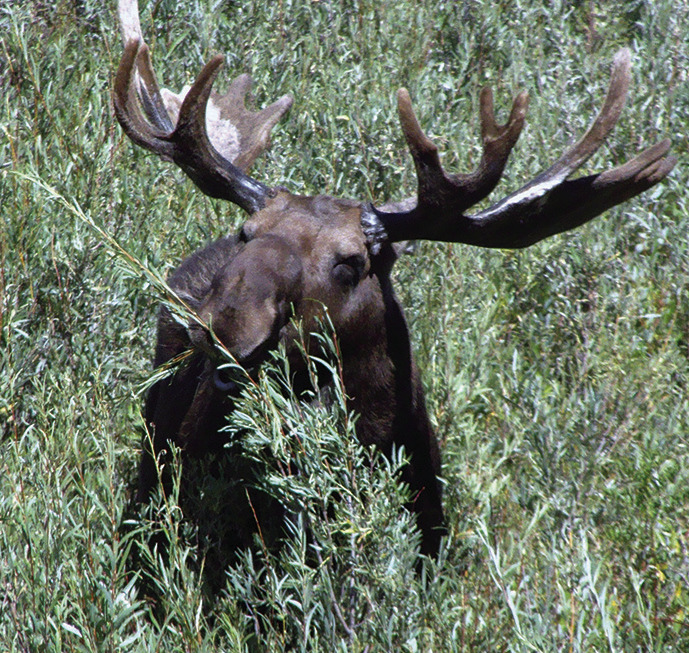
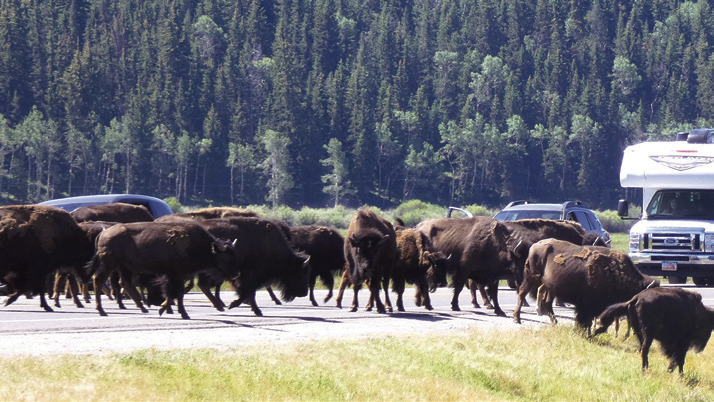
A favorite destination for these bike tours is Mormon Row out in Antelope Flats, the open prairie on the east side of the Snake River. The Row, naturally, takes its name from the area settled by a small community of Mormons. There are preserved and restored homes, barns, and outbuildings with the mountains in the background. Quite photogenic. Sometimes the Flats can also be a good place to see bison and pronghorns. Moose hang out in the willows near the Snake and Gros Ventre Rivers as well as the creeks that feed the rivers. But bison and pronghorns go where they want to go. This year, we saw none at all in the Flats but there were significant herds a few miles north of the Triangle X Ranch.
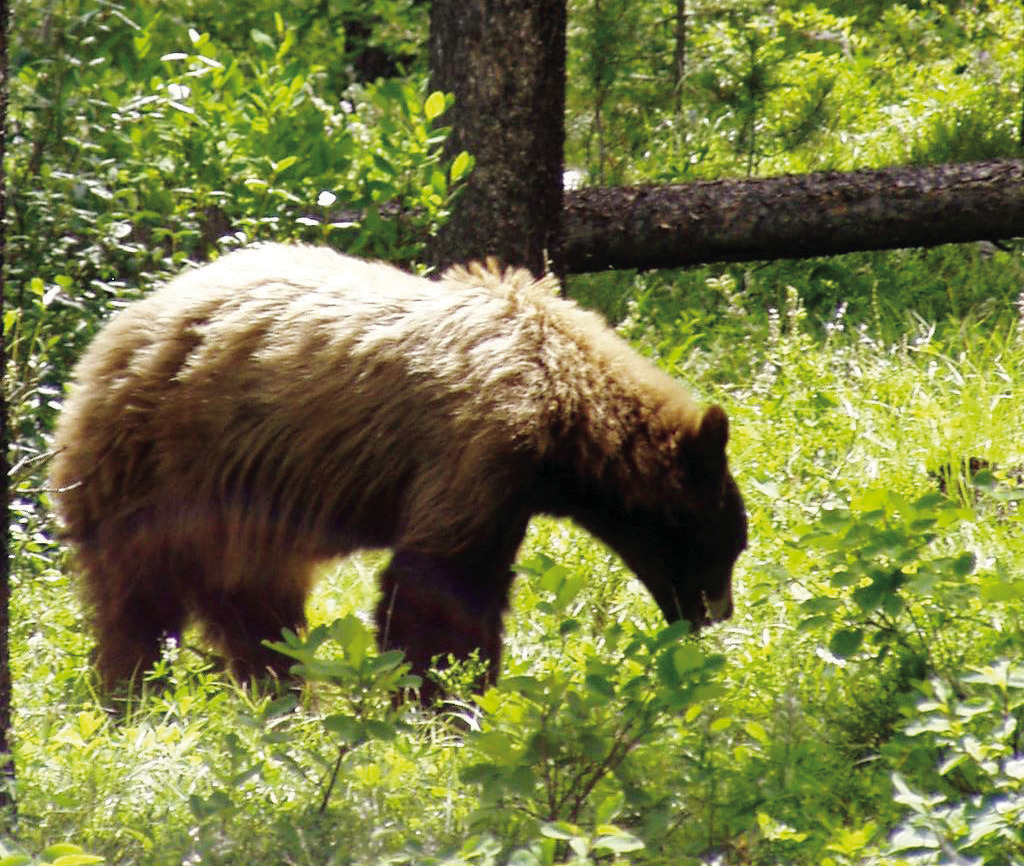
Visitors often have conflicted attitudes toward bears. Everyone wants to see bears, but some hesitate to go places where they might have unpleasant encounters. Actually, with the increase in the number of hikers, there seems to be less likelihood of seeing a bear. Generally speaking, bears mind their own business unless they are surprised on the trail, approached too closely, or have cubs. The sound of a few dozen hikers stomping down the trail is usually enough to persuade a bear to quietly move off. Odds are you will never know that you were within a few yards of one. With that said, the Park Service suggests carrying bear spray in the back country. You can buy or rent it in the park or in Jackson. (If you plan ahead, you can save a few bucks online.) You might want to carry it within easy reach instead of tucked away in your backpack. And read the instructions instead of waiting until the very last second to figure out how to use it. There is a story, probably apocryphal, of a woman who used it on her children under the impression that bear spray works like bug spray.
Back in the Olden Days, Shirley and I used to be ignored by bears that were busy feeding in the thimbleberries. On one trip, however, we went looking for a good place to access the river for fishing. A bear casually joined us in a small clearing in the stream-side willow bushes. He obviously had heard us talking so was not surprised or annoyed by our presence. He gave no signs of aggression and pretended to ignore us as we slowly and nonchalantly vacated the area. If you don’t want to be treated like prey, you probably shouldn’t act like prey by running—which wouldn’t work anyway.
We did not see that bear until he wanted to be seen. Which reminds me of two college students who were doing research for the Park Service. One was carrying a full-size plywood silhouette of a bear and the tab end of a large reel measuring tape. The other held the reel and a clipboard. The silhouette was carried into the woods so they could measure how far it could be seen. Think of it as a variation on the old Verizon “Can you hear me now?” commercials. As you can undoubtedly guess, even without the official study results, it depends entirely on the terrain. You may not see a bear 20 yards or even 20 feet away in willows or a berry patch, but it would be clearly visible quite a distance in other places. As the Charmin folks will testify, bears value their privacy when doing what they do in the woods.
There are numerous options for trout fishing in the rivers, small streams, and mountain lakes both in the park and in the surrounding national forests. Guides can take you drift boat fishing on the Snake, and you might enjoy white-water rafting in the canyon stretch just downstream from Jackson. A float trip also increases your opportunities to see all kinds of wildlife—moose, elk, bears, eagles, pelicans, swans.
The usual view of the mountains is from the bottom up, but, even if you don’t hike, there are places to see things from the top down. Jackson is a major ski resort. Just inside the park on the Moose-Wilson Road is the Teton Village Scenic Aerial Tram Ride to the top of 10,455-ft. Rendezvous Mountain. The view from there is north along the ridgeline of the Teton Mountain Range and Jackson Hole. Or, you could take Signal Mountain Road to the summit for views of the Hole and the mountains rising behind Jackson Lake. You might even be able to hear the calls of sage grouse way down in the Hole. Sunset behind the mountains turns the sky all pink, purple, and yellow. Even better, if you are up to it, is sunrise when the first rays of light touch the east-facing slopes. Either way, you can’t go wrong.
We have also seen grizzlies feeding along Signal Mountain Road. At one bear jam, there was a geezer doing his very best Daniel Boone impression, skulking up closer to get photos of a couple young bears.
Shirley turned to the woman next to us and said, “What does that fool think he is doing?”
The woman replied, “That’s my husband and you’re right—he is a fool.”
Our theory is that God provided us with zoom lens for situations like this. Bears are mostly vegan, but, like all vegans, they sometimes cheat on their diet. When they do, it might not turn out to be the usual walk in the park.
You might want to see more of his stories and photos at AnotherWalkinthePark.blogspot.com. ✲