ORGAN DONATION AND BLOOD DONATION gifted Harvey J. Steele with 20 additional years of life.
Harvey, who had a self-proclaimed “face for radio,” was lucky enough to get paid for doing what he loved. When he was a toddler, Harvey created a pretend radio station out of a cardboard box. In elementary school, Harvey and his father built a fully functioning transmitter, which allowed him to broadcast live from his bedroom on his licensed radio station titled WOW. When he was 12 years old, Harvey began his radio career by reading the news on Eastern Illinois University’s campus radio station. He went on to call play-by-play of his high school sports teams, spun Top 40 hits in college, and advanced to program director at a country music station after college. In 1981, Harvey was hired as an on-air personality at WTOD in Toledo, where he planned to stay for two years before moving to a bigger market. But Toledo became home. After 13 years at WTOD, Harvey moved down the hall of the Cumulus Toledo building to K-100, where he and Gary Shores partnered together to make 23 years of radio magic as Shores & Steele.
Harvey was thankful that his listeners/friends and K-100 gave him a platform to make his mark on the community. He volunteered countless hours for numerous organizations, but the one closest to his heart was Life Connection of Ohio, the non-profit organization that serves families and saves lives through organ donation.
Rewind to July 1997. Harvey started to slow down. His energy was slipping away from him. His skin and the whites of his eyes turned yellow seemingly overnight. His stomach retained liters of fluid. One trip to the doctor, and he was diagnosed with end-stage liver disease. The only hope for him to survive was a liver transplant.
Harvey was placed on the national transplant waiting list in August 1997. At that time, there were approximately 53,000 people waiting for a life-saving organ transplant in the U.S. (Now, there are over 100,000!) In September 1997, Harvey’s health took a cliff dive, and his new home became the 11th floor of the Cleveland Clinic so he could be monitored 24/7. His wife used to call him the Energizer Bunny—he was always full of energy and incredibly busy—but liver failure turned him into a frail, jaundiced man who could not even walk.
Then, on November 5, 1997, a miracle happened. Harvey received the liver transplant that he so desperately needed. After his 13-hour surgery, he started looking like himself again. And his gift came just in time—doctors said if he did not receive a transplant, he would not have made it through the week.
After his transplant, Harvey resumed his Energizer Bunny status, and he was determined to make the most of his second chance at life. No matter how busy he was, he always made time to do everything humanly possible to spread the word about organ donation. He never said “no” to those opportunities because he was so thankful that someone said “yes” and saved his life.
Sadly, Harvey passed away on December 28, 2017. He did so much good in his 60 years of life, but the legacy he left from his last 20 years—all made possible because of organ donation and blood donation—is incredible. He made his mark on the community, and he created a life-saving ripple effect that knows no end.
Not to mention the impact he left on his daughter, who is writing this story. So, I guess I should introduce myself! I’m Kara Steele, the Director of Community Services at Life Connection of Ohio. I blame my father for my career in the best possible way. I am so grateful for the donor hero and their family whose decision meant I was gifted 20 more years with my father.
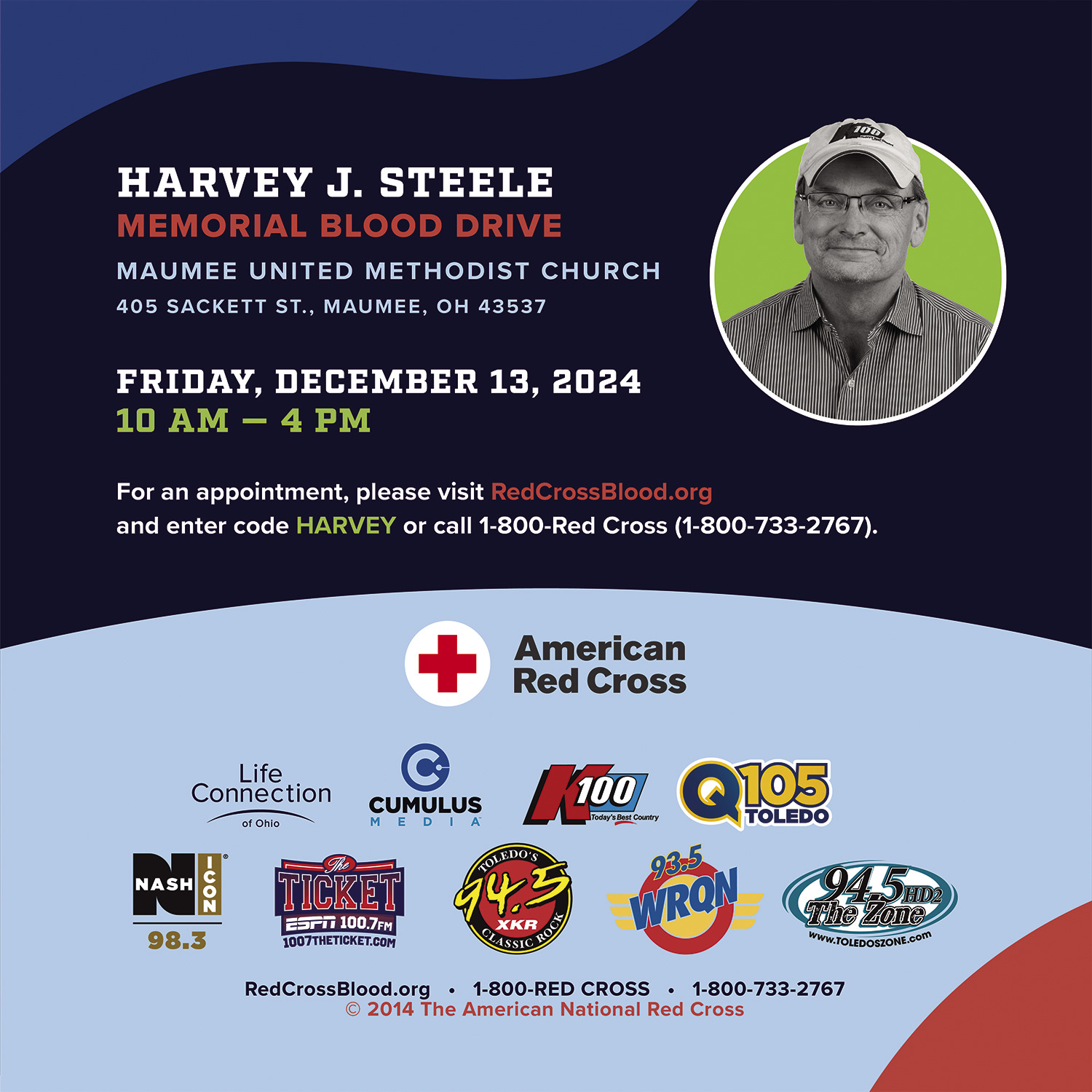
To celebrate his life—and in gratitude for the life-saving blood products he received along with his liver transplant—the community is invited to give blood at the fifth annual Harvey J. Steele Memorial Blood Drive. The big event is set for Friday, December 13, from 10:00 a.m.– 4:00 p.m. at Maumee United Methodist Church (405 Sackett Street, Maumee). For an appointment, please visit Red-CrossBlood.org and enter the code HARVEY or call 1-800-RED-CROSS.
✲