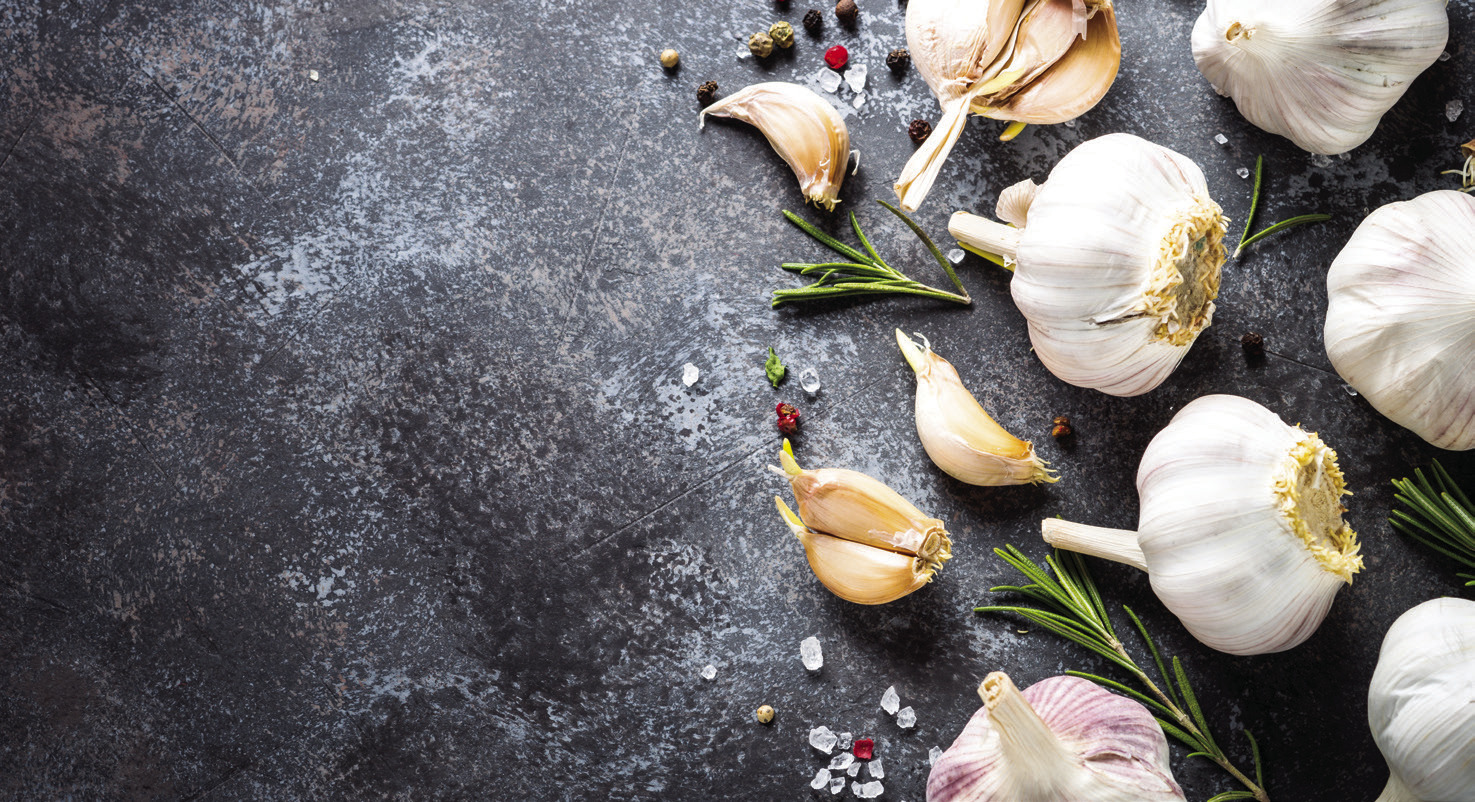
WHAT WARDS OFF vampires, protects against the “evil eye,” enlivens your love life, keeps jealous nymphs at bay, once served as a form of currency, and imparts a wonderful flavor to all kinds of cooking? If you answered “garlic,” you obviously know your folklore and very likely hold this pungent bulb in very high esteem.
Okay, the part about the vampires, evil eye, and nymphs might be a bit farfetched. And garlic as an aphrodisiac? Well, that, too, may be a stretch considering the notorious relationship between garlic and halitosis. But the part about imparting a wonderful flavor to all kinds of cooking is indisputable.
Affectionately dubbed the “stinking rose,” garlic is actually a member of the lily family and is closely related (perhaps not surprisingly) to onions, chives, shallots, and leaks.
Though we tend to associate garlic with Mediterranean, especially Italian, cooking, it is also commonly used to season dishes in Asia, Africa, and Europe. The use of garlic in the US was restricted primarily to certain ethnic cuisines—and, hence, to certain ethnic neighborhoods—until around 1940 when the rest of the country finally wised up to the bulb’s potential as an ingredient in cooking. It’s noteworthy that garlic has a longstanding reputation as a medicinal food. Monks in the Middle Ages believed garlic could protect against plague (though the subsequent plague-related death of millions of Europeans—many of whom, no doubt, ate garlic—might suggest otherwise). Hippocrates used garlic to treat cervical cancer. World War II medics made garlic poultices to treat wounds when antibiotics were in short supply.
Today, scientists recognize garlic for its antioxidant properties as well as its influences in lowering LDL cholesterol, thinning blood to prevent clots that could cause stroke or heart attack, and many additional health benefits. And, at just four calories per clove, it’s easy to reap all the health benefits of garlic without adding to your waistline.
Anyone who’s ever cooked with garlic understands how it came to be known as the “stinking rose.” But what’s behind that powerful aroma? When we cut, press, chew, or cook garlic, thereby rupturing the cells, an enzyme called allinaise is released, which changes the compound alliin, also present in garlic, into allicin. Sulfurous allicin molecules cause that characteristic garlicky smell. They also get absorbed into the bloodstream and lungs, causing garlic breath and, in the case of people who consume large quantities of garlic, even a garlicky body odor.
For many, though, the flavor garlic imparts to recipes—not to mention that sense of contentment one experiences when the heady aroma of garlic permeates the kitchen—is well worth the social implications.
Here are a few helpful hints to remember when cooking with garlic:
• When sautéing garlic, take care not to burn it lest it turn bitter.
• The finer you chop raw garlic, the stronger the flavor.
• One clove of finely pressed or minced raw garlic adds more flavor than a dozen cooked, whole cloves.
• Using a garlic press eliminates the need to peel the clove. After pressing, the skins are left behind in the tool cavity and are easier to discard.
• Green sprouts emerging from the center of each clove can be bitter tasting and should be discarded before chopping garlic—though some people find the flavor appealing when the sprouts are used like chives in a salad.
• Cooking or baking whole cloves results in a sweet, nutty flavor with little or no pungency. When selecting garlic, look for heads that are firm and undamaged. Pass up heads exhibiting dark, powdery patches underneath the skin as this is a form of mold that will eventually spoil the clove. Unpeeled garlic heads should be stored in a cool, dry location—not the refrigerator or freezer—where they will keep for up to three months. Individual cloves can be expected to hold up for five to ten days in proper storage. Garlic stored in olive oil or vegetable oil, however, must be kept refrigerated to prevent the growth of harmful bacteria.
If you’d like to experiment with garlic for its culinary benefits rather than as a talisman against vampires, nymphs, or the evil eye, give these recipes a try:
4 skinless, boneless chicken breasts Salt and pepper to taste 3/4 pound fresh mushrooms, sliced 2 Tbs. all-purpose flour 2 Tbs. olive oil 6 cloves garlic 1/4 cup balsamic vinegar 3/4 cup chicken broth 1 bay leaf 1/4 tsp. dried thyme 1 Tbs. butter Season the chicken with salt and pepper. Rinse the mushrooms and pat dry. Season the flour with salt and pepper and dredge the chicken breasts in the flour mixture. Heat oil in a skillet over medium high heat and sauté the chicken until it is nicely browned on one side (about 3 minutes).
Add the garlic. Turn the chicken breasts and scatter the mushrooms over them. Continue frying, shaking the skillet and stirring the mushrooms. Cook for about 3 minutes, then add the vinegar, broth, bay leaf, and thyme. Cover tightly and simmer over medium low heat for 10 minutes, turning occasionally.
Transfer the chicken to a warm serving platter and cover with foil. Set aside. Continue simmering the sauce, uncovered, over medium high heat for about 7 minutes. Swirl in the butter or margarine and discard the bay leaf. Pour this mushroom sauce mixture over the chicken and serve.
Garlic mushrooms
8 ounces mushrooms 1/2 ounce butter 2 cloves garlic, crushed Dash hot pepper sauce Salt and pepper Wash and dry the mushrooms. Melt the butter in a small pan, then add mushrooms and cook at a medium heat for a couple of minutes, stirring constantly. Add the garlic. Continue cooking and stirring for another minute or so. Stir in a dash of pepper sauce and season with just a touch of salt and pepper.
Reduce heat to minimum, then cover with a tight-fitting lid. Leave the garlic mushrooms to sweat for at least ten minutes, stirring occasionally.
Baked garlic
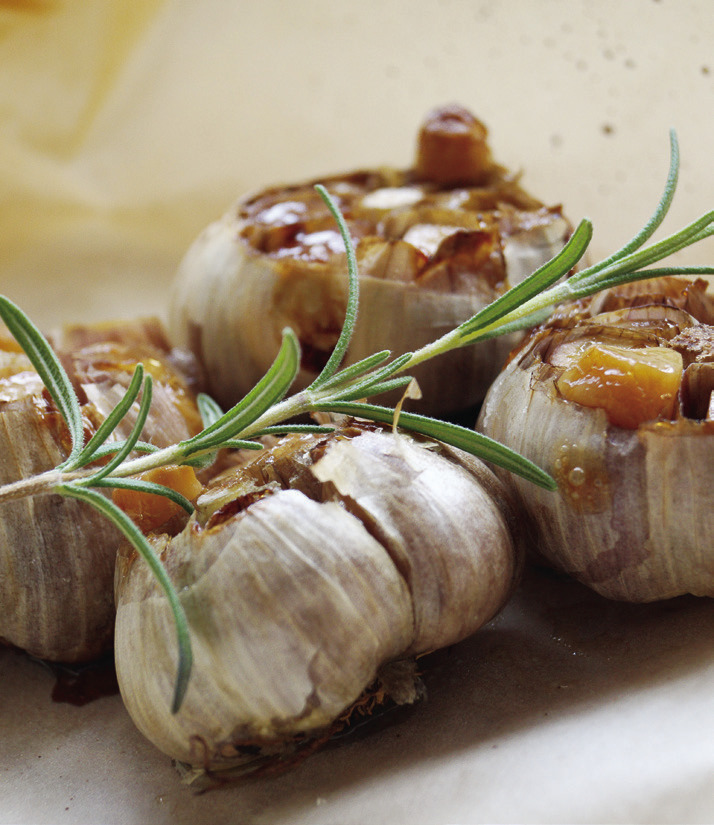
Garlic bulbs Olive oil Thyme leaves Butter Remove loose outer leaves. Cut off tops of bulbs so that each clove is open at the top. Cloves must be pierced for steam release. Drizzle one quarter olive oil over each bulb and dot with butter. Sprinkle each bulb with a few thyme leaves. Place in baking dish and cover.
Oven: Place in a cold oven. Bake at 300 for one hour. Remove cover and bake for additional 20 minutes or until tender. Baste occasionally with olive oil.
Microwave: Cook at full power for 4 minutes. Allow to cool. ✲