A NEW-TO-THE-REGION TREATMENT at The University of Toledo Medical Center can significantly improve the shakiness and movement problems experienced by patients with Parkinson’s disease and other movement disorders.
UTMC is the first and only hospital in the region to offer deep brain stimulation therapy, an advanced neurosurgical procedure that works by using tiny electrodes to modulate the brain’s electrical signals.
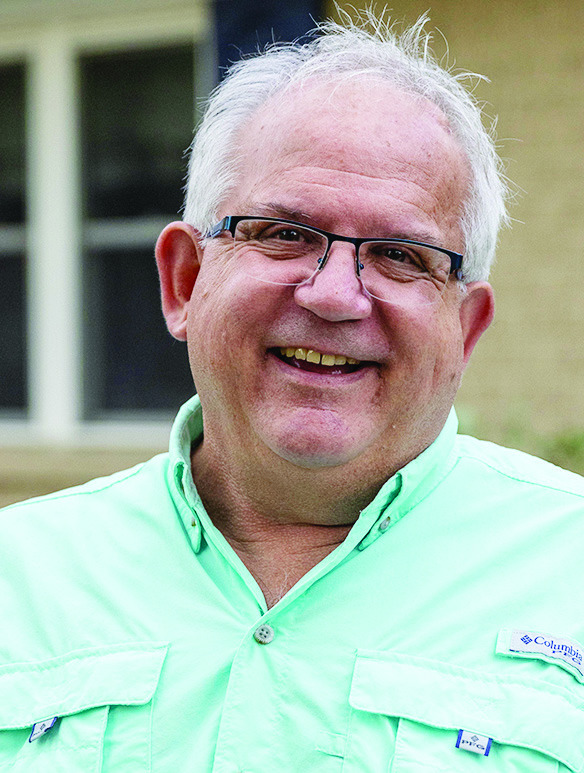
More than a million Americans are estimated to be living with Parkinson’s, and tens of millions suffer from some degree of essential tremor, said Dr. Alastair Hoyt, a UTMC neurosurgeon who specializes in deep brain stimulation therapy. “These are serious, life-altering diseases,” Hoyt said. “While the treatment won’t slow the progression of Parkinson’s, it can make a big difference in the movement issues that come with the disease. We can significantly reduce tremors, and we’re also really good at improving the stiffness and slowness of movement that comes with Parkinson’s.”
Essential tremor is a condition that most often causes shakiness in the hands but can also affect a patient’s voice and even lead to full body shaking. Deep brain stimulation can reduce tremors in these patients by up to 80%.
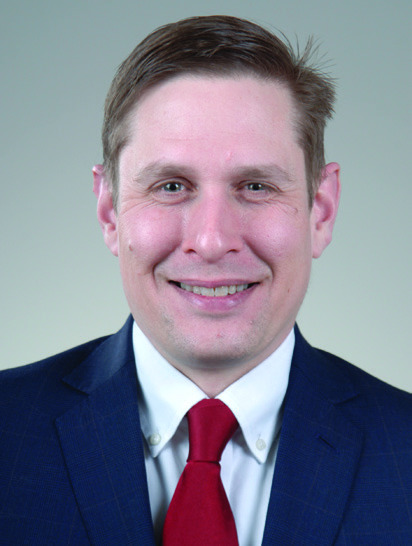
Steve Brown, a 67-yearold public school teacher who suffers from essential tremor, was among the first patients to undergo the procedure at UTMC. “Every aspect of life that you can think of was impacted by the tremor,” he said. “It’s not fully back to normal since the surgery, but every day I’m discovering I can do that with my right hand again. It has been life-transforming.”
Brown, who has a family history of essential tremor, first developed symptoms in his 40s, but his tremor worsened in recent years, robbing him of his ability to legibly sign his name, forcing him to pull back on hobbies, and making everyday tasks as simple as carrying a cup of coffee through the house seem Herculean.
When one medication didn’t work and another caused significant side effects, he chose to undergo the procedure at UTMC. “I knew what the tremors were doing to my body, but I didn’t realize how depressed I was,” he said. “It’s been a world of difference. I finally kind of got my mojo back, and instead of feeling 80, I’m feeling 60. I’m able to write cursive all the sudden. I couldn’t even print my name before. I would do it again in a heartbeat.”
The deep brain stimulation procedure is the same whether being done to treat Parkinson’s or essential tremor. Under sedation, two small holes are made in the skull through which probes are inserted into the brain. The patient is then awakened and asked to do a series of tests while the device is powered on to help the surgeon zero in on precisely the right spot. After the patient is put back under general anesthesia, the surgeon fixes the electrodes in place and inserts the control and power module under the skin in the chest.
About 85% of patients, Hoyt said, are discharged the day after surgery.
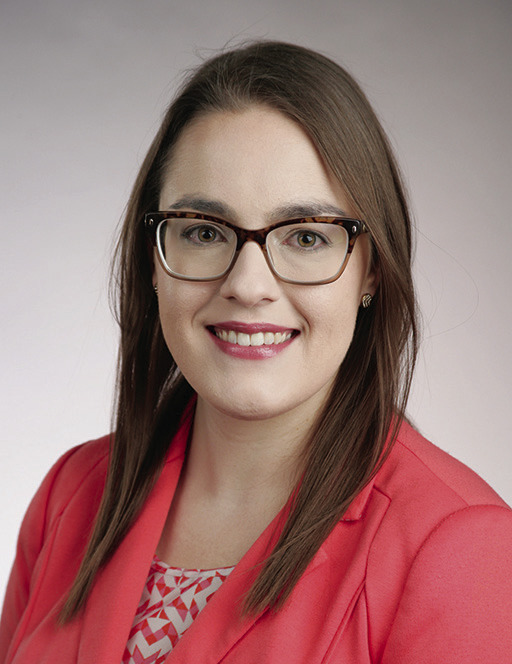
Though it might sound like science- fiction, the procedure has been approved for use in the United States for more than two decades. “It’s not the experimental treatment that a lot of people think it is,” said Dr. Jennifer Amsdell, a neurologist and movement disorder specialist at UTMC who also treats Brown. “Deep brain stimulation is a well-tested, well-established option for certain patients suffering from essential tremor or Parkinson’s disease.”
While Parkinson’s is less prevalent than essential tremor, Hoyt and Amsdell said Parkinson’s patients make up the majority of deep brain stimulation therapy procedures. Part of the reason for that, Amsdell said, is the benign nature of essential tremor. Because it doesn’t signal or cause patients harm on its own, treating it isn’t always seen as a priority. “Sometimes patients are told it’s just essential tremor, it’s benign, it only causes tremor,” she said. “But it affects people’s ability to carry out their activities of daily life, their ability to write, their ability to use tools, their ability to feed themselves in many cases. It can affect your balance. Even though it’s ‘just a tremor,’ it really impacts people’s lives. For people who have tremor that’s not responding to medication or have Parkinson’s with complicated medications or side effects to medications, there’s hope in this option.”
Amsdell encourages patients who fit those criteria to talk to their primary care physician about the possibility of deep brain stimulation therapy.
Individuals also can call UTMC’s Multidisciplinary Movement Disorders Clinic at 419-383-3759 for more information.
✲