
AS OUR POPULATION GROWS OLDER, neurological conditions such as stroke, epilepsy, seizure disorders, brain tumors, and dementia are becoming more common across the nation. In fact, each year, more than 50 million Americans experience a disorder of the brain or nervous system.
Recognizing the growing need for advanced therapies, cutting-edge technologies, and specialized expertise to address this trend in our community, Mercy Health recently invested over $19 million to expand the Mercy Health – Neuroscience Institute at Mercy Health – St. Vincent Medical Center.
“The expansion of the Neuroscience Institute will grow capabilities and allow us to serve more patients facing critical neurological illnesses close to home,” says Jeff Dempsey, president, Mercy Health – St. Vincent Medical Center. “We’re proud to expand access to the latest treatments in brain, spine, stroke and neurological care to patients in our community.”
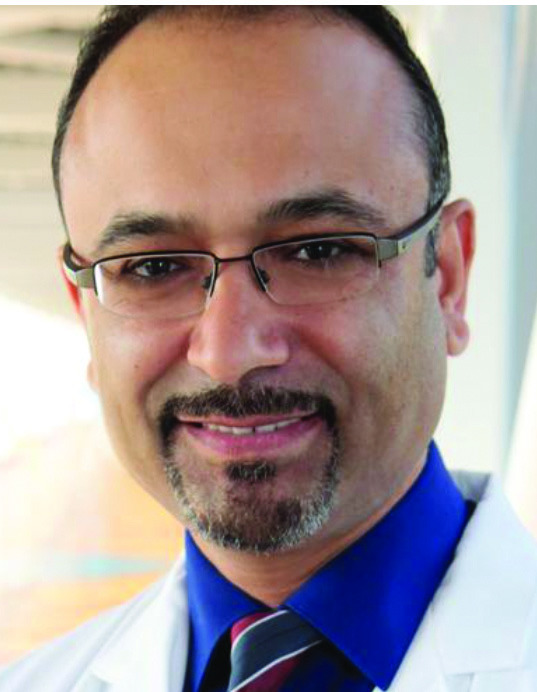
According to neuroendovascular surgeon Sam Zaidat, MD, Chair of the Department of Neuroscience, and Stroke Medical Director for Mercy Health – St. Vincent Medical Center, “This investment strengthens our ability to provide comprehensive, multidisciplinary neurological care that starts when patients enter the emergency room, follows them when they’re in acute care in the hospital, and continues right through neuro- rehab to help reintegrate them into the community. We have the technology, physicians, nursing staff, and environment to cater specifically to this patient population.”
The Mercy Health - Neuroscience Institute offers access to a comprehensive range of neurological specialties, including neurosurgery, neuroendovascular care, and inpatient neurology as well as a dedicated Epilepsy Monitoring Unit (EMU). Also located within the Neuroscience Institute is a16-bed Neuro ICU staffed with board-certified neuro-intensivists, which is designed to provide patients with a private, comfortable, and specialized environment for treatment and recovery.
Dr. Zaidat emphasizes that the ability to access comprehensive neurological services locally and in a central location is vital for patients—and not just from the standpoint of convenience and cost. “Having to seek care at distant facilities puts stress on patients that can actually affect their recovery. It’s always our aim and our goal to keep our patients close to home and family. The Mercy Health leadership and administration believe in this as well, so they ensure we have all the resources and support we need to offer the highest level of care right here in the community,” he says.
In addition to offering comprehensive, seamless neurological care, the Mercy Health – Neuroscience Institute is a leader in clinical research— especially in the area of stroke treatment and prevention—and offers a wide range of clinical trials that help bring the latest advances and breakthrough therapies to Northwest Ohio. Some of these trials are designed and conducted in collaboration with international partners while others are available only at the Mercy Health – Neuroscience Institute. “We’ve really established ourselves as a go-to for clinical trials,” says Dr. Zaidat. “People who come here know we’re pioneers in research and on the leading edge in the advancement of science.”
Dr. Zaidat notes that people experiencing a stroke, or “brain attack,” should be seen within 24 hours of symptom onset in order to minimize the risk of long-term disability. However, he emphasizes, the sooner they seek help, the better, stating, “The faster stroke patients can reach a state-of-the-art interventional center like ours, the faster we can initiate treatment, restore their function, and get them back to their lives and loved ones.”
Among the many recent advances in stroke care, Dr. Zaidat is especially enthusiastic about a revolutionary aspiration device that very quickly removes blood clots to restore blood flow so stroke patients can recover more rapidly, as well as a unique new oral medication (currently available only to clinical trial participants) that appears to be significantly more effective at preventing secondary strokes than the use of aspirin or other blood thinners. “We’re very excited to be on the leading edge with new technologies and medications,” he says.
Looking to the future, Dr. Zaidat’s next objective for the Mercy Health – Neuroscience Institute is to develop and implement a new approach to the treatment of patients with early Alzheimer’s disease or other forms of cognitive dysfunction—and work to fulfill this hopeful vision is already in progress.
Dr. Zaidat also expresses his gratitude to all the individuals and organizations that made the expansion of the Mercy Health – Neuroscience Institute possible, stating, “We are very thankful to our donors and community partners, the Mercy Health Foundation, and the president of Mercy Health’s Toledo market who all supported this project and advocated to get the resources we need to provide comprehensive, multidisciplinary neurological care and services here in Northwest Ohio.” ✲