Sponsored by Wood County Park District
YOU ARE FAMILIAR with examples of ancient monuments such as Stonehenge and Machu Picchu. You may also know that they functioned as observatories. The ancients did not have sophisticated telescopes or infrared radar technology for observing the night sky, but they did have a keen interest in carefully noting recurring patterns in the heavens for religious and practical purposes. Knowing the dates of summer and winter solstices or the vernal and autumnal equinoxes has all kinds of benefits ranging from when to plant the sweet potatoes to when it is time to pick up and move to a new location.
Often, the ancient observatories were based on the precise time when the rising sun sent a shaft of light through a narrow opening, focusing on a specific spot in an otherwise dark chamber. When archaeologists are excavating a site, they are on the alert for indicators such as the location of small portholes and narrow slits in rock walls. Sometimes they conclude that the location is not a solar observatory but dedicated to some other astral phenomenon.
The oldest such observatory was discovered at Gobekli Tepe in Turkey and dedicated about 12,000 years ago to tracking Sirius, the Dog Star. Much later, in 4,241 BC, the Egyptians did something similar because they had found that once a year Sirius rose in direct line with the rising sun in the middle of the Nile flood season. They made that day the beginning of their year and were the first to establish a solar calendar. But the solar year is not precisely 365 days, so occasionally, as with our leap years, they had to adjust it.
With that said, many civilizations tended to hold on to a lunar calendar. The Chinese New Year is lunar, for example, though modern Chinese follow our common calendar. There are also Hebrew and Islamic religious calendars that are based on that of the ancient Babylonians. Christmas is always Dec. 25, but Easter is a “movable feast” that occurs on the first Sunday after the first full moon following the vernal equinox. It fell on April 9 this year but will occur on March 31, 2024.
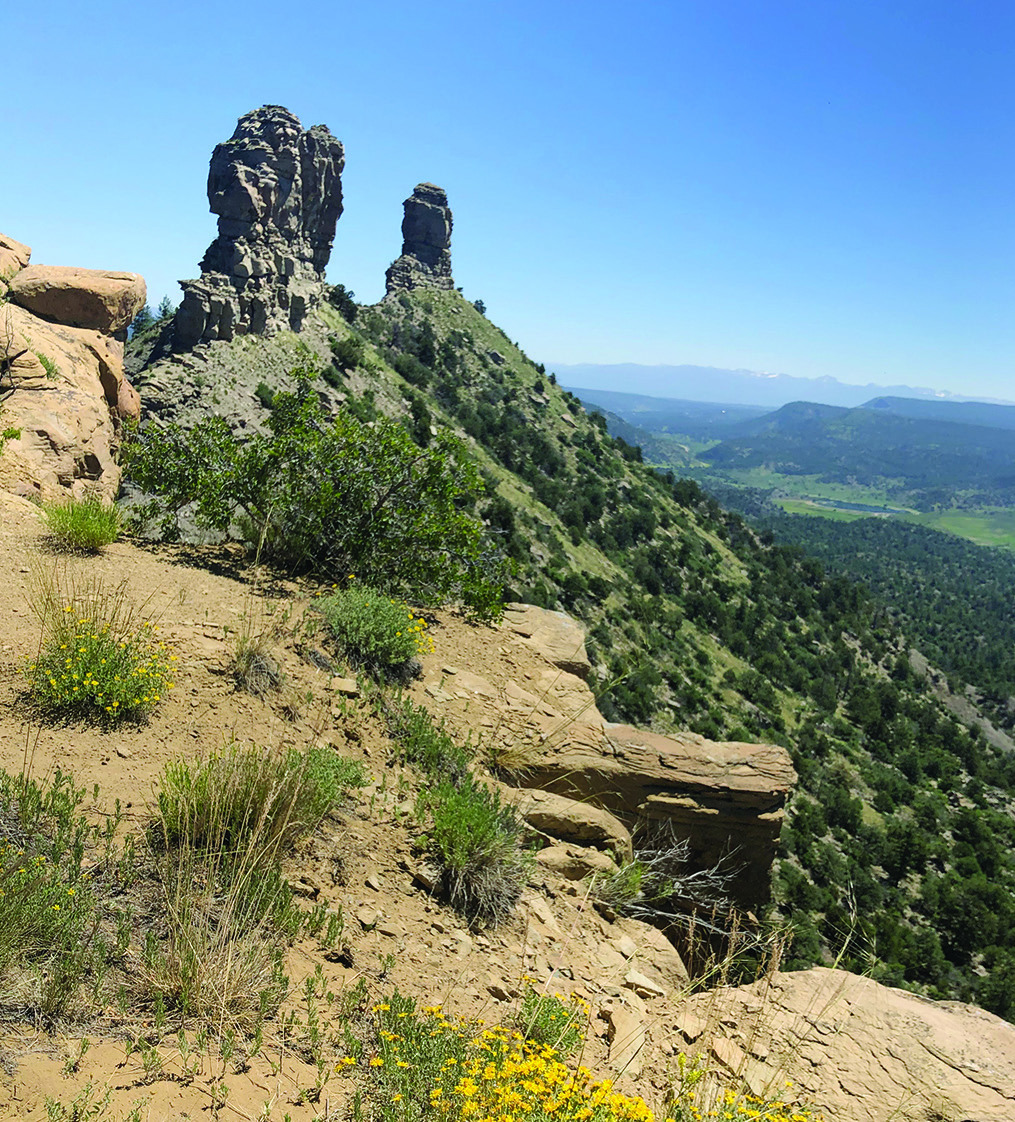
On our trip to Colorado this summer, Shirley and I stopped at Chimney Rock near Pagosa Springs. True confession: We have driven right past Chimney Rock on several occasions because I assumed it was just another pioneer landmark like Scott’s Bluff, Courthouse Rock, Signature Rock, or those other Chimney Rocks in Virginia and Nebraska. If you have seen one Chimney Rock, you have seen them all.
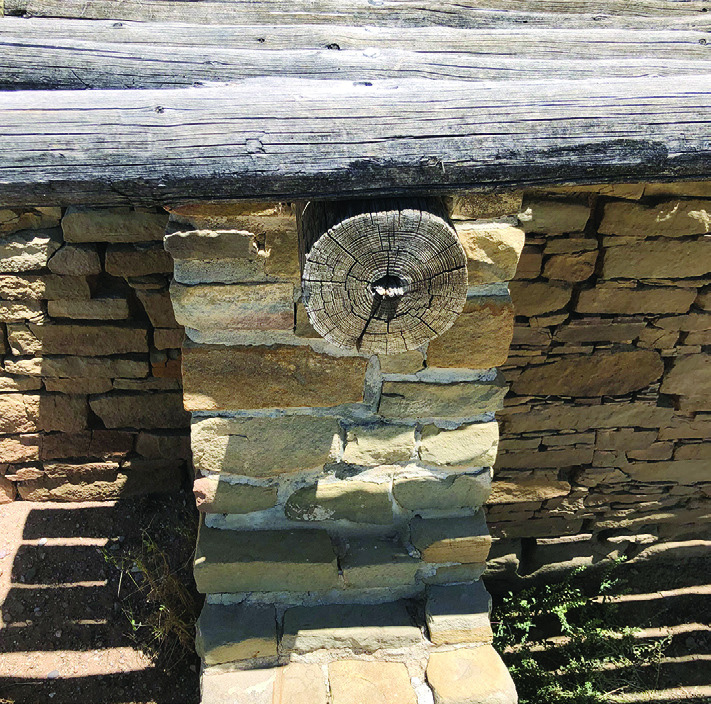
Or maybe not. Chimney Rock in Colorado was the site of an Indian pueblo established at an elevation of 7,620 ft. on the narrow spur of a mesa. Archaeologists began its excavation in the 1920s and discovered eight villages with about 200 rooms dedicated to living quarters, work and storage spaces, and ceremonial activities dating from 925 to 1125 AD. A key to establishing dates is dendochronology—the study of tree rings. Compare the ring pattern of a new source, such as a roof beam, with those of already established vintage, and you can get fairly reliable dates going back almost 14,000 years. Rings can tell archaeologists when a tree was felled but not necessarily when it was used for construction or to replace a piece of damaged wood.
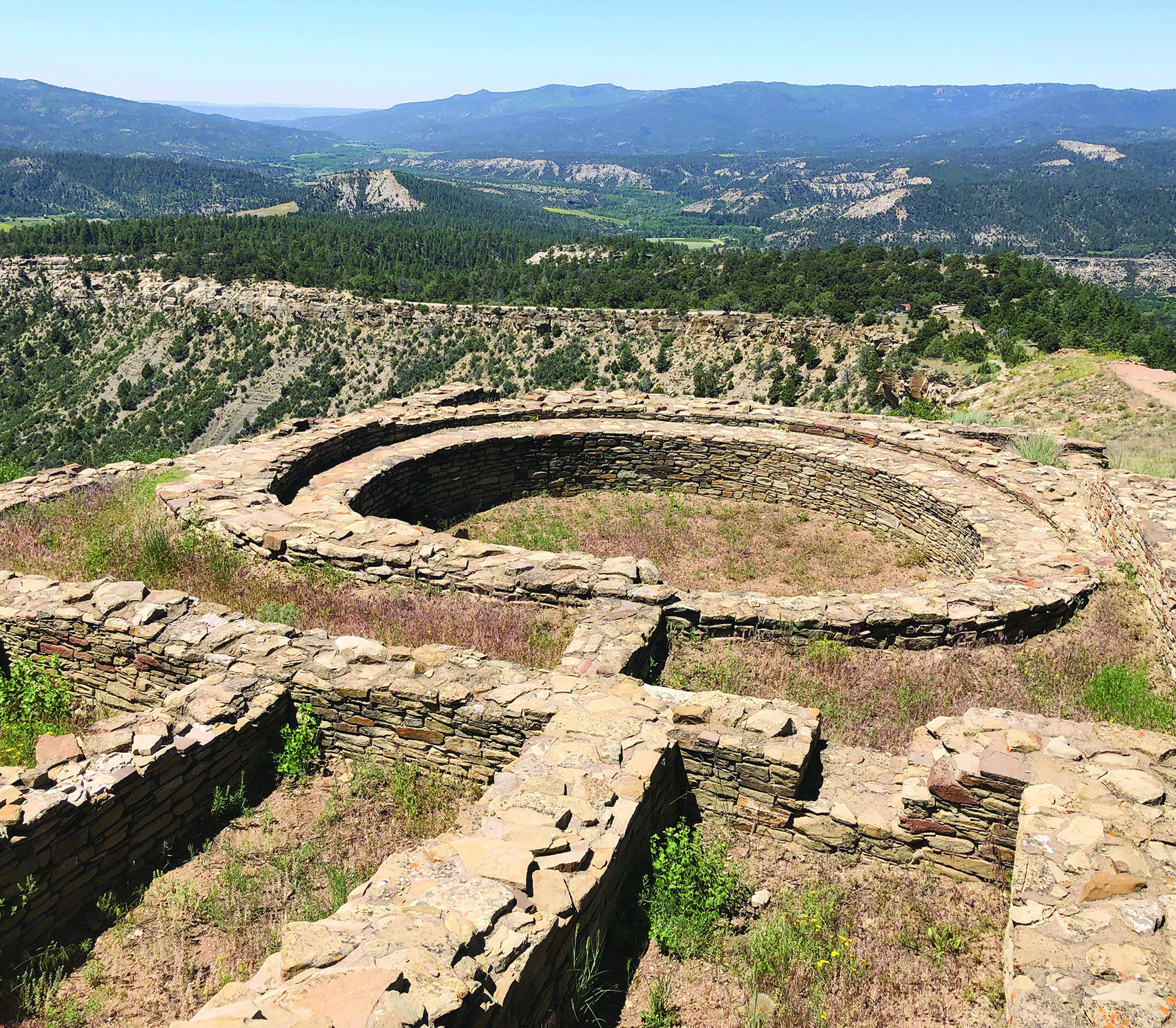
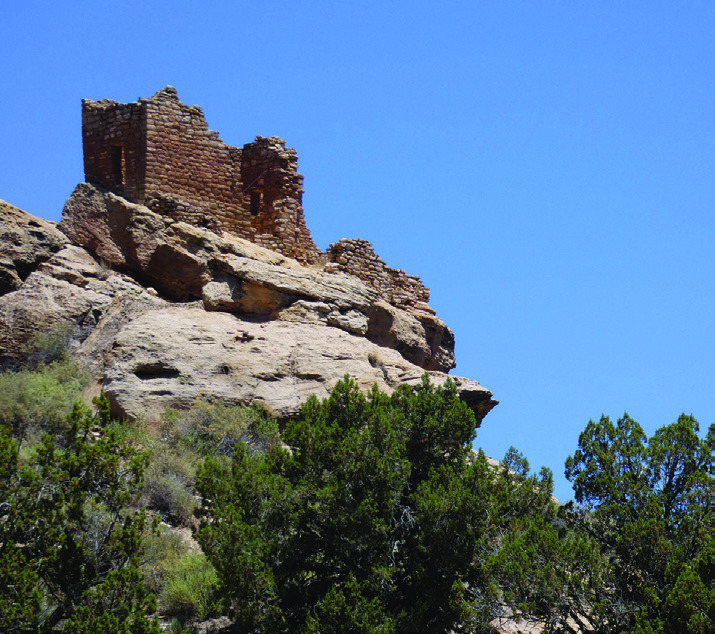
One of the particularly impressive things about the pueblo at Chimney Rock is that building materials came from downhill and were carried by hand up to the worksite. Visitors to the National Monument can climb the half-mile trail to the site of the pueblo. It is easy enough at first—if you are carrying nothing heavier than a cell phone. But, then, in short stretches it is only a few feet wide with unnerving drop-offs to either side. As you approach the summit, the “trail” seems little more than a jumble of random rocks. Careful where you put your feet. It must have taken considerable motivation to climb it a few thousand times while carrying rocks and timbers to build the Great House at the top. There are 36 rectangular rooms and two round ceremonial rooms called kivas close to Chimney Rock and neighboring Companion Rock.
Archaeologists found much less wood than they anticipated at a pueblo of this size. Some speculated that the Great Kiva was intentionally left without a roof—even though there are clearly places where roof beams would have rested if there had been any. Some said that it was just that the project was not complete when it was abandoned in 1125. If I were slightly more cynical, I might think they just got tired of making the climb while heavily laden. It can be difficult to determine what people were thinking a thousand years ago based on how rocks were stacked.
Some archaeological speculation, however, is based on fundamental issues. Climbing a steep trail carrying rocks is not easy, but at least there were plenty of rocks in the neighborhood. The right kind of wood, however, doesn’t grow on trees out in the desert Southwest. Evidently there was some great symbolic or religious power associated with Ponderosa pine and spruce because the builders were willing to transport it long distances when there were other options closer by. The massive roofs of the larger kivas were supported by heavy wooden pillars and cross beams and apparently not just any old wood would do.
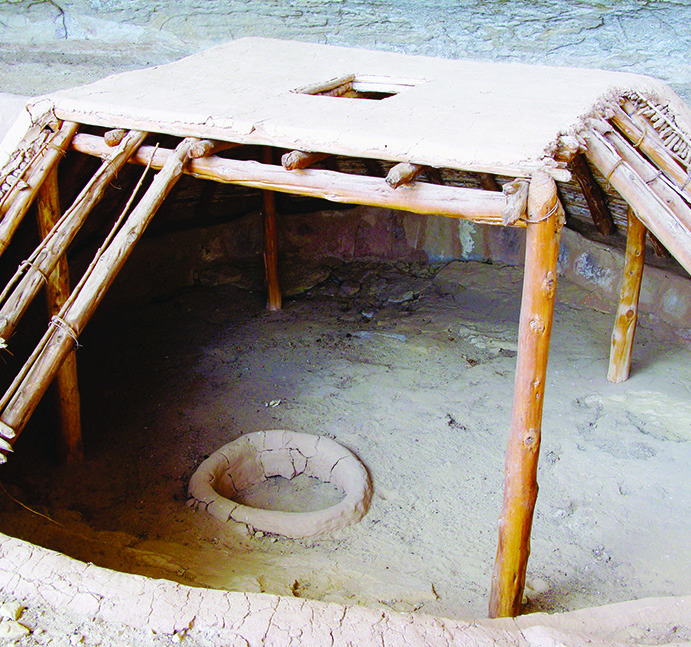
At the base of the trail is a workspace consisting of three pit houses and adjacent workrooms with places for grinding corn, trimming and shaping wood, and making stone tools, pottery, and arrowheads. Speaking of stone tools, consider that all that construction was performed without the benefit of metal implements.
Initially, archaeologists theorized that the Chimney Rock Pueblo, like many others, was a solar observatory for the purpose of establishing the time of solstices or equinoxes, but they couldn’t find the usual evidence. Turns out they were chasing the wrong phenomenon and the new theory is even more impressive. Raise your hand if you have ever heard of the lunar standstill.
Like the sun, the moon rises and sets in a slightly different place every day in a predictable cycle. Lunar standstills occur when the moon reaches its positions farthest north and south during the course of a month. The full definition is much more technical than that. You could Google it if you are really interested in a more complete appreciation for the complexity of the calculations. During the year of a major lunar standstill, there are also solar eclipses in March and September. The ancient Puebloans were really, really interested as indicated by the fact that they were willing to do all that work for a major lunar standstill that happens only once every 18.6 years. Evidently, delayed gratification and a firm grasp of ordinary linear differential equations were hallmarks of their culture.
At Chimney Rock, the date of the lunar standstill is determined by when the moon rises straight up between it and Companion Rock. Archaeologists say that Great House Pueblo was begun during the lunar standstill of 1076 AD and completed during the next one in 1093 AD. Then the pueblo was abandoned in 1125. There is a pattern of unexplained departures associated with other pueblos in the Southwest such as at Mesa Verde National Park, Hovenweep and Canyon of the Ancients National Monuments in Colorado, as well as Bandelier in northernNewMexico.AncientHebrews left written accounts of why and how they left Egypt. Ancient Puebloans left petroglyphs and pictographs but no explanatory narratives.
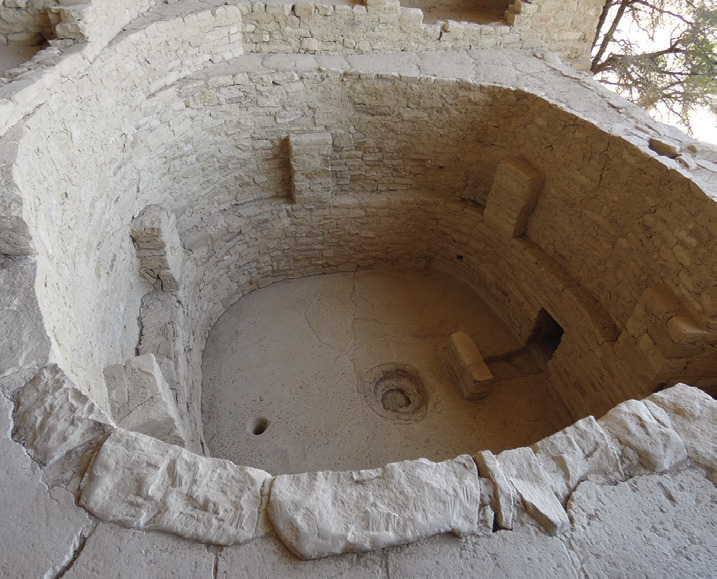
There is plenty worth seeing at Chimney Rock even if you are not interested in lunar standstills. Though the site cannot compete with the grandeur of Mesa Verde, they share many similar features. Kivas, for example, are ceremonial locations often recognizable by the circular shape that distinguishes them from residences and storage rooms. But not all kivas are circular and not all circular structures are kivas. For that matter, the locations chosen for ancient pueblos varies considerably as well.
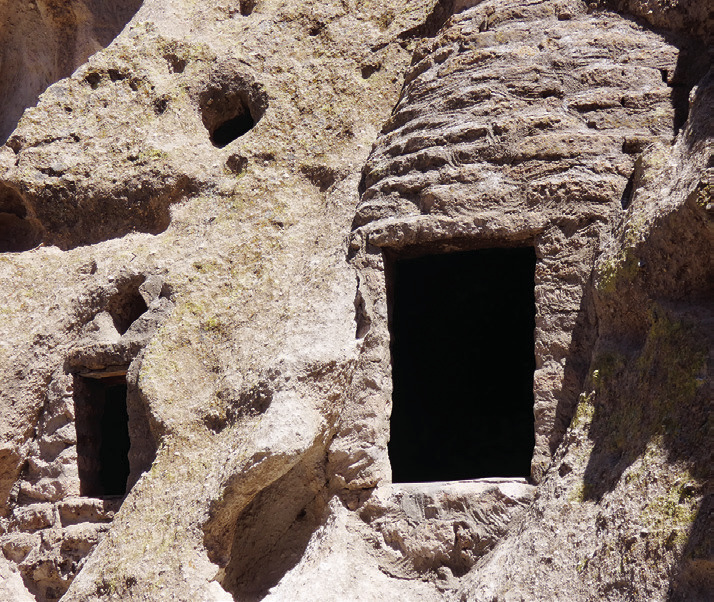
Mesa Verde is famous for Cliff Palace built under a massive overhanging ledge high on a cliff face. At Hovenweep, the structures line the top of a narrow canyon. At Bandelier, they are at the bottom of the cliff and out on the canyon floor. All, however, share clearly evident cultural attributes much the way that Gothic cathedrals in Europe all share basic architectural characteristics. And, like the cathedrals, at some point the builders just stopped doing it.
At Bandelier, for example, the remains of one of the kivas clearly shows that the Puebloans began to give up on the project well before it was finished. The first courses or layers of stone walls were obviously carefully chosen, shaped, and placed. Then the quality of workmanship became noticeably cruder even to people untrained in archaeology. It is difficult to stay highly motivated and disciplined performing an arduous task that can take decades. Consider how hard it can be just to make it to 5:00. Sometimes people and cultures just lose their energy. That may have been the case at Chimney Rock.
Still, there is evidence that the pueblo there thrived as an outlier of the Chaco Canyon community down in New Mexico. There is the architectural similarity of kivas in both locations that are partially or completely underground and entered through the roof where a ladder passed through religiously purifying smoke. Ventilation was provided via fresh air shafts built into the walls with wind deflectors at the base to keep ceremonial fires from being affected by the draft and the smoky space from becoming unbearable. The fire pit itself is lined with adobe brick with a rim above floor level and an ash pit to the east. Radiating from the pit are narrow sub-floor cavities covered with planks that served as foot drums at which participants sat or stood to stomp their feet rhythmically. A small symbolic hole in the floor, called a sipapu, represents where the first humans emerged from the underworld, literally born from Mother Earth. There are raised stone platforms or benches along the wall for seating and placement of ceremonial objects. We know much of this not from archaeology but because their cultural descendants still live in the Southwest.
Taken all together, there is enough archaeological material in a typical kiva to inspire another and better Indiana Jones movie. One theory about why the pueblo was abandoned is the presence of evil spirits. Indie would have to come up with a clever way to explain how construction was not just a walk in the park and then identify the ancient malefactors who were the real “evil spirits” responsible for causing the residents to abandon the mesa.
LeMoyne Mercer is the travel editor for Healthy Living News. You might want to see more of his stories and photos at AnotherWalkinthePark.blogspot.com. ✲