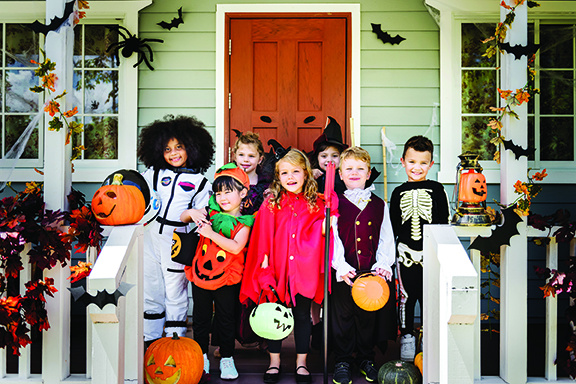
HALLOWEEN NIGHT is a dangerous time for pedestrians, especially for excited, costume-clad kids. In fact, according to AAA, Halloween is the deadliest day for young pedestrians nationwide. What’s behind this frightening finding?
Several factors make Halloween disproportionately dangerous for little trick-or-treaters. They include:
• Due to their shorter stature, kids under 12 years of age are often invisible to drivers. After dark, little trick-or-treaters are even more difficult to spot.
• Young kids lack the experience and maturity needed to anticipate drivers’ behavior.
• In their eagerness to collect as much candy as possible, kids typically take the shortest path from one house to the next, often crossing the street in the middle of the block or dashing between parked cars into traffic.
• Costumes can contribute to the problem, as well. Dark-colored costumes are hard to see at night, and masks can impede a child’s ability to see and hear approaching motor vehicles.
• As adult Halloween parties continue to grow in popularity, more motorists are driving under the influence of alcohol or other substances.
Though these factors might scare parents into thinking it’s best to keep their kids home on Halloween, observing some simple precautions will help keep Halloween night safe and fun for little ones.
Plan a route
Along with helping kids plan their costumes, parents should develop a plan designating the safest trick-or-treating route for their kids to take on Halloween night. Limit the route to familiar neighborhoods and well-lit houses.
Lighten up and lose the mask Costumes should be made of light-colored materials (this also applies to the clothing of accompanying parents). To enhance your child’s visibility, incorporate reflective tape into the costume design or wrap it around the child’s wrists and ankles. Also, give your child a flashlight so he or she is more visible to traffic and can illuminate dark sidewalks and pathways. Emphasize to your child that the flashlight beam must not be directed into drivers’ eyes.
When creating costumes, keep in mind that makeup or face paint is preferable to a mask, which can limit a child’s ability to see and hear traffic. Even a mask that covers only the face can significantly impede peripheral vision, which is critical when crossing streets.
Reinforce pedestrian safety rules Remind kids that the rules of pedestrian safety still apply on Halloween night, including waiting for walk signs before crossing at an intersection; looking left, right, and then left again before crossing the street; crossing only at street corners, never between parked cars; and walking facing traffic when no sidewalk is available.
Accompany your kids
Better yet, walk with your kids as they trick-or-treat so you can show them the safest places to cross the street and remind them of other safety rules. If you’re unable to accompany your kids, have them walk with a group. Remember, there’s safety and greater visibility in numbers.
Drive safely
On Halloween night, drivers must be extra vigilant in residential areas, especially when entering or exiting a driveway. Even kids who have already learned the rules of traffic safety can still exercise poor judgment when they’ve got visions of chocolate bars and peanut butter cups dancing in their heads. Motorists are urged to keep a sharp eye out for kids crossing the street where they shouldn’t, drive well below the speed limit wherever trick-or-treaters are likely to be present, avoid taking neighborhood shortcuts, and, of course, avoid driving under the influence of drugs or alcohol. When dropping off or picking up children by motor vehicle, make sure they enter and exit the vehicle on the curb side. If motorists and pedestrians follow these few simple rules, all our little ghosts and ghouls should make it home safely with their trick-or-treating spoils. ✲