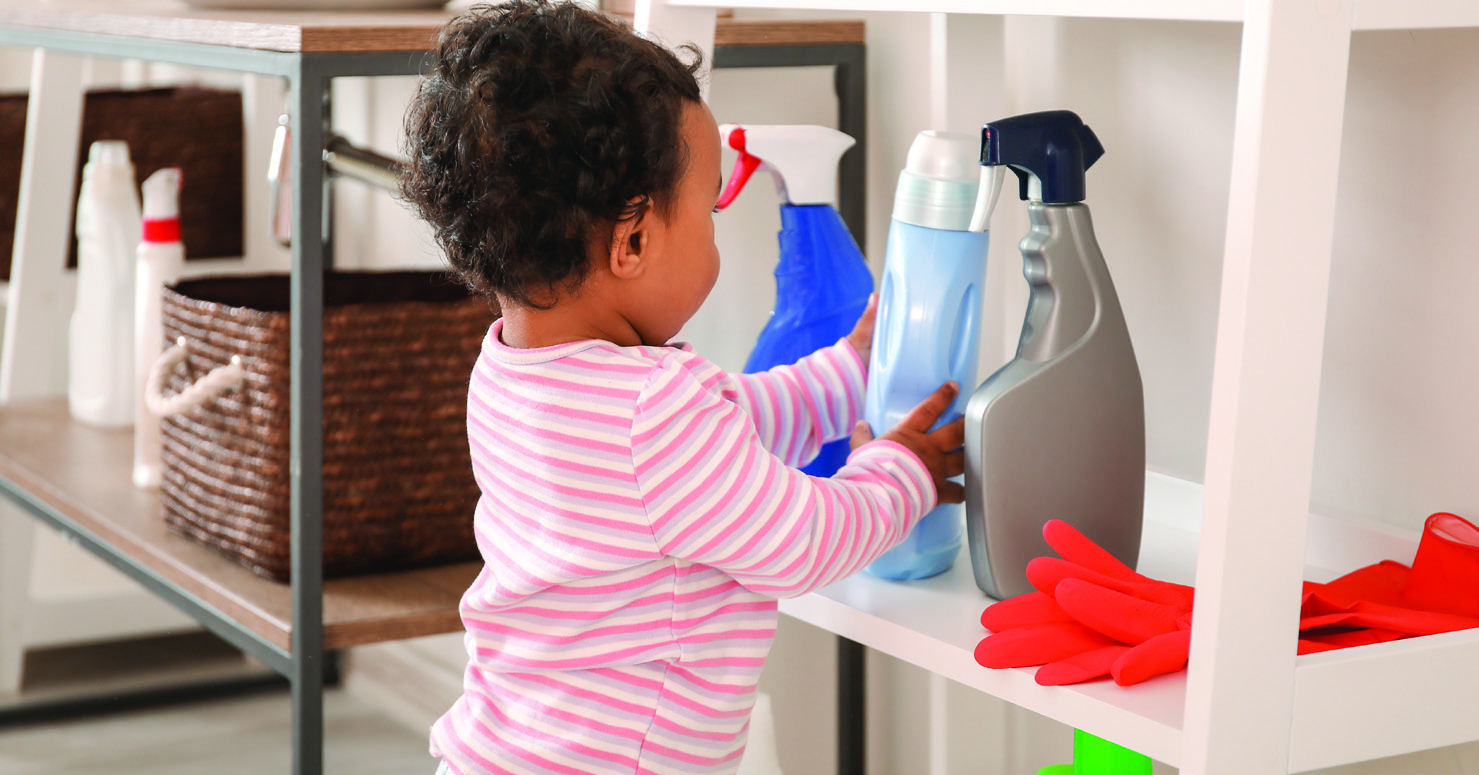
FOR CHILDREN, HOME SHOULD BE A SAFE, comfortable refuge where they feel insulated and protected. It’s difficult for their young, developing minds to comprehend that many items and substances contained within their home—some of which they see Mom and Dad use on a routine basis—can actually cause serious harm or even death if handled improperly, ingested, or inhaled.
Parents, on the other hand, are generally aware that some household products pose a threat and make an effort to keep them out of reach. However, they may be oblivious to the dangers posed by certain common substances, or they may underestimate their child’s curiosity or ingenuity in accessing toxic materials.
For example, vitamins, especially those containing iron, are among the potentially harmful items that parents commonly overlook. We tend to think of vitamins as being beneficial, so it’s easy to forget that, just like many over-the-counter or prescription medications, they can be harmful or deadly if taken inappropriately. Compounding the problem is the fact that many of today’s vitamins are formulated to taste good and some even come in kid-friendly form, such as gummies.
Beware of pretty poisons
The most common cause of child poisoning is ingesting medications that aren’t properly secured. Like vitamins, many pills and liquid medicines can be defined as “pretty poisons” because, to a child, especially one who isn’t old enough to read labels yet, they can easily be mistaken for something good to eat or drink, such as candy or fruit punch. That’s why it’s so vital for parents to teach children that they must never touch, taste, or smell something if they aren’t sure what it is.
Also, keep in mind that “child-resistant” packaging is not the same as “child-proof” packaging. Child-resistant packaging may be effective at reducing the risk of poisoning, but it cannot prevent poisoning altogether. An unsupervised child who is sufficiently determined to open a bottle or package will likely find a way to do so.
Don’t get complacent
Parents are also usually good at keeping their children away from most areas where poisons are commonly stored, such as the medicine cabinet, the cleaning closet, and under the sink. But one site is all too commonly overlooked—the garage. Parents who put safety latches on virtually every drawer and cabinet in the house often forget that the average garage contains a plethora of poisons as well. It’s equally important to child-proof the garage by storing chemicals out of reach and putting locks or safety latches on cabinets and drawers.
Other commonly overlooked potential poisoning sources are the medications adults carry with them in a bag or purse, along with the meds that Grandma and Grandpa or other guests leave on the nightstand whenever they come for a visit.
Furthermore, parents should avoid complacency when it comes to personal care products such as nail polish remover, perfumes, cosmetics, and mouthwash. These, too, must be kept where children cannot reach them.
Teach them early
Children age five and under are at the greatest risk for poison exposure. That means it’s critical for parents to start teaching their kids about poison safety as soon as they are old enough to comprehend the message—just as they teach them other important concepts, such as how to cross the street safely and “stranger danger.”
Key messages parents should share with their children when educating them about the dangers of household poisons include:
• If you don’t know what something is, always ask a grownup before you touch, taste, or smell it.
• Only take medicine if Mom, Dad, or the grownup taking care of you gives it to you.
• Stay away from the areas at home that could contain poisonous items.
• If someone you know, such as a younger sibling or friend, touches, tastes, or smells something that could be poisonous, tell a grownup right away.
• Never put leaves, stems, berries, bark, seeds, or flowers of any plant that you find in the house or outside in your mouth.
Do your part for prevention Of course, parents bear the greatest responsibility when it comes to preventing poisoning. Be sure to read the labels on all your household products to determine whether they present a poisoning hazard, and store all poisonous materials out of reach or lock them up when not in use. Also, never transfer medications or other poisonous materials out of their original container or packaging. A case of “mistaken identity” can be deadly. Moreover, if you’re using a toxic substance, never leave it out of your sight and within reach of children—not even for a few seconds.
Know how to react if poisoning occurs If you know or suspect that your child has ingested a poisonous substance, contact poison control immediately by phone at 800-222-1222 or online at webpoisoncontrol.org. Call 911 immediately if the individual collapses, has a seizure, has trouble breathing, or can’t be awakened. ✲