
Sponsored by Wood County Park District
THIS SPRING, Shirley and I returned from Florida via Savannah. The most direct route home is straight up I-75, but we almost never head home in a straight shot. There were stops in St. Augustine and then, on our way to Savannah, at Jekyll Island and Fort King George on the southeastern coast of Georgia. Springtime in the Deep South can be simply lovely: redbuds, dogwoods, pear trees, azaleas and rhododendrons, magnolias, camellias. Temperatures tend to be mild. It hasn’t gotten sticky yet, but that comes soon enough.
Jekyll Island is one of what the Georgia tourism people call the Golden Isles: St. Simons, Little St. Simons, Sea Island, and Cumberland Island. They are barrier islands that are constantly being created and destroyed by tides that deposit sand parallel to the coast then wash it out again. Barrier islands serve as buffer zones against destructive weather. Despite the occasional hurricane, they have long been popular with both permanent residents and tourists. Jekyll Island is 7 miles long and 1.5 miles wide, comprising 5,700 acres. About 4,400 of those acres are solid ground, 240 of which are in the Historic District. The rest is marsh land.
The island is governed by a conservation clause that strictly limits development. Sixty-five percent of the land is set aside to preserve the natural beauty and wildlife. That leaves only 35% for all the hotels, shops, private residences, and businesses that serve the upscale resort community.
The Golden Isles got their name in 1717 when Sir Robert Montgomery began promoting colonization by Londoners who were encouraged to believe that they could become wealthy there. (Perhaps you have heard that developers sometimes exaggerate just a teensy bit.) Then there was the way to acquire gold perfected by Edward Teach. As Blackbeard the Pirate, he stole it from Spanish galleons. Treasure hunters are still searching for gold that Blackbeard is said to have buried on the islands. Others seek gold and silver offshore by diving in search of galleons that sank in stormy seas.
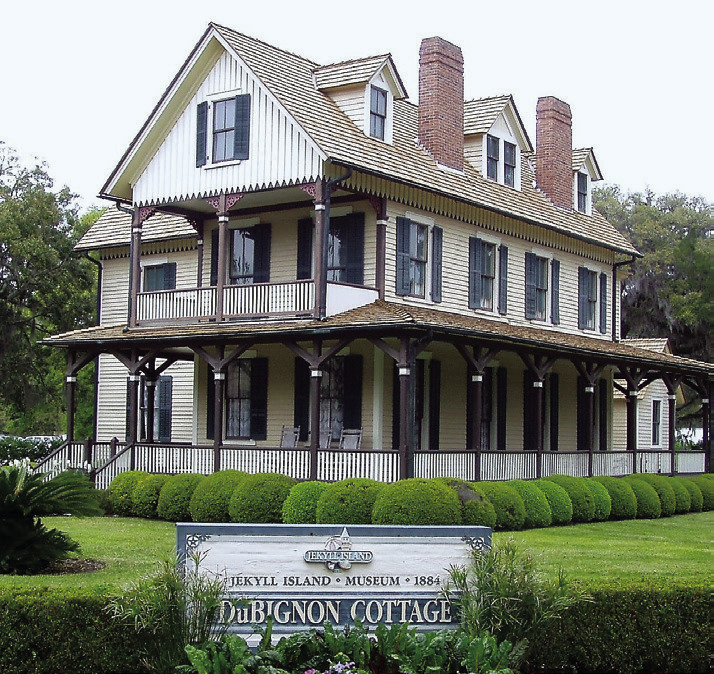
Jekyll Island began attracting seasonal residents in 1886 when a small group of wealthy men bought the entire island to establish their private winter resort. Initially, hunting was the primary recreational pursuit. A gamekeeper kept the island stocked with quail, pheasants, turkeys, and deer that ended up on the menu at the Jekyll Island Club. Membership in the club, the most exclusive in the world, was limited to 100. They were not searching for gold. They brought their gold with them. You will recognize some of their names: J.P. Morgan, Joseph Pulitzer, William Vanderbilt, Marshall Field, William Rockefeller. As the club became more family oriented, members began building modest “cottages.” These cottages were only modest in comparison to their summer cottages in Newport, Rhode Island. Members and their families enjoyed rousing games of croquet or perhaps some tennis and golf.
But the leisure class was engaged in more than just leisure. The Federal Reserve Board, for example, was created there at a secret meeting in 1910 attended by men who controlled about a quarter of the wealth of the whole world. That meeting was in response to the financial panic of 1907 that saw the New York Stock Exchange lose half its value.
In 1915, Theodore Vail, president of AT&T, conducted the first transcontinental phone call from Jekyll Island. He was accompanied by J.P. Morgan, Jr. and William Rockefeller in a hookup that included President Woodrow Wilson in the White House and Alexander Graham Bell in New York, all of whom conversed with Bell’s assistant Thomas Watson in San Francisco. Evidently they were on what we used to call a “party line” or today would be a conference call. Bell repeated his famous 1886 original phone call: “Watson, come here. I need you.” To this Watson replied from the West Coast, “It would take me a week to get to you.”
Despite the founding of the Federal Reserve, their efforts failed to prevent the Great Depression, during which even the super wealthy were not immune to hard times. In 1933, a new membership level was introduced in the hope that younger and slightly less affluent families could help preserve the club. Even so, the club closed in 1942 because of the combined effects of the Great Depression and the national emergency brought on by World War II.
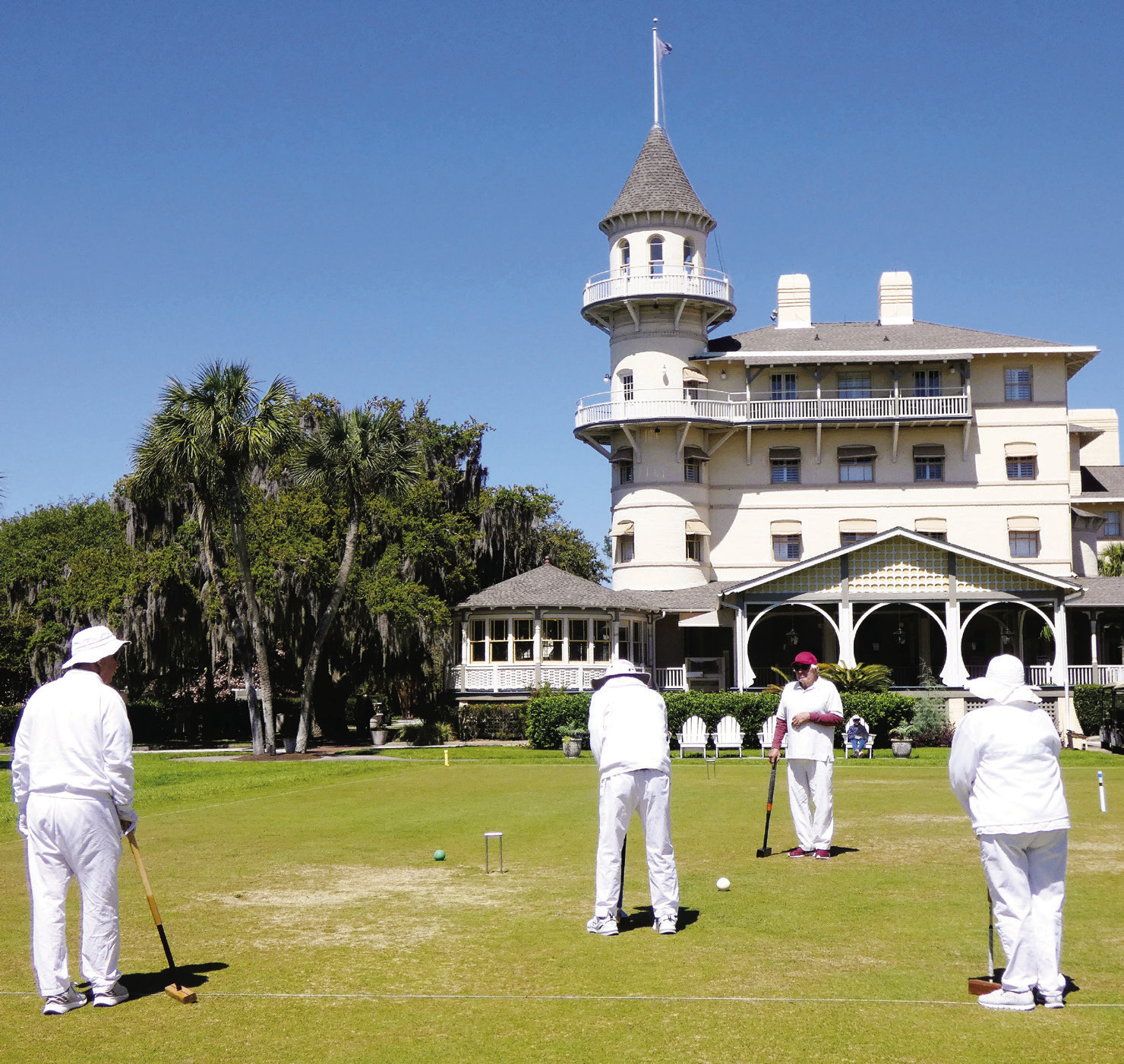
Tourists today are attracted to the Golden Isles by the assurance that they will experience the treasure of golden sunrises, sunsets, and sandy beaches. There is also the chance to visit the Historic District where those Gilded Age cottages are preserved. The original club is now the Jekyll Island Club Hotel where traditional white attire is still required for croquet on the lawn out front. Croquet is taken very seriously there.
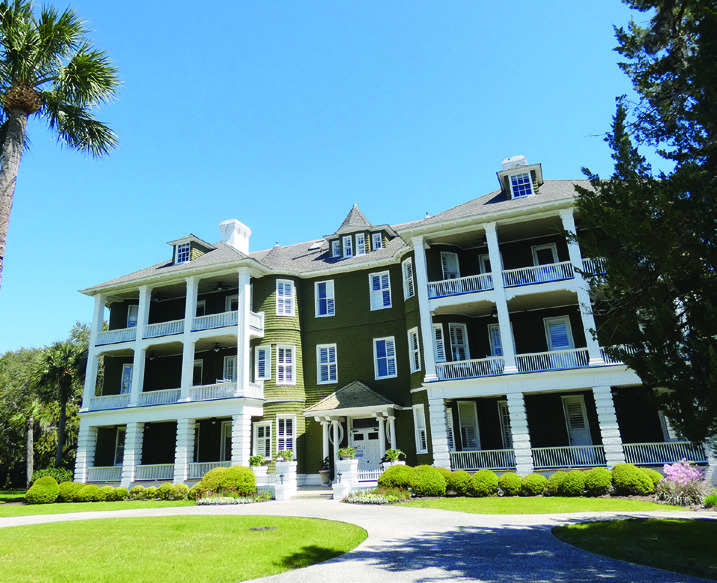
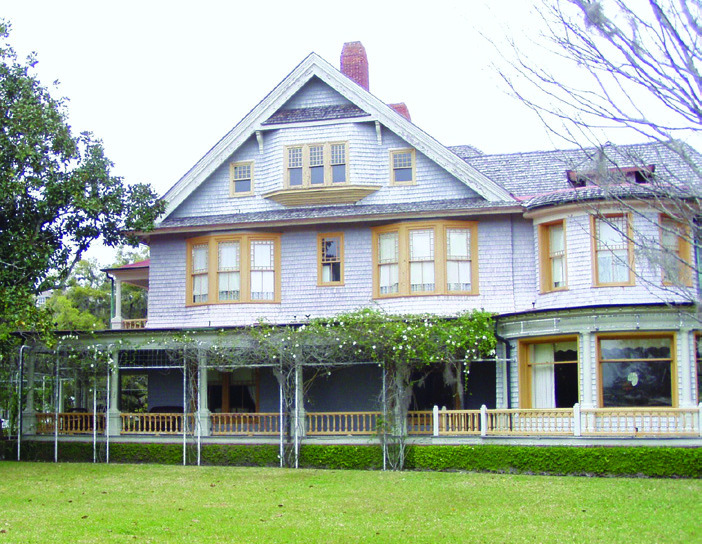
Next to the Club Hotel is Sans Souci, the first condominium in America. It was the home of J.P. Morgan who did not need a whole house because he kept his 200-foot yacht moored out front. Most of the cottages were what passed for “rustic” even though they were designed by some of the nation’s leading architects and built to accommodate family, guests, and servants. Moss Cottage and Indian Mound, the cottage of William Rockefeller, younger brother of John D., are representative of the “simple life” as they defined it. Even so, Rockefeller seems to have been constantly busy redesigning and adding improvements. Mrs. Rockefeller, for example, is reported to have been nervous about fire danger, so he added rose trellises over the porch that did double duty as a fire escape. Also installed a walk-in safe. Of course he did. Must keep enough cash on hand to tip the help. Or buy an occasional copper mine.
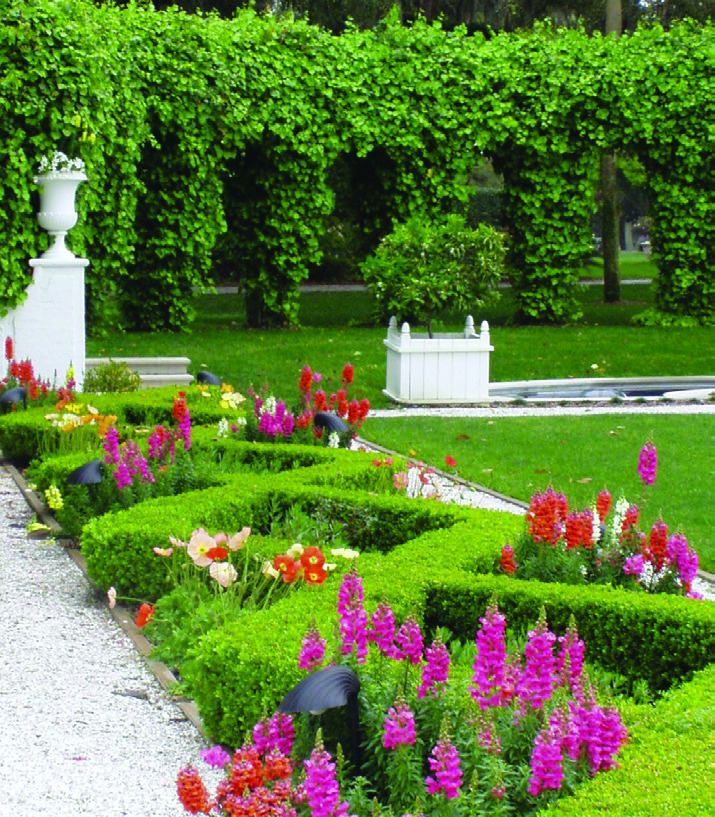
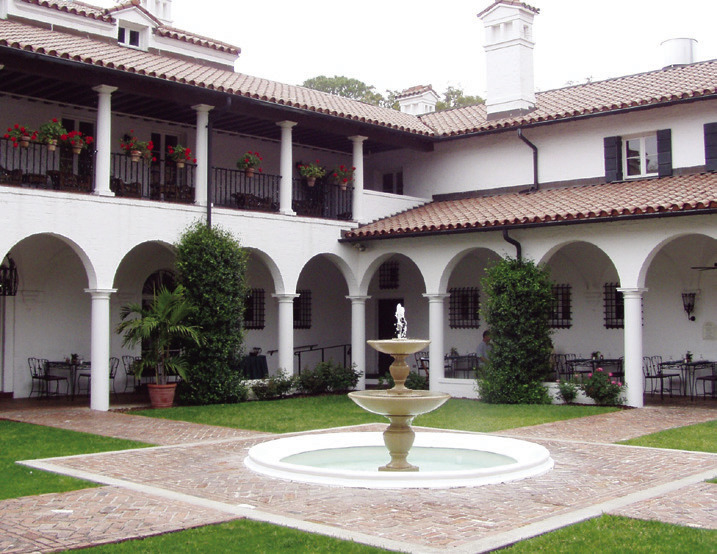
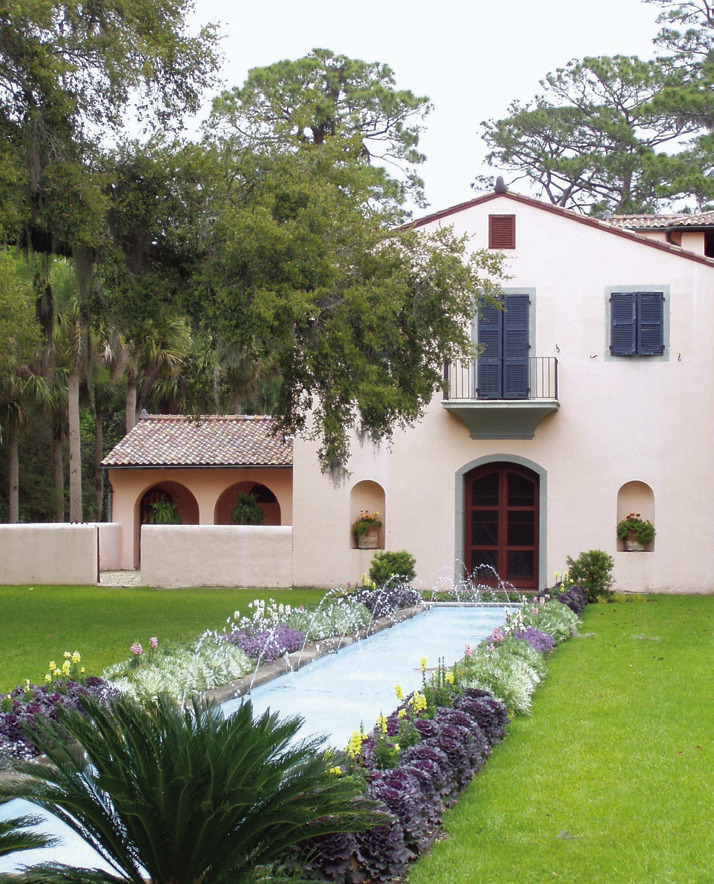
A notable exception to the rustic rule is Crane Cottage owned by the family in the plumbing fixtures business. (It is bright white like their ceramic fixtures.) In Italian Renaissance style, it was the most elaborate of the cottages and features a sunken formal garden and a courtyard with fountain. Like the Club turned Club Hotel, Crane Cottage accommodates paying guests and is a popular venue for weddings.
You could take a tram or a carriage ride through the Historic District with a guide to tell you what you are looking at. Or, as Shirley and I prefer, you could walk through, traveling at your own pace, and spending more or less time at each stop as whim dictates. But we are not first-time visitors, so our approach may not be appropriate for everyone.
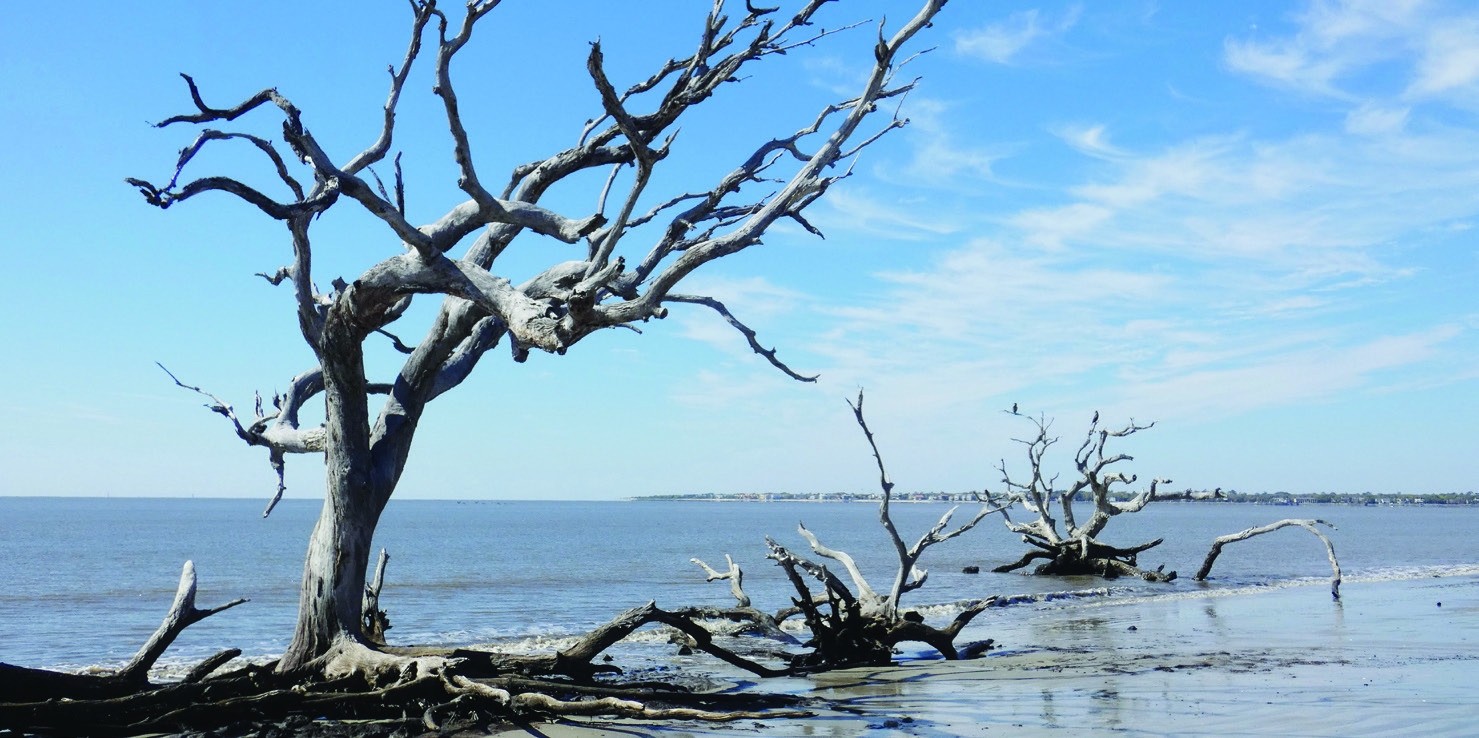
We begin at the north end of the island where there is a trail through the marsh habitat from which to see shore birds, egrets, herons, and pelicans. The trail ultimately arrives
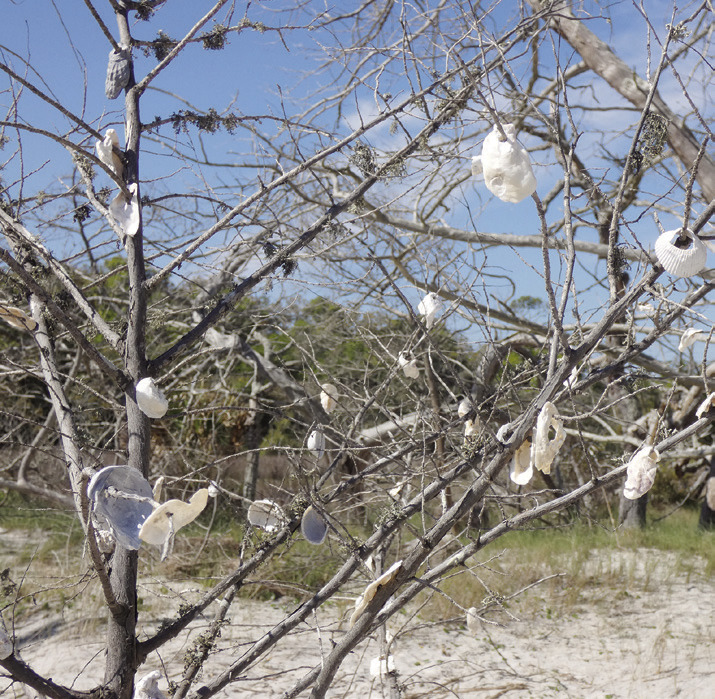
islands is clearly on display. Our first time there, we thought the dead trees along the shoreline were the result of hurricanes that frequent the coast. Soon learned, however, that the beachfront is constantly changing as sands shift in and out. As the beach was sucked away, trees died leaving Driftwood Beach picturesque in a strange way. You would not think that dead trees could be so entrancing, but they are a favorite backdrop for wedding photos and everyone with a cell phone is apparently required to take a couple hundred selfies. There is a small tree with sea shells hung from its branches. There is no way of knowing what tourists are going to find intriguing. The Golden Isles tourist brochure says, “If you are coming to Jekyll Island just to visit Driftwood Beach, the best route is….” That should tell you something about the priorities of some visitors.
There are another six beaches of a more traditional sort with soft, golden sand, pavilions, and picnic facilities. One of them, Glory Beach, is named for the 1989 movie Glory that was filmed there. Denzel Washington and Morgan Freeman were featured as soldiers in the 54th Massachusetts, the first African-American Regiment in the Union Army.
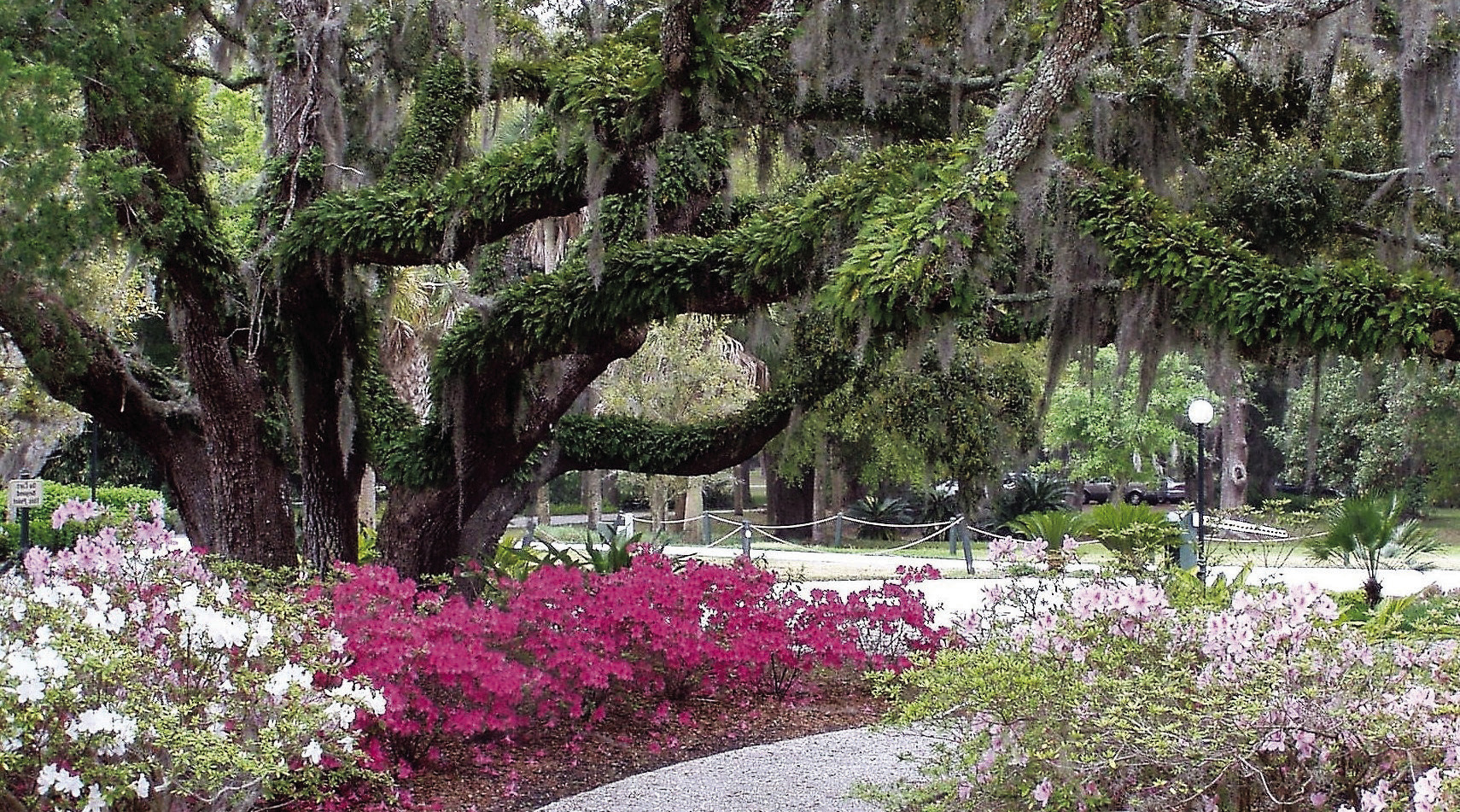
Though Jekyll Island was once entirely owned by members of the Club, it is now mostly upscale residential. There are 20 miles of bike paths that can get you anywhere on the island without venturing onto thoroughfares. Rental bicycles, including tandems, are available if you don’t have your own with you. There are more shops and hotels than you might expect in a relatively small area, but it does not feel at all crowded. The streets and homes are shaded by ancient live oaks dripping with Spanish moss, making a stroll through the Historic District just a walk in the park.
LeMoyne Mercer is travel editor for Healthy Living News. You might be interested in photos and stories about other destinations at AnotherWalkinthePark.blogspot.com. ✲
