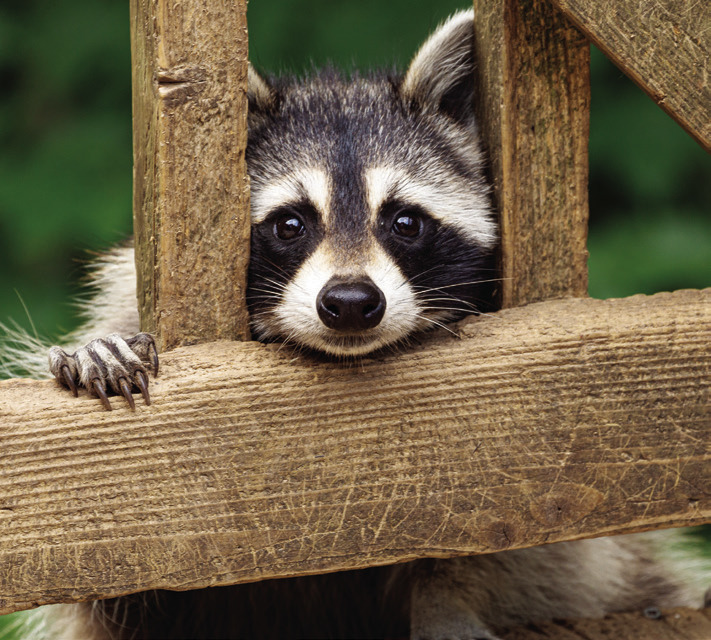
Encounters with wildlife can be exhilarating—that is, when they occur at a safe distance that gives both the person and the wild animal the option to stay out of each other’s way. However, as more and more once-wild spaces are developed for human habitation, people and wildlife are being pushed into ever closer proximity, greatly increasing the odds of conflicts such as bites or other forms of aggression, pet injuries or fatalities, damage to landscaping and/or garden crops, home infiltration, and other adverse interactions.
Here in Northwest Ohio, we don’t have to worry about encountering bears, cougars, or other large, dangerous predators in our backyards, but we do have our share of whitetail deer, raccoons, opossums, skunks, foxes, coyotes, squirrels, bats, rats, and other critters that feel right at home in urban or suburban settings and are more than happy to take advantage of any resources they can find in or around our dwellings.
Because these animals are with us to stay whether we like it or not, it’s important to make every effort to minimize the potential for conflict. Here are some of the steps you can take to help ensure peaceful coexistence with the wildlife in your neighborhood:
Never feed wildlife intentionally…
Wild animals are perfectly capable of finding food for themselves, but it’s only natural for them to take the path of least resistance when it comes to sourcing sustenance. Putting out food for wildlife can have several adverse effects. One, is that the animals may alter their natural hunting, foraging, or scavenging behavior because an easy meal is always available on your property. Another is that the foods we offer are often nutritionally inadequate or outright inappropriate for wild animals, putting their health at risk. Furthermore, fed animals tend to lose their natural fear of people and become habituated to them as a source of food, which can lead to nuisance behavior or even aggressive interactions.
…or unintentionally
Even if you’re not feeding the neighborhood wildlife intentionally, there’s a chance you may be ringing the proverbial dinner bell unintentionally. For example, poorly secured and easily opened trash cans containing food scraps are always a draw for hungry wildlife. Pet food and water bowls left outside are another major attractant. With the growing popularity of keeping backyard chicken flocks, poultry feeders and waterers are becoming an increasing problem in terms of attracting wildlife.
To avoid unintentional feeding, trash cans should have tight-fitting lids and, ideally, be kept in a garage or other enclosed space inaccessible to animals until it’s time to take them to the curb. If possible, take your cans out on the morning of trash pickup day rather than the night before. If you feed pets outdoors, be sure to remove the food bowl as soon as they’re done feeding and promptly clean up any food left on the ground. A good option for backyard poultry keepers is to use a high-quality treadle- style feeder, which requires the birds to step on a plate to open the feed compartment. These feeders not only prevent rodents and other small critters from accessing the food, but also significantly reduce food spillage.
Weigh the pros and cons before feeding the birds
Opinions vary among experts on whether feeding wild birds is beneficial or harmful overall. On the pro side, reliable, predictable access to a bird feeder can give wild birds a boost of energy that will help them endure long migrations and harsh winters. Feeding sites can also help compensate for the destruction of food-rich habitat, such as woodlands and meadows, at the hands of humans. Among the con arguments, bird-feeding stations tend to concentrate many species and individuals in a relatively small space, which can promote the spread of disease and increase the birds’ vulnerability to predation. Of course, bird seed and suet also attract a broad range of critters in addition to birds, such as raccoons, squirrels, rats, deer, opossums, skunks, coyotes, and various others, which can lead to all the previously mentioned drawbacks and nuisance behaviors associated with wildlife feeding.
If you do choose to feed wild birds on your property and would like to minimize its appeal to wild animals of the nonfeathered variety, choose a feeder with a ledge or tray that catches falling seed and suet; install a baffle designed to deter both squirrels and raccoons; position the feeder at least 8 to 10 feet away from trees, roofs, railings, or any other surface a determined squirrel can use for a 'launching pad'; and clean up fallen food from the ground around the feeder on a daily basis. Seed and suet should be stored indoors, whether inside your home or in a garage or shed.
Never approach or touch wildlife
Wild animals are just that—wild. No matter how cute and endearing a wild animal may appear, keep in mind that it’s not the family dog or cat. Never approach or attempt to pet or otherwise make physical contact with an animal, as doing so could provoke an aggressive response. Make sure any children in your household are taught this lesson as well.
Also, don’t automatically assume a juvenile animal found alone has been abandoned by its mother and needs to be “rescued.” It’s likely that the mother is simply away temporarily to forage or hunt and will return soon expecting to find its offspring right where it was left. When pets and wild animals meet, there’s always a possibility of conflict that could lead to the injury or fatality of one or the other. While we can’t necessarily control where wild animals go, we can control our pets. Provide your outdoor pets with a safe and secure enclosure, and be sure to use a leash whenever walking them. In addition, make sure your pets are up to date on all their vaccines.
If you keep backyard poultry, keep in mind that your feathered friends are on the menu of all sorts of predators, including the airborne variety (i.e., hawks and other raptors). Make sure their coops, enclosures, and runs are properly reinforced on all sides and overhead.
Eliminate access to your homeLast but certainly not least, in order to prevent wild animals from entering your home and taking up residence, it’s important to eliminate any easy access points that they can exploit. To list just a few examples, trim back any trees or bushes that make contact with your home or extend over the roof; keep your home’s immediate perimeter clear of vegetation and debris; keep pet doors locked at night; ensure that all exterior vents and pipes are properly covered or sealed; repair any holes or cracks in your home’s foundation or brickwork; make sure your chimney is properly capped and keep the fireplace damper closed when not in use; cover basement window wells; keep your garage door closed when not immediately entering or exiting; and install barriers—ideally extending underground—around the base of decks, sheds, porches, and similar structures. ✲