
Can shingles be prevented?
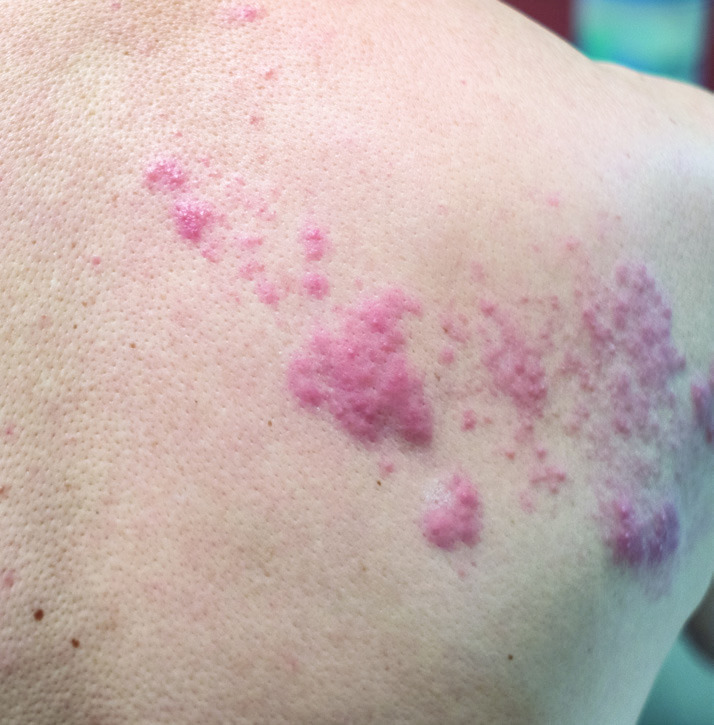
PEOPLE WHO HAVE HAD CHICKENPOX may not be aware that the virus responsible for all those itchy blisters (the varicella-zoster virus) is still present in their body and may eventually resurface and make its presence known in a most unwelcome encore performance—not as chickenpox, but as a condition called shingles, or herpes zoster. In fact, according to the Centers for Disease Control and Prevention (CDC), approximately one in three people in the US will develop shingles and there are an estimated 1 million cases in America each year.
Who is at risk?
After a person recovers from chickenpox, the varicella-zoster virus lies dormant in the nerve roots close to the spine. In some people, the virus remains forever in a dormant state and causes no health problems, while in others, it reactivates and causes shingles. Why the virus breaks dormancy in some people is not fully understood, but those most likely to develop shingles include older adults (age 60 and over), people with a weakened immune system, and those who had chickenpox before their first birthday. However, the CDC notes, anyone who has had chicken pox can get shingles, including children, and, though uncommon, it is possible to get shingles more than once in one’s lifetime.
What are the symptoms?
Shingles typically causes a severe burning, tingling, stabbing, throbbing, or stinging sensation in the affected area, followed by the appearance of a rash and blisters. Most commonly, the rash develops on the torso in a band that extends from the middle of the stomach to the middle of the back, but it can also occur on other parts of the body, such as the head around the eye or on the forehead, on the neck or chest, or on an arm or leg—again, typically on only one side of the body. Other symptoms associated with shingles may include headache, joint pain, fever and chills, swollen lymph nodes, and upset stomach.
Most cases of shingles last for three to five weeks, according to the National Institute on Aging.
Is shingles contagious?
If you’ve already had chickenpox or received the chickenpox vaccine, you can’t catch shingles from someone else who has it. Anyone who has not had chickenpox or has not been vaccinated can be infected through direct contact with fluid from rash blisters. However, they will not develop shingles initially; they’ll get chickenpox. They will then be at risk of developing shingles later in life.
Covering the shingles rash, avoiding touching or scratching the rash, and washing one’s hands frequently can help reduce the risk of transmitting the virus to others. Shingles is no longer contagious once all the blisters have crusted over and no new blisters are forming.
Are there any serious complications?
Most people who have shingles recover with no lasting complications, but some will experience one or more complications beyond the typical pain, rash, and blisters. Examples include:
• Secondary bacterial infection
• Post-herpetic neuralgia, or PHN (pain that persists for months or even years after the rash has healed)
• Peripheral motor neuropathy (nerve damage)
• Permanent scarring in some severe cases.
It’s also worth noting that the risk of experiencing serious complications from shingles is higher for people age 60 and older and the immune-compromised.
Antiviral medications are typically used to treat shingles and reduce the duration and severity of symptoms, and pain medications may be prescribed to reduce the often-intense pain associated with the condition. Your doctor may also recommend cool, moist compresses and topical lotions to ease the discomfort.
However, as anyone who has experienced the intense pain and discomfort of shingles will tell you, the best way to manage the condition is to avoid getting it in the first place. The good news is, the shingles vaccine (Shingrix) is more than 90 percent effective at preventing shingles and PHN. The CDC recommends two doses of the vaccine for adults age 50 and older as well as for adults age 19 and older who have a weakened immune system. ✲
