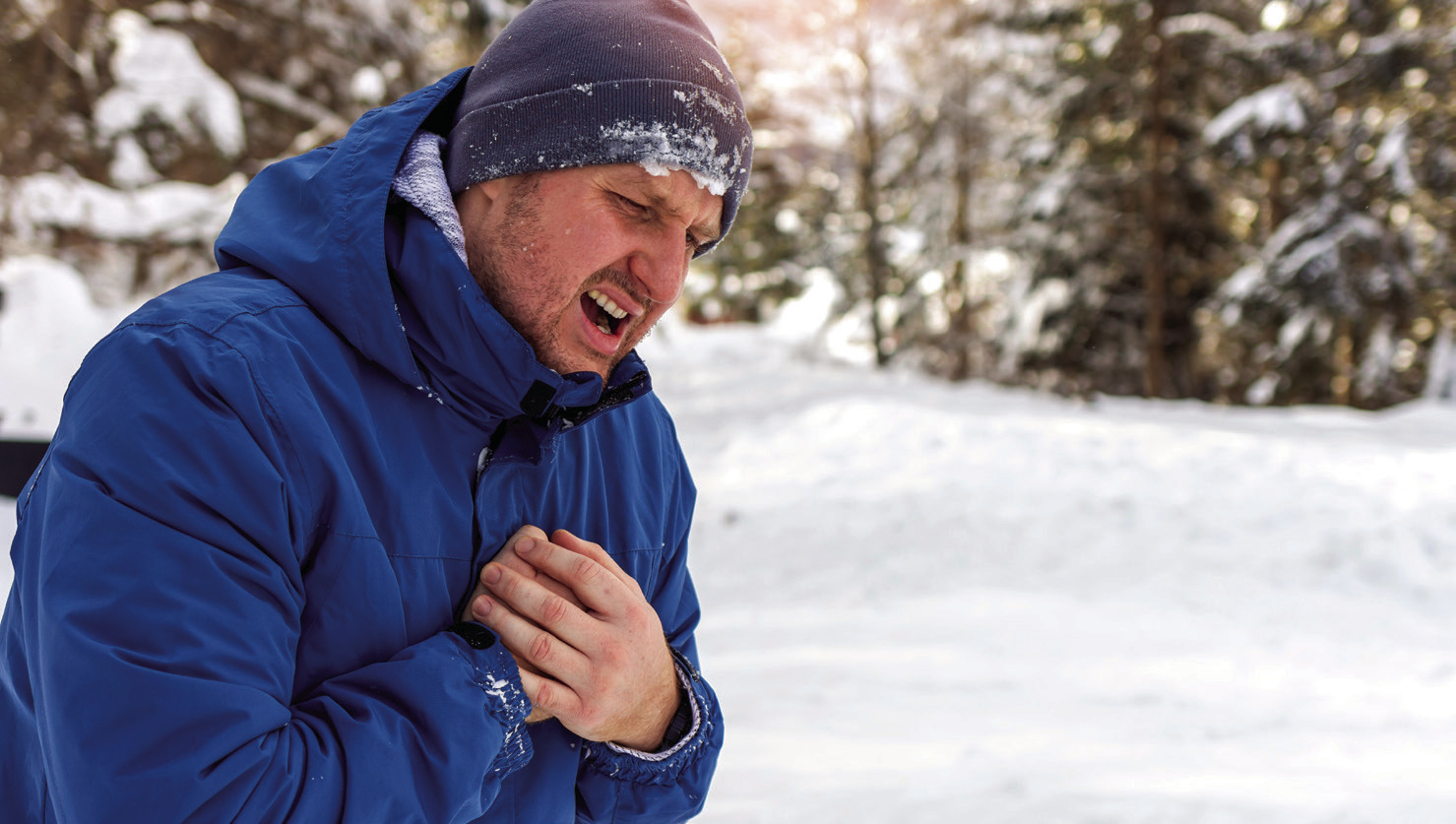
HEART ATTACKS BROUGHT ON BY shoveling snow might sound like an urban legend—one of those “my sister’s neighbor’s cousin” stories. But the arduous work of clearing a driveway on a frigid winter day really can raise your risk of a heart attack, particularly if you have pre-existing risk factors.
“That scenario is something we do see on occasion,” said Dr. William Saunders, chief of emergency medicine at The University of Toledo Medical Center. “You have people who aren’t used to exerting themselves that much going out and doing what amounts to a strenuous workout. It can be a real danger.”
Combine that with slips and falls, frostbite, and icy roads and that winter wonderland suddenly seems not quite so wonderful.
Saunders, a board-certified emergency medicine specialist, said the cold weather is partly to blame for the elevated risk of heart attacks. “There is some data that exerting yourself in cold weather is a lot harder than exerting yourself in warm weather,” he said. “The heart is already working harder in cold weather to keep you warm.”
Add in the heft of snow—a dense, wet snow can weigh more than 20 pounds per square foot—and it can present a real risk, particularly if you’re older, have additional chronic health conditions, or aren’t accustomed to strenuous exercise.
Signs and symptoms of a heart attack can include chest pain, shortness of breath, or pain radiating to the neck, arm, or back.
Despite the seriousness of heart attacks, Saunders said the most common weather-related trips to the ER are from falls on icy steps, sidewalks, and driveways. While not every tumble is an emergency, Saunders said people should trust their gut. “If you have any extremity injury, like a wrist or ankle, that looks deformed, you should seek immediate care in an emergency department,” he said.
One exception is for patients who are on blood thinners. Saunders said anyone who is taking blood thinners should get checked out after a fall, even if there are no obvious injuries. “Blood thinners are often a good choice for reducing someone’s risk of heart attack or stroke, but they are going to make you bleed more easily after an injury,” he said. “The problem is that internal bleeding isn’t immediately evident.”
Any patient on blood thinners who falls and hits their head should quickly be evaluated. Signs of a serious head injury can include headache, changes in vision, confusion, nausea, and vomiting.
Exposure related injuries like frostbite and hypothermia are generally less common, but still a concern— particularly when cold temperatures are accompanied by brisk wind. Frostbite, for example, can happen in as little as 10 minutes on a breezy, sub-zero day. To minimize these risks, Saunders said it’s important to dress appropriately for not just the air temperature but also the wind chill, even if you only intend to be outside for a short time.
“If you fall outside on a very cold day, that can create a pretty bad scenario. On cold, snowy days, it’s worth checking in on elderly friends and relatives to make sure they’re doing OK and see if they need help clearing their drive,” he said.
Tyrel Linkhorn is a communications specialist at The University of Toledo.
✲