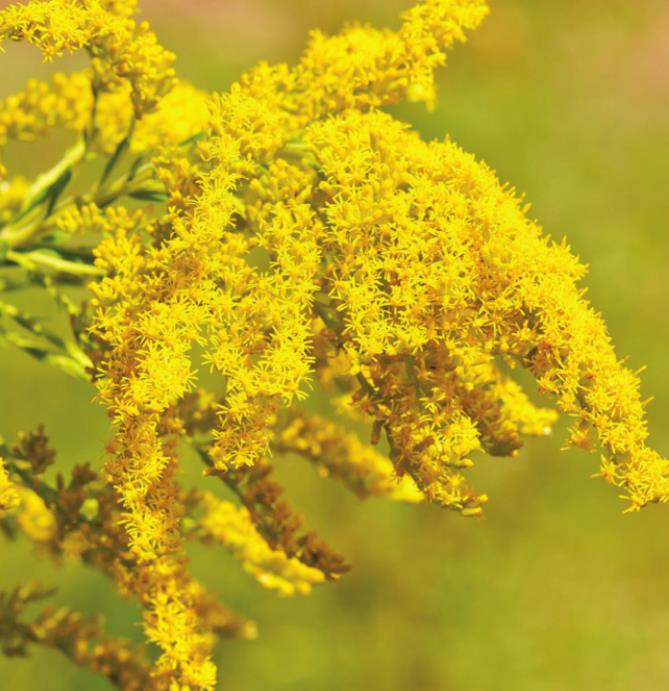
A MAJOR TRIGGER OF SEASONAL ALLERGY SYMPTOMS will soon be taking flight. From around mid-August until the first killing frost, a particularly irritating pollen will be spreading far and wide through the air, making seasonal allergy sufferers miserable with symptoms such as sneezing, runny nose, nasal congestion, eye irritation and puffiness, itchy nose and throat, headaches, and asthma flare-ups. The source of this airborne scourge? Ragweed.
Though it’s not the only weed pollinating at this time, ragweed is the most common and the most problematic for allergy sufferers. In fact, those particularly sensitive to ragweed pollen may even begin to experience symptoms in early August.
Ragweed is such a scourge for people with seasonal allergies largely because it’s such a prolific pollen producer. In fact, each plant can produce up to a billion pollen particles in its one-year lifetime, accounting for the vast majority of pollen floating in the air from August to October. Not only is ragweed pollen exceptionally abundant, but it’s also a world-class traveler. Though most of the pollen settles relatively close to the source plant, it can be borne upon the wind for a distance upwards of 400 miles and an altitude of up to two miles.
Found throughout the US, ragweed is most abundant in the Midwest and Eastern states, thriving best in areas where the soil has recently been disturbed or anywhere it has a chance to get a foothold ahead of other weeds and grasses, such as along roadsides and riverbanks, in abandoned fields, and in vacant lots. What’s more, ragweed seeds can lie dormant for decades until environmental conditions favor germination.
The symptoms of ragweed allergy can often be managed effectively with medications or through allergy immunotherapy treatments (“allergy shots”), but avoidance should also be considered an essential element of the strategy to minimize the suffering ragweed pollen imposes. Moving to an area where the pollen is less abundant—such as higher altitudes, out West, or, perhaps, Hawaii—is one avoidance alternative, but let’s face it, for most people, that’s just not a practical solution. Besides, given the extensive range of the ragweed plant and the distances its pollen can travel, it’s not so easy to move beyond ragweed’s reach.
A good avoidance strategy includes trying to stay indoors with air conditioning and a high-efficiency particulate air (HEPA) filter when the pollen count is high. Ragweed pollen levels tend to peak between the hours of 10:00 a.m. and 3:00 p.m., so allergy sufferers should try to stay indoors during that period. When you must go outside, be sure to take your allergy medications beforehand to get ahead of symptoms. Wearing glasses or sunglasses will reduce the amount of pollen that gets in your eyes, and saline spray can be used to flush the pollen out of your nose. When you come back indoors, it’s a good idea to change your clothes and wash your hair to avoid transferring pollen to your furnishings and bed.
Because numerous weeds pollinate at the same time of year as ragweed, it’s important for people who experience allergy symptoms during late summer and fall to see an allergist for testing to determine which, if any, other pollens might be causing them to react. Identifying the exact culprit (or culprits) is important because with all those pollens floating around simultaneously, there’s no way to avoid one but not the others. Also, if immunotherapy is the chosen method of allergy management, extracts from each identified trigger pollen would need to be included in the injections.
If ragweed pollen is making you miserable, you have choices apart from moving to another part of the country or continuing to suffer with symptoms. If medications aren’t doing the job, immunotherapy may be a good alternative. Your allergist can help you develop an effective long-term management strategy so you aren’t trapped indoors for a significant portion of the year.