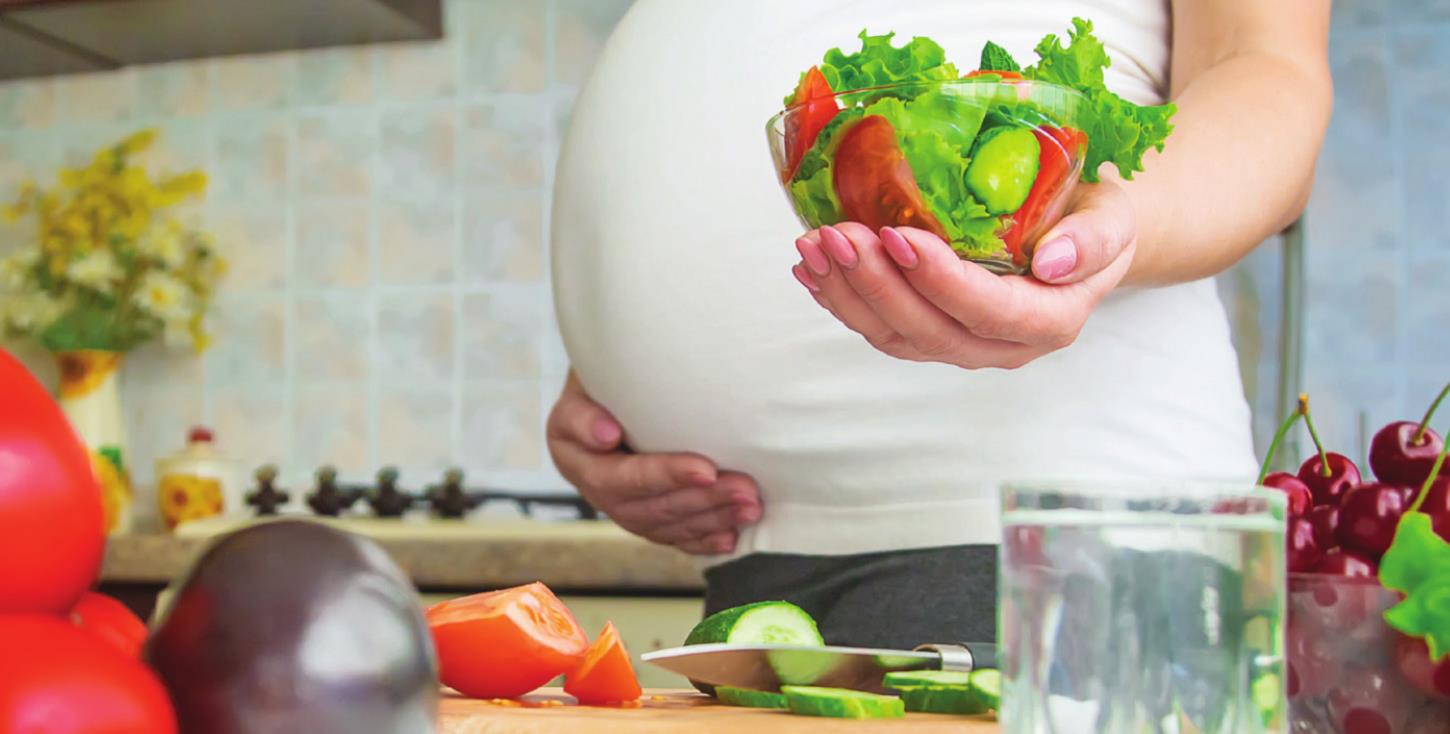
“EATING FOR TWO” is a misnomer we commonly apply to women who are pregnant, erroneously assuming pregnancy gives them—and in some cases even their partner, spouse, or significant other—license to eat to their heart’s (stomach’s?) delight. While healthy eating is especially important during pregnancy for both mom and baby, that does not mean women need to double their caloric intake during this magical 40 weeks.
I should point out that pregnancy does require additional calories—but only somewhere in the range of 200 to 300 per day. That’s the equivalent of a cup of milk and four graham crackers. Beyond that modest uptick in calories, choosing a healthy, well-balanced diet is essential for mom and baby. That includes eating a variety of foods, taking your multivitamin as prescribed, and drinking plenty of fluids.
Let’s take a closer look at some of the elements that comprise a healthy diet during pregnancy:
Meal planning and food shopping
When it comes to choosing healthy, well-balanced meals throughout the day, a good place to start is MYPLATE. gov, where you’ll find all kinds of helpful recommendations. For example, you should include a protein at each meal, shooting for a goal of 50 to 75 grams per day total. You should also get three cups of dairy for calcium and vitamin D, at least two fruit servings, and at least three vegetables per day. In addition, try to avoid extra calories from added sugars and added fats, which can lead to unhealthy weight gain; choose healthy fats from avocados, nuts and seeds, and vegetable oils such as canola oil; and limit items such as soft drinks, sweets, and fried foods.
You might also find it helpful to eat six smaller meals per day rather than three larger ones, especially later in your pregnancy when the baby is taking up a lot of room and making you feel full faster. If you’re having trouble with nausea in the morning or at any time during the day, nibbling on a few crackers, chips, or pretzels might help your tummy. Be sure to stay hydrated throughout the day, as well.
And don’t forget to take your multivitamin to ensure your developing baby gets enough folic acid, iron, and calcium. Taking it with a meal is helpful, and later in the day usually works best if you have trouble with it.
When food shopping, always make a list that includes items from each food group. It’s never a good idea to food shop when you’re hungry, so eat prior to shopping to avoid overbuying items you really don’t need. Use food labels to help steer you toward healthy food purchases, and store all your foods properly as soon as you get home from the store.
Food safety
Foodborne illness is a high risk during pregnancy, so always practice good hand hygiene before you start cooking and before you eat; keep counters, sinks, and cutting boards clean and sanitized; and keep hot foods hot and cold foods cold until you’re ready to eat. Also be sure to:
• Promptly store leftover foods in the refrigerator or freezer.
• Cook meat and poultry until it’s well done.
• Avoid eating cold deli luncheon meats and hot dogs or heat them until they’re steaming hot before eating.
• Use only pasteurized eggs and store them in the refrigerator. Cook all eggs until they’re well done (so the yolk is hard).
• Avoid unpasteurized milk and cheese like Mexican soft cheese, feta, Brie, Camembert, and blue-veined cheese.
• Wash all fruits and vegetables.
• Avoid raw sprouts.
Another important food-safety consideration for pregnant women is limiting the intake of foods containing mercury, an environmental contaminant that can impair fetal growth and brain development. Mercury is found in high concentrations in fish like shark, swordfish, king mackerel, and tilefish such as golden snapper (a.k.a. golden bass). These should be avoided. In general, cooked or canned salmon and tuna should be limited to no more than 12 ounces per week. However, eating up to 8 ounces per week is recommended in the new Dietary Guidelines for Americans 2020-2025 to provide essential omega-3 fatty acids to improve brain and vision development in the baby. Fish oil supplements should be avoided during pregnancy.
Pregnancy is a special time that should be enjoyed while eating healthy, getting plenty of exercise, and avoiding unhealthy lifestyle choices. Don’t be surprised if you develop a sudden dislike or cravings for certain foods. Some of the more common cravings are for sweets, salty snacks, red meats, and fluids. They say that cravings are the body’s way of signaling that it needs a specific nutrient, such as more protein, or additional liquids to quench thirst. So go ahead and give in to your cravings—within moderation.
Laurie Syring, RDN/LD, is Clinical Nutrition Manager at ProMedica Flower Hospital.