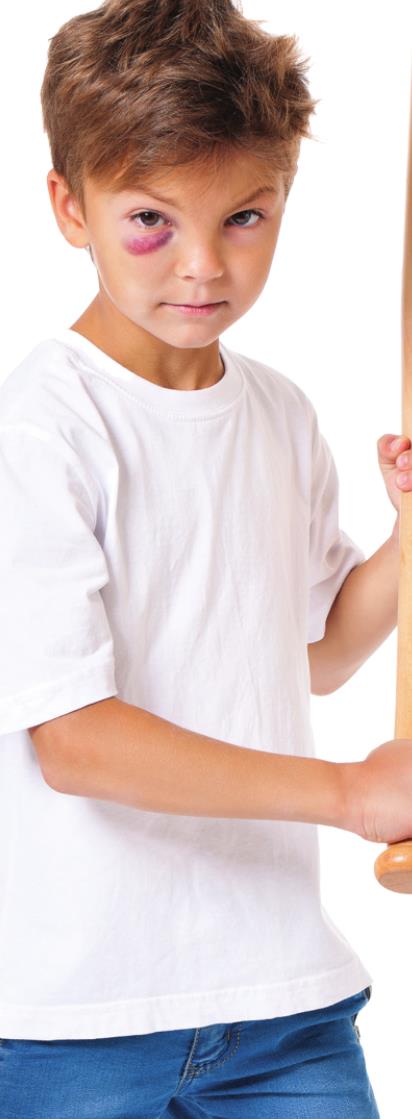
ANOTHER SCHOOL YEAR HAS OFFICIALLY BEGUN, and for many kids that means taking part in sports once again (potential COVID restrictions notwithstanding). While participating in athletics is tremendously beneficial to kids on a variety of levels, it also comes with certain inherent risks, including, in many sports, the potential for eye injury.
In fact, the American Academy of Ophthalmology (AAO) notes that nearly 30,000 sports-related eye injuries are treated in U.S. emergency rooms each year. The National Eye institute (NEI) reports that among US children specifically, eye injuries are a leading cause of blindness, and most of these injuries occur while they’re playing sports.
Which sports put kids at the greatest risk of eye injury? As one might expect, any sport that involves a ball, puck, bat, stick, racquet, and/or the potential for players to collide with one another is considered high-risk for eye injury. Interestingly, the sport of basketball appears to be one of the worst sports from the standpoint of eye safety. According to “Sports Eye Safety,” an article on the AAO website written by David Turbert and Beatrice Shelton (https://www.aao.org/eye-health/tips-prevention/injuries-sports), “One study found that basketball was the leading cause of sports-related eye injuries in the United States followed by baseball, softball, airsoft rifles, pellet guns, racquetball and hockey.”
It might seem counterintuitive that a sport involving such a large ball puts players at high risk of eye injury, but it’s not necessarily the ball that’s at issue. Rather, eye injuries in basketball are more likely to occur when players collide or when a player’s eye is accidentally poked, for example when going up for a shot or rebound.
The NEI also lists different sports according to their level of eye-injury risk, identifying baseball, softball, basketball, fencing, hockey, mountain biking, paintball, racquetball, and squash as high-risk, and badminton, golf, soccer, tackle football, and tennis as moderate-risk.
The good news is, simply wearing appropriate protective eyewear can prevent the vast majority of sports-related eye injuries—9 out of 10 according to the NEI—and help keep your child from becoming another eye-injury statistic.
What constitutes “appropriate protective eyewear” varies from sport to sport. The NEI recommends that kids wear safety goggles with polycarbonate lenses when participating in baseball and softball (fielding), basketball, mountain biking, racquetball or squash; helmets with attached polycarbonate face guards or face masks when playing baseball and softball (batting), hockey, or tackle football; and swim-safety goggles with polycarbonate lenses when taking part in water sports such as surfing, water polo, waterskiing, or tubing. Of course, this list is far from all-inclusive. Other sports not listed here may have different eye-protection requirements, which should be discussed with your child’s coach.
What if your child already wears glasses to correct his or her vision? Isn’t that sufficient to protect against eye injury in sports? Unfortunately, it’s not. In fact, regular eyeglasses can actually make an eye injury even worse if they should shatter. On the other hand, it is usually possible to get protective eyewear in a child’s prescription to not only help prevent eye injury but also correct his or her vision. Alternatively, it may be possible for your child to wear protective eyewear over his or her corrective eyeglasses. Your eye doctor can explain all the possible options for your young athlete.
In the event of an eye injury, don’t hesitate to seek medical attention, even if the injury doesn’t seem serious. Some serious eye problems can develop with no obvious initial symptoms, and delaying treatment can result in permanent vision loss or even blindness. The AAO recommends getting medical help immediately if you notice any of the following signs or symptoms:
• Ongoing pain in the eye
• Trouble seeing
• A cut or torn eyelid
• One eye does not move as well as the other
• One eye sticks out of the eye socket farther than the other
• The eye has an unusual pupil size or shape
• There is blood in the clear part of the eye
• The person has something in the eye or under the eyelid that tears and blinking can’t remove.
Of course, an ounce of prevention being worth a pound of cure, it’s much better to avoid an eye injury in the first place than to require treatment for one. So make sure your child wears sport-appropriate eye protection during every game and practice. ✲