I RECENTLY HAD MY ANNUAL APPOINTMENT with my eye doctor. I drove to the medical clinic. When I arrived, a staff member gave me a phone number and directed me to call it when I was parked in the lot. I found a spot, parked, and called. They told me to wait until the office was ready for me and that it would happen shortly.
So I waited. And waited—for an hour.
I drive a modified van with hand controls and a ramp that deploys from the passenger side. The middle seat is removed to allow me to drive my electric cart in and out. I drive my cart in, hook it down with a cable, stand up, and move to the driver’s seat. When I get to my destination, I walk the short distance to my cart and then drive down the ramp.
Since it was 20 minutes before my appointment, I turned off the ignition (and the air conditioning). I sat on my cart inside the van, reading emails and an article from my phone. I felt a bit warm since it was in the upper 70s and the humidity was oppressive. I checked my watch a few times, figured they were late, and continued on my phone, distracted for a while.
I opened the doors where the air was more uncomfortable outside than in my van. I considered going back to the driver’s seat to turn on the air conditioning, but by this time, since I waited this long, as soon as I ventured up front, the clinic would call me and I would have to drag my heat weakened legs back to the middle of the van.
I was ready to leave the van after an hour, when finally they called and invited me in. I told the receptionist how long I waited. She offered me water, and I eventually felt my body getting stronger as I cooled down and the weakness went away. I was not too smart—I should have left my van and gone into the clinic. Next time, I will do just that.
Overheating can cause many serious health problems. For persons with chronic diseases, and for anyone, the heat from sitting in a car can do physical damage. For me, with my multiple sclerosis, a rise in my core temperature disrupts the flow of electrons in my body enough to cause problems such as temporary muscle weakness, fatigue, or vision loss. What happens to me during steamy or humid weather is more weakness in my arms and legs. With MS and overheating, I take it easy and the temporary weakness goes away.
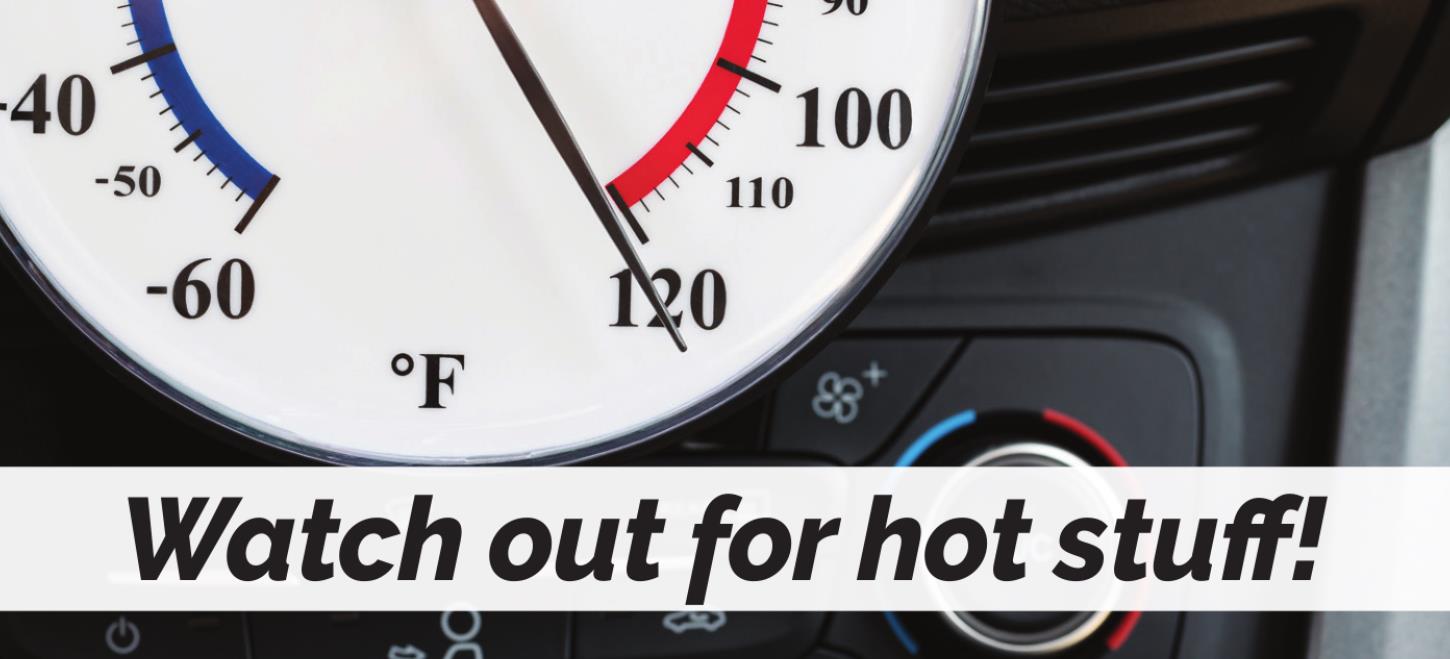
A car parked outside on a hot summer’s day can turn into a scorching oven. According to the journal Temperature, researchers studied how long it takes different types of cars to heat up on hot days. The findings were sobering: Within 1 hour, the temperature inside a car parked in the sun on a day that reached 95 degrees Fahrenheit or hotter hit an average of 116 degrees F. The cars’ dashboards got even hotter, reaching 157 degrees F; the steering wheels climbed to a temperature of 127 degrees F; and the temperature of the seats hit 123 degrees F.
Anyone can have a serious reaction to intense heat. A person can get heat exhaustion with symptoms of sweating heavily, having a rapid pulse, and feeling faint or sleepy. Heat stroke can occur and is a more serious condition, in which the body’s core is 104 degrees Fahrenheit (40 degrees Celsius) or hotter. This condition requires emergency treatment, as it can lead to damage to the brain, heart, kidneys, and muscles. Symptoms include high body temperature, nausea, vomiting, headache, and changes in behavior, such as confusion, agitation, or irritability. Other symptoms are slurred speech, seizures, or coma.
To cool down, go to a cooler environment, such as the shade or an air-conditioned area, especially during the hottest hours between 10:00 a.m. and 2:00 p.m. local time. It’s also important to stay hydrated. Drink your water.
The media warns all of us about the danger of extreme heat, especially leaving children or pets in locked cars during warm weather, which does not even have to be severely hot. A child’s body heats up three to five times faster than an adult’s does. When left in a heated car, major organs begin to shut down when the temperature reaches 104 degrees F. A child can die when his temperature reaches 107 degrees.
When pets are left in cars, even with a window left open, they have a harder time adjusting to heat than most humans, so being stuck in a hot car can quickly become life-threatening. When the temperature rises, dogs will try to cool off by panting, and their anxiety level will likely rise in relation to their discomfort. Extreme heat can cause brain damage and death in dogs.
Basically, do not leave children or animals in a car. Vehicles heat up very quickly, even when the temperature is in the 50s. Heating happens, and although it might be a pain to remove your child from a pretty involved child seat buckle and belt, do not leave them in your car, even for a matter of minutes.
Do not leave your pet in a car, even with the windows cracked open. If you see a child or pet in a hot car, call 911. You could be saving a life.
So, try to avoid the potential serious danger of any amount of time in a closed vehicle for adults, children, and pets. Have water in your vehicle, and keep a cooling vest or an ice pack to apply to your wrist or body. Before you get out of your car, make it a habit of checking the back seat for a child or pet. Use an alarm to remind you of how much time you have left the car. If you can go out in the morning or evening when temperatures tend to be cooler, do your errands then.
Be aware of the potential of extreme heat in your car, and remember that extreme heat can cause damage to all living things.
Sister Karen Zielinski is the Director of Canticle Studio. Canticle Studio is a part of the Sisters of St. Francis of Sylvania, OH’s overall advancement effort and has a mission of being a creative center where artists generate works, products, and services in harmony with the mission of the Sisters St. Francis. She can be reached at kzielins@sistersosf.org or 419-824-3543.