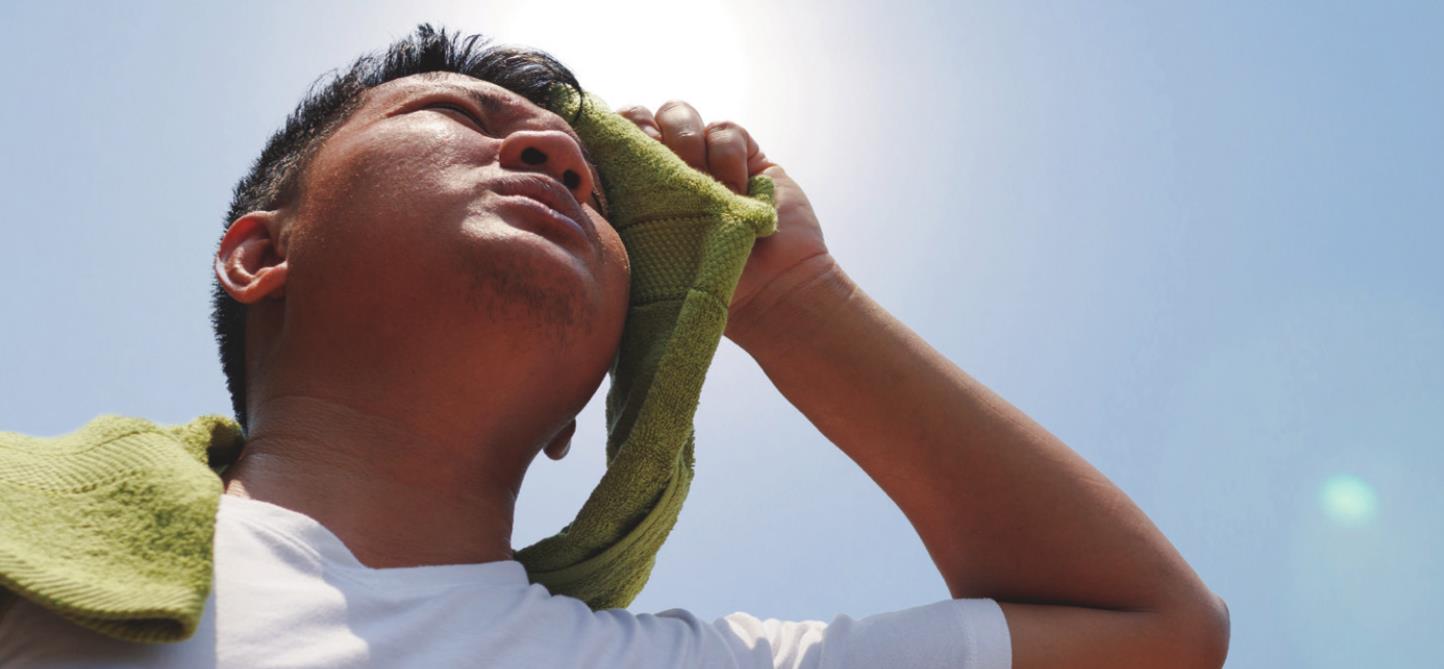

WHEN WE’RE IN THE MIDST OF one of our seemingly endless Northwest Ohio winters, we look forward wistfully to the warm days of summer. But then summer can have a sinister side, too. If we aren’t careful when we’re working, playing, or working out in the mid-summer heat, we can easily push ourselves to the point of heat-related illness.
Heat-related illness occurs when we overheat to the point that our body’s natural cooling mechanisms—evaporative heat loss through perspiration and loss of heat through the skin—are not sufficient to cool us down. The people most vulnerable to heat-related illness are those at either extreme of the age continuum—the very young, who don’t shed heat as well as adults do, and the very old.
Heat cramps
Heat-related illness progresses in stages, typically beginning with heat cramps, which result from excessive perspiration that depletes the body of both water and salt. According to the Centers for Disease Control and Prevention (CDC), signs of heat cramps to look for include heavy sweating during intense exercise, and muscle pain or spasms. In the event of heat cramps, the CDC advises:
• Stop physical activity and move to a cool place.
• Drink water or a sports drink.
• Wait for the cramps to go away before resuming physical activity.
• Get medical help right away if the cramps last longer than an hour, you’re on a low-sodium diet, or you have heart problems.
Heat exhaustion
The next stage of heat-related illness is heat exhaustion. At this stage, excessive fluid loss due to exerting and/or wearing overly heavy clothing in a warm, humid place leads to decreased blood flow to the vital organs. Because of the high humidity, perspiration does not evaporate, so the body is unable to cool itself naturally.
According to the CDC, the potential symptoms of heat exhaustion include heavy sweating; cold, pale, and clammy skin; a fast, weak pulse; nausea or vomiting; muscle cramps; tiredness or weakness; dizziness; headache; and fainting.
If heat exhaustion is suspected, you should:
• Move to a cool place.
• Loosen your clothes.
• Put cool, wet cloths on your body or take a cool bath.
• Sip water.
• Get medical help right away if you are throwing up, symptoms worsen, or symptoms last longer than an hour.
Heat stroke
The most dangerous stage of heat-related illness is heat stroke, also known as sunstroke. With this life-threatening condition, the victim’s natural temperature-control mechanisms have completely shut down and his or her body temperature rises precipitously. At such high temperatures, brain damage or death can occur if the victim’s body is not cooled quickly enough.
Symptoms to look for include a high body temperature (103°F or higher); hot, red, dry, or damp skin; a fast, strong pulse; headache; dizziness; nausea; confusion; and loss of consciousness.
In the event of heat stroke, the CDC advises:
• Call 911 right away—heat stroke is a medical emergency.
• Move the person to a cooler place.
• Help lower the person’s temperature with cool cloths or a cool bath.
• Do not give the person anything to drink.
An ounce of prevention
Of course, the best approach to heat-related illness is to prevent it from happening in the first place. Here’s how:
• Drink plenty of water when you work, exercise, or play in the heat. Don’t wait until you feel thirsty!
• Dress to beat the heat in lightweight, light-colored clothing.
• Tackle strenuous outdoor chores or activities early in the morning when the temperature is usually at its coolest.
• If possible, stay indoors when it’s excessively hot outside.
• If you must be active in the heat, take frequent breaks in a shady, cool location.
• Be alert to symptoms of heat-related illness in others.