ATRIAL FIBRILLATION, OR AFIB, is the most common form of heart arrhythmia (irregular heartbeat), affecting an estimated 5 million Americans, many of whom may be unaware that they even have the condition. Though not immediately harmful by itself, AFib can lead to life-threatening complications over time, such as reduced function of the heart, possibly leading to heart failure, and, most notably, a significant increase in the risk of stroke. This elevated stroke risk is the reason many people with AFib are prescribed blood thinners.
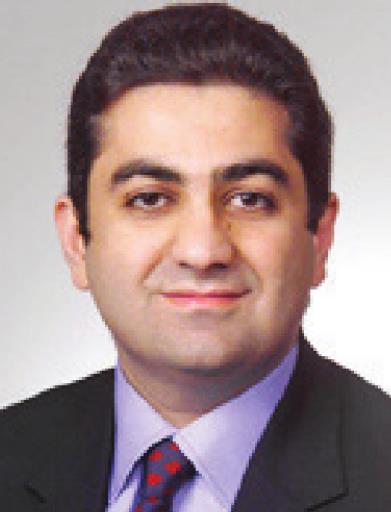
What exactly is AFib and what causes it? Samer Khouri, MD, head of Cardiology at The University of Toledo Medical Center (UTMC), explains, “Just like a home, the heart needs good walls, good plumbing, and a good electrical system. AFib is a problem with the electrical system. Usually, the heart beats in a very regular manner, but when the upper chamber starts beating irregularly due to this electrical problem, the rhythm becomes abnormal and eventually you start to feel palpitations.”
He further explains that stroke risk increases in people with AFib because when the upper chamber of the heart fails to contract properly and beats in a disorganized way, blood tends to pool in the left atrial appendage—a sac-like structure located in the left atrium—where it can form clots. If those clots then become dislodged from the left atrial appendage, they can travel to vessels in the brain, obstructing blood flow and causing stroke. Clots can also travel to other parts of the body, such as the legs or bowel, potentially causing other life-threatening complications.
The most significant risk factor for developing AFib is having high blood pressure—one more reason it’s important for your doctor to keep a close eye on this health metric. In addition, AFib risk increases as people age and is higher among smokers.
With respect to symptoms, the most common is palpitation—the sensation that the heart is fluttering or beating too hard or too fast. “However, some patients fall into what we call the ‘silent group’ because they don’t feel palpitations with AFib. In these individuals, the main symptom may be shortness of breath, heart failure, or even stroke,” Dr. Khouri notes.
When it comes to treating AFib, UTMC takes a unique multidisciplinary, highly individualized approach. The team—consisting of an electrophysiologist, cardiothoracic surgeon, structural heart disease specialist, pharmacist, social worker, and nurse coordinator—works in a highly collaborative manner to provide expert evaluation, diagnosis, and treatment of AFib all in the same location to maximize patient convenience.
The UTMC team’s options for treating AFib range from medications to state-of-the-art, minimally invasive surgical procedures, including various ablation procedures to create a path and organize electrical activity in the heart, such as catheter ablation and CryoMaze, as well as procedures to close or plug the left atrial appendage so blood can’t pool and clot there, such as Atriclip and Watchman device implantation.
“We usually first try medical therapy, but that’s only successful in 50 to 60 percent of cases. The rest of the cases require a different intervention,” says Dr. Khouri. “Oftentimes, that means catheter ablation, but in some patients that can be difficult to do, in which case we have the alternative of doing surgical ablation. If we can’t achieve a normal heart rhythm with ablation and the patient is at increased risk of bleeding on a blood thinner, we can take one of two approaches unique to us—either plugging the left atrial appendage with the Watchman device, or ligation of the left atrial appendage. We always have another treatment option available to us.”
Dr. Khouri emphasizes that every AFib patient is unique, so the treatment approach at UTMC is always tailored to each case based on age, risk, and the patient’s needs and preferences. Also, while treatment usually begins with the most conservative approach and then becomes progressively more aggressive, that’s not always the case. “For example, in young patients, more aggressive treatment is often needed to prevent the arrhythmia from becoming permanent, so ablation may be the perfect choice. On the other hand, for an 80-year-old patient at high risk of bleeding, a more conservative approach would be appropriate,” he says. According to Dr. Khouri, an actual cure is achieved in very few AFib cases. However, the condition is usually very manageable. “Most often, our goal is to control symptoms while preventing stroke, and here at UTMC, we’re very patient-focused, so the treatment approach is tailored to the individual in every case,” he states.
To learn more about the AFib program at UTMC call, 419-383-3963.