RADIATION THERAPY is a long-established, highly effective tool for treating various forms of cancer that yields results similar to surgery while sparing healthy tissue and organs. What’s more, in recent years, tremendous advances in technology and technique have revolutionized the field of radiation oncology, allowing for much more accurate and targeted treatments and yielding optimal outcomes for patients.
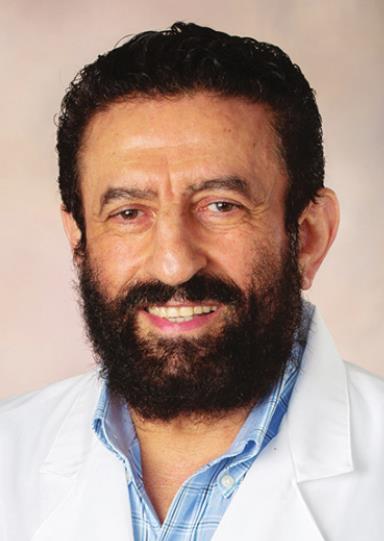
According to radiation oncologist Ahmed Akl, MD, of The Toledo Clinic Cancer Centers, decades of research and clinical trials have produced excellent data showing that radiation therapy can be used successfully as the primary treatment for many cancers, especially in the early stages. “For example, radiation can be used as the primary and only treatment for early stage skin cancers, oral cancer, certain head-and-neck cancers, lung cancer, prostate cancer, and many others. The success rate of these treatments can be as high as 90 to 95 percent with preservation of organs and no compromise of function,” he says. “When treating cancers at more advanced stages, radiation plays a major role in combination with chemotherapy or surgery, or all three can be used together.”
Dr. Akl explains that radiation oncologists have several forms of radiation at their disposal, the most commonly utilized being photon radiation, or high-energy x-rays. He remarks that photons are electromagnetic waves with a short wavelength that penetrate to the desired depth and work by damaging the cancer cells’ DNA so they can’t replicate. “As a result, the cancer cells die and disappear, but normal tissue is able to regenerate and return to normal. This ability to discriminate between cancer and healthy cells is the greatest therapeutic advantage of photon radiation,” he adds.
While most people are aware that radiation therapy plays a vital role in cancer treatment, what they might not realize is that it can also have important applications in managing certain medical emergencies associated with cancerous tumors. Dr. Akl gives the example of spinal cord compression caused by tumor growth. “If the patient is not a candidate for surgery, we can shrink the tumor with radiation and prevent paralysis. When done immediately, before paralysis develops, the success rate is 90 percent,” he says.
However, radiation in this scenario becomes less and less effective the longer the patient waits to get treatment. “That’s why it’s so important for patients in this situation to be alert to symptoms such as lower back pain and any weakness or numbness in the legs. If complete paralysis has already set in, the chance of recovery after treatment is only about 10 percent,” Dr. Akl cautions.
Another emergency use for radiation therapy is shrinking a lung cancer tumor that is pressing against the superior vena cava—the large vein in the chest that carries blood into the heart. When this vein is compressed, proper blood flow and fluid drainage is impeded, causing back pressure. As a result, patients tend to experience swelling of the face and arms. Shrinking the tumor with radiation opens up the superior vena cava, thereby restoring proper drainage and reducing swelling.
Other examples of emergency radiation therapy that Dr. Akl provides include destroying tumors that can develop behind the eye in people with leukemia, which can prevent them from losing their vision, as well as eliminating tumors that are compressing the brain and causing neurological symptoms. “With brain tumors, we first give the patient a steroid to reduce swelling in the brain, then we start radiation treatment. Even if there are multiple lesions, we can usually destroy them completely,” he says.
Patients preparing to undergo radiation therapy commonly have concerns regarding severe side effects from treatment. In some instances, these anxieties stem from memories of adverse experiences that a parent or grandparent had with radiation many years ago. However, Dr. Akl reassures patients that radiation today is very different from what it was in the past. “Modern radiation technology is so advanced and sophisticated that side effects, if any, are minimal,” he says. “Also, before each treatment, we take an image of the entire organ that allows us to direct the beam very accurately so the full dose is delivered to the cancer while the surrounding tissue is spared. Once patients complete their course of radiation treatment, they can usually get back to their normal lives within a matter of weeks.”
The Toledo Clinic Cancer Centers, located at 4126 N. Holland Sylvania Road, Suite 105, also provides imaging, laboratory, chemotherapy and IV services. The cancer center consists of 7 medical and 3 radiation oncologists along with 8 nurse practitioners and 4 research nurses. The cancer center also has satellite centers in Maumee, Napoleon, Bowling Green, Wauseon, and Monroe.
The Toledo Clinic Cancer Centers has earned Patient-Centered Specialty Practice level 3 recognition and Oncology Medical Home recognition from the National Committee for Quality Assurance. Oncology homes align systems and resources with coordinated care focused on cancer patients and their needs. This reduces fragmentation, supports shared decision making, and improves the patient experience. They are the first oncology practice in the state of Michigan and the second oncology practice in the state of Ohio to receive this recognition.
For more information, please call The Toledo Clinic Cancer Centers at 419-479-5605.