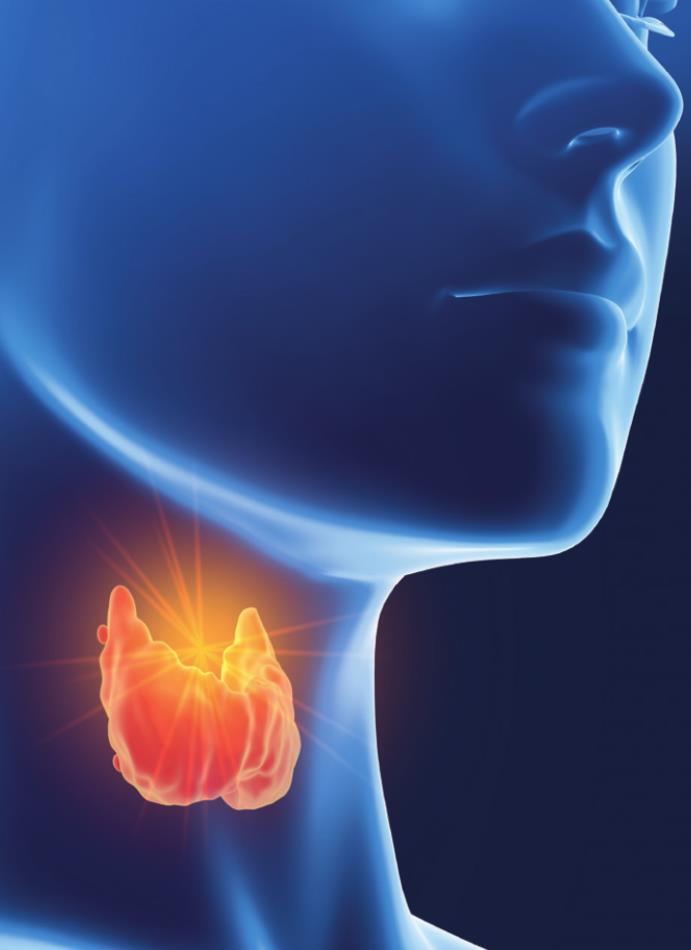
THE THYROID GLAND is an organ of the body we seldom give much thought—that is, unless it’s not working properly. This small, butterfly-shaped gland, located at the base of the neck along the front of the windpipe, releases hormones that regulate the body’s metabolism and affect a host of bodily functions, including breathing, heart rate, body temperature, the rate at which calories are burned (influencing weight loss and weight gain), the rate at which food moves through the digestive tract, muscle contraction, menstrual cycles, and many others.
To accomplish all these different regulatory functions, the thyroid utilizes two main hormones: triiodothyronine, or T3, and thyroxine, or T4, which are made using iodine derived from the foods we eat. The hypothalamus and pituitary gland, both of which are located in the brain influence the function of the thyroid gland, sensing when the levels of T3 and T4 are too low or too high and hormonally signaling the thyroid to increase or decrease their production accordingly.
Several diseases and disorders can affect the thyroid gland, for example goiter, or bulging in the neck; thyroid nodules; thyroid cancer; inflammation of the thyroid gland, called thyroiditis; and the autoimmune condition known as Grave’s disease. Two particular terms related to thyroid dysfunction—hyperthyroidism and hypothyroidism—are recognizable to many people, but they also tend to cause a fair amount of confusion, due in no small part to the fact that the names of these conditions look and sound almost identical.
To help clear up the confusion, let’s take a closer look at these two opposite extremes of thyroid function and what symptoms they commonly cause.
Hyperthyroidism
Hyperthyroidism, or overactive thyroid, occurs when the thyroid gland makes more thyroid hormones than the body actually needs. This condition affects one in 100 Americans age 12 and over and according to the National Institutes of Health is more common in those who have a family history of thyroid disease; have other health problems such as pernicious anemia, type 1 or type 2 diabetes, or primary adrenal insufficiency; eat large amounts of food containing iodine or take medicines that contain iodine; use nicotine products; or were pregnant within the past six months. While there are many potential causes of hyperthyroidism, Graves’ disease is the most common.
The NIH states that symptoms of hyperthyroidism might include weight loss despite an increased appetite; rapid or irregular heartbeat; nervousness, irritability, trouble sleeping, and fatigue; shaky hands and weak muscles; sweating or trouble tolerating heat; frequent bowel movements; and enlargement in the neck (goiter). If left untreated, hyperthyroidism can lead to serious complications, such as blood clots, stroke, heart failure, and other heart-related problems; an eye disease called Graves’ ophthalmopathy; thinning bones, osteoporosis, and muscle problems; as well as menstrual cycle and fertility issues.
Hypothyroidism
The condition known as hypothyroidism, or underactive thyroid, is the opposite of hyperthyroidism, meaning the thyroid gland produces less thyroid hormones than the body requires. More common than overactive thyroid, hypothyroidism affects nearly five out of 100 Americans age 12 or older. Among those that the NIH identifies as being at higher risk of developing hypothyroidism are individuals who had a thyroid problem before; had surgery or radioactive iodine to correct a thyroid problem; received radiation treatment to the thyroid, neck, or chest; have a family history of thyroid disease; were pregnant in the past six months; or have Turner syndrome or certain other health problems.
Also according to the NIH, common symptoms of hypothyroidism include fatigue; weight gain; difficulty tolerating cold; joint and muscle pain; dry skin or dry, thinning hair; heavy or irregular menstrual periods or fertility problems; slowed heart rate; and depression. Potential complications of untreated hypothyroidism include high cholesterol and, in very rare instances, a life-threatening condition called myxedema coma.
Thyroid disorders are usually treatable
The good news is, both hyperthyroidism and hypothyroidism can usually be treated successfully with medications or other therapies. Many of the symptoms listed above can stem from other physical or mental health conditions, but if you experience one or several of these warning signs, it’s important to seek a medical evaluation to determine whether thyroid dysfunction is the underlying cause. ✲