

WHEN FUNCTIONING PROPERLY, the lymphatic system performs several important functions, including, among other duties, carrying white blood cells throughout the body to fight infection, maintaining proper fluid levels in the tissues, and helping to rid the body of toxins, waste, and debris. These processes are performed by a network of vessels and over 600 lymph nodes, which transports a clear, protein-rich fluid called lymph.
However, if the lymphatic system is impaired and doesn’t drain as it should, lymph can accumulate in the body’s soft tissues, causing swelling. This chronic condition, called lymphedema, most commonly affects the extremities (arms or legs) but can also occur in other parts of the body, such as the head and neck, abdomen, or even the genitals. If not properly treated, lymphedema will worsen progressively. In later stages, lymphedema becomes irreversible and requires much more intensive treatment measures.
Because lymphedema becomes more severe and more challenging to manage with the passage of time, it’s essential to identify it early—ideally before any symptoms arise—and for those at risk of developing lymphedema to be monitored and educated on the condition and its symptoms.
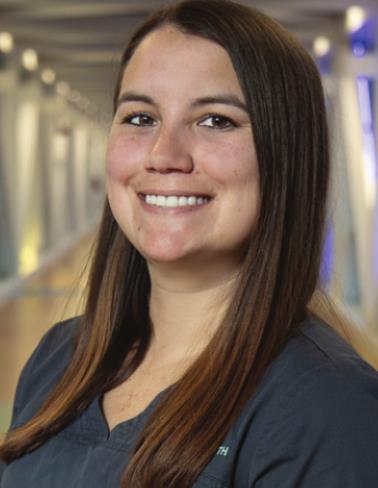
Bethany Schnipke and Courtney Andryc, both occupational therapists and certified lymphedema therapists (OTR/L, CLT) with the Mercy Health Lymphedema Prevention Program, are poised to provide this vital educational component for individuals at risk as well as to help patients with lymphedema learn to manage their symptoms independently, prevent or minimize the progression of symptoms, and maximize their quality of life.
Andryc notes that lymphedema can be either primary or secondary. “Primary lymphedema is commonly hereditary, meaning the person was born with it, and we tend to see it more frequently in women than in men. Secondary lymphedema occurs when the lymphatic system is damaged and can have a variety of possible causes, such as the surgical removal of lymph nodes, radiation treatment, obstructive tumors causing blockage, trauma to the system, morbid obesity, recurring infections, or vascular conditions,” she explains.
People with breast cancer are often at high risk of developing lymphedema because treatment for this form of cancer commonly involves the surgical removal of lymph nodes. For this reason, Andryc and Schnipke encourage patients diagnosed with breast cancer to schedule a “prehab” visit for lymphedema education prior to undergoing surgery or radiation. Prehab also gives the therapy team an opportunity to establish a baseline of the patient’s fluid volume against which to compare future measurements so they can more easily determine whether lymphedema is occurring and take appropriate control measures as early as possible.
“The SOZO can detect a change in lymphatic fluid as small as 36 ml (2.4 tablespoons),” Schnipke says. “The device itself looks like the scale in a doctor’s office, and all the patient has to do is stand on it. The process is very quick, taking only about 30 seconds, but it can save you a lifetime of trouble by detecting any changes before symptoms occur.”
Lymphedema occurs in four stages, ranging from Stage 0, which is the subclinical, at-risk stage, to Stage 3, in which the affected limb becomes extremely swollen and misshapen and other significant skin changes occur. According to Andryc, at Stage 2 and beyond, lymphedema is irreversible, though it can still be managed with proper treatment and good patient compliance with self-management.
The most significant complication associated with lymphedema is an increased risk of infection and wounds that are difficult to heal. Schnipke adds, “The aesthetic aspect of lymphedema is also a concern for many of our patients. We are mindful of the effects lymphedema has on body image and self-confidence.”
During stages 0 and 1, when lymphedema is still reversible with proper care, it’s critical to keep an eye out for early onset symptoms, such as a feeling of heaviness in the affected limb or area (the most common initial symptom); new pain, discomfort, or tightness; a pulling sensation in the armpit that can extend all the way to the fingers; changes in skin appearance or texture (i.e., discoloration or firmness); tenderness, tingling, or a burning sensation down the arm; or mild swelling of an area (sometimes noticeable when clothing or jewelry becomes too tight). Experiencing any of these symptoms indicates the need to react quickly to prevent the lymphedema from becoming more severe.
The appropriate treatment for lymphedema varies based on the stage of the condition. Compression bandaging, compression garments, manual lymphatic drainage, and vasopneumatic pumps are just some of the options therapists can use to manage lymphedema and slow its progression. But again, when it comes to treating lymphedema, the importance of early intervention— better yet, prevention—cannot be overstated.
A healthcare provider’s referral is required to participate in the Mercy Health Lymphedema Prevention Program. To schedule your appointment, please call 419-251-4261.
One tool the Mercy Health Lymphedema Prevention Program therapists use to closely monitor at-risk patients for signs of lymphedema is the state-of-the-art SOZO ® Digital Health Platform. In fact, this device makes it possible to determine lymphedema is developing before any degree of swelling can be observed with the naked eye.
