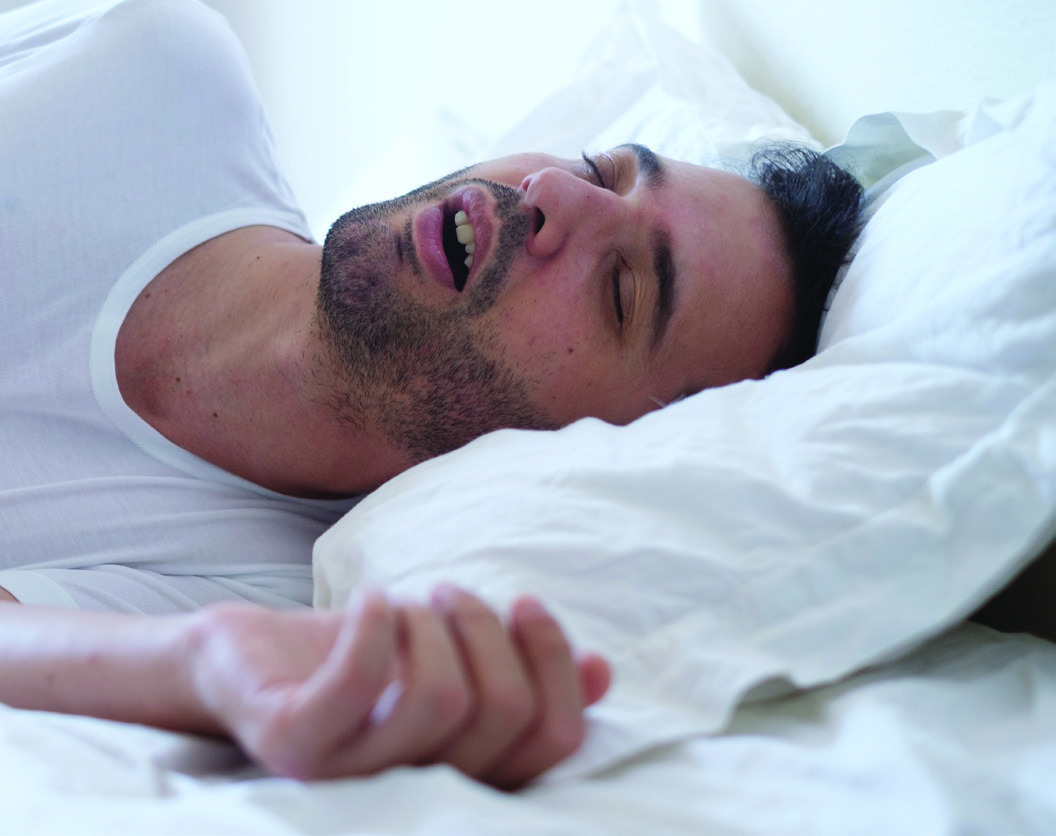
MOST PEOPLE ARE AWARE OF SLEEP APNEA (pronounced “APP-neeuh”)— or more correctly, obstructive sleep apnea (OSA). However, many people are not aware that untreated OSA can negatively impact heart health.
In people with OSA, upper airway muscles relax excessively during sleep. Structures supported by them, such as tonsils, adenoids, and the base of the tongue, collapse into and block (i.e., obstruct) the upper airway, thereby restricting airflow.
As the blood oxygen level falls, a person makes increasingly strong but unsuccessful efforts to breathe. The person ultimately arouses (only for a few seconds), during which time the person takes several deep, fast breaths (usually with snoring and gasping). The blood oxygen level is quickly restored, and the person resumes sleep. However,
sleep sets the stage for another OSA episode.
People with OSA have greater risks of arrhythmia (i.e., irregular heartbeat) and cardiovascular diseases such as coronary artery disease, hypertension (i.e., high blood pressure), heart failure (i.e., the heart insufficiently pumps blood throughout the body), and stroke. Certain phenomena occurring during OSA episodes may contribute to this association.
For example, during an OSA episode, each increasingly strong effort to breathe exerts excessive pressure on the heart, which can affect the heart’s rhythm and blood flow through the heart. Over time, these effects can contribute to heart failure, arrythmias, and stroke.
Repeated rises and falls in the blood oxygen level contribute to inflammation in the blood vessels, which may then contribute to atherosclerosis (“ATH-eh-roh-skleh-ROH-sis,” i.e., hardening of the arteries) of the coronary artery (which encircles the heart) and other arteries throughout the body. Atherosclerosis is involved in coronary artery disease, heart failure, and stroke.
Finally, each time a person arouses to take some breaths at the end of an apnea episode, the heart rate and blood pressure are temporarily
increased. Frequent intermittent increases in blood pressure may contribute to hypertension in people with OSA.
The most effective treatment for OSA is positive airway pressure.
In this treatment, pressurized air is applied to the upper airway through a mask that fits over the nose or nose and mouth. The positive pressure prevents collapse of the upper airway, thereby preventing OSA. Research indicates that, in some people with OSA, positive airway pressure treatment can reduce blood pressure and the number of episodes of atrial fibrillation (a type of arrhythmia). Positive airway pressure treatment may also improve atherosclerosis, although scientists continue investigating this.
You may have OSA if you note the following symptoms:
• You snore (or others complain of your snoring).
• You gasp (or others note you gasp) for air during sleep.
• Others note you stop breathing during sleep.
• You awaken with a sense of choking.
• You note inexplicable arousals from sleep.
• You struggle with excessive daytime sleepiness.
If you note these symptoms, you may want to consider visiting a sleep center to be assessed for OSA. If you are diagnosed with OSA, treating it may help reduce your risk of developing cardiovascular problems or may improve treatment results for cardiovascular problems (e.g., better control of blood pressure in hypertension).
Regina Patrick, RPSGT, RST, is a freelance writer/editor and a registered sleep technologist. She has been involved in the sleep field for more than 30 years.
✲