
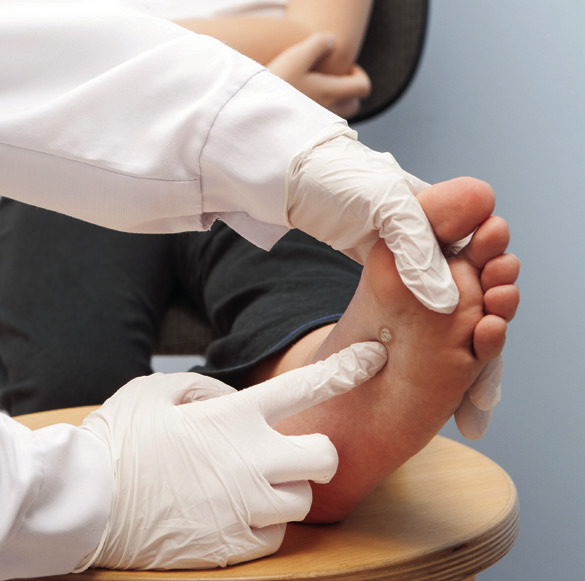
FOOT ULCERS ARE a relatively common complication in people with diabetes. Most often occurring on the bottom of the foot, these slowto- heal open wounds or sores can develop unnoticed from very minor cuts, scrapes, or blisters but have the potential to result in severe infection and can even lead to amputation if not managed properly.
Why do diabetic foot ulcers occur?
A variety of factors related to the disease process of diabetes can cause or contribute to the development of foot ulcers. A major contributing factor is diabetic neuropathy, or nerve damage, which can cause numbness that reduces the ability to perceive pain, heat, or cold. So, for example, it would be possible for the individual to walk around all day with a sharp pebble in his or her shoe or experience another form of minor injury that breaks or damages the skin of the foot without realizing it.
In addition to numbing the sensation of pain, diabetes increases the risk of developing peripheral artery disease and slows the immune response. As a result, circulation of oxygen-rich blood to the legs and feet is reduced and the body’s ability to fight off infection is impaired. The greater the severity of these factors, the higher the risk of developing a serious foot ulcer that is slow to heal and prone to infection.
An ounce of prevention…
Once they occur, foot ulcers can often be managed under a doctor’s care. However, ulcers that develop an infection that does not improve with treatment may ultimately require amputation. When it comes to these slow-healing, infection- prone wounds, an ounce of prevention is definitely worth a pound of cure.
The Centers for Disease Control and Prevention advises people with diabetes to take the following steps to keep their feet healthy and avoid ulcers (source: CDC.gov):
• Check your feet every day for cuts, redness, swelling, sores, blisters, corns, calluses, or any other change to the skin or nails. Use a mirror if you can’t see the bottom of your feet, or ask a family member to help.
• Wash your feet every day in warm (not hot) water. Don’t soak your feet. Dry your feet completely and apply lotion to the top and bottom—but not between your toes, which could lead to infection.
• Never go barefoot. Always wear shoes and socks or slippers, even inside, to avoid injury. Check that there aren’t any pebbles or other objects inside your shoes and that the lining is smooth.
• Wear shoes that fit well. For the best fit, try on new shoes at the end of the day when your feet tend to be largest. Break in your new shoes slowly. Always wear socks with your shoes.
• Trim your toenails straight across and gently smooth any sharp edges with a nail file.
Have your foot doctor trim your toenails if you can’t see or reach your feet.
• Don’t remove corns or calluses yourself, and especially don’t use over-the-counter products to remove them—they could burn your skin.
• Get your feet checked at every healthcare visit. Also, visit your foot doctor every year (more often if you have nerve damage) for a complete exam, which will include checking for feeling and blood flow in your feet.
• Keep the blood flowing. Put your feet up when you’re sitting, and wiggle your toes for a few minutes several times throughout the day.
• Choose feet-friendly activities like walking, riding a bike, or swimming. Check with your doctor about which activities are best for you and any you should avoid.
Most importantly, if you are diabetic and observe any unusual symptoms or changes in your feet, don’t hesitate to see your doctor. The earlier foot-health problems are detected, the less likely they will lead to serious complications such as ulcers. ✲
