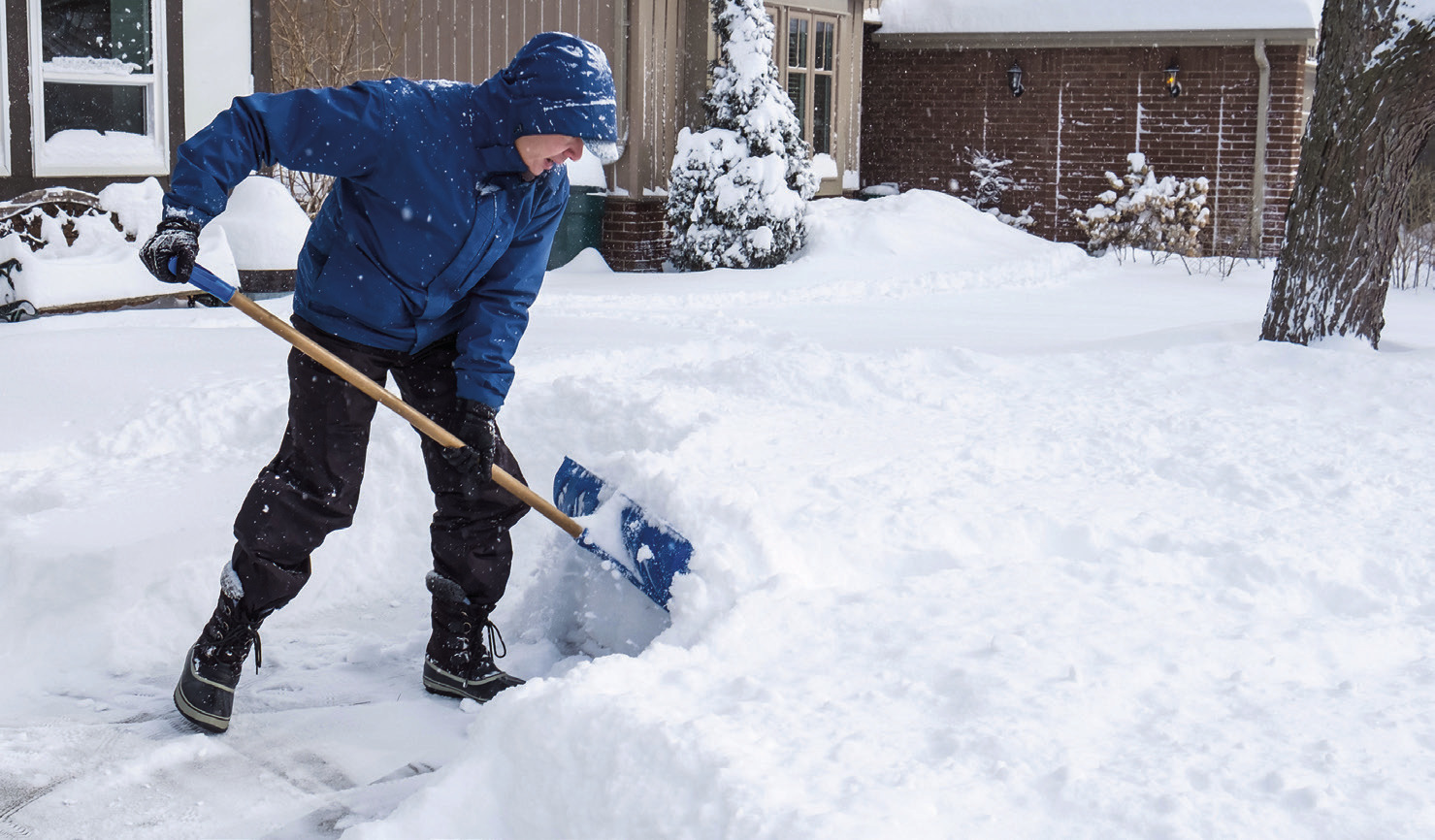
JUST WHEN YOU THOUGHT it was safe to go back outside after raking or blowing that last batch of fallen leaves to the curb, snow-removal season is upon us once again. For those who don’t own a snowblower, that means picking up a shovel every time the white stuff accumulates on driveways and walks.
More than just a minor annoyance, snow shoveling can be very hard on the body and cardiovascular system, leading to muscle strain in the back, shoulders, or arms, or, for some individuals, even heart attack if done incorrectly.
People who are older or out of shape are at greater risk of injuring themselves or experiencing a heart attack while shoveling heavy snow, but even people who are young and reasonably fit should proceed with caution.
Just as with starting a rigorous exercise regimen, it’s wise to get clearance from your physician before shoveling snow. Anyone who has a personal or family history of heart disease or heart attack, has high blood pressure or high cholesterol, smokes, or leads a sedentary lifestyle is at increased risk for heart-related complications while shoveling snow and should leave the chore to someone else.
Why is shoveling so hard on the heart?
Shoveling snow—especially that wet, heavy stuff that sticks to your shovel—demands a significant level of isometric exertion, especially from the upper body, which places considerable burden on the heart muscle. To put this exertion into perspective, consider that according to a study published in the Journal of the American Medical Association (JAMA), just two minutes of shoveling heavy, wet snow can elevate a person’s blood pressure and heart rate to levels equal to or greater than the levels produced by a maximum aerobic workout.
In addition, the inhalation of cold air, which becomes more pronounced as the level of exertion increases, may cause the blood vessels leading to the heart to constrict or narrow. As a result, the heart gets less oxygen than it needs, so a person predisposed to heart problems may experience chest pain or a dangerous heart rhythm.
Snow shoveling safety tips If you and your doctor agree that you’re fit enough to shovel snow, be sure to consider the following safety tips before you pick up a shovel and attempt to tackle those snow drifts:
• Remember, shoveling snow is a vigorous physical activity. You should warm up your muscles with several minutes of light exertion just as you would before beginning exercise.
• Dress in light layers so you can shed garments if you begin to overheat or add them if you get cold. Your outermost layer should be water-repellent.
Protect your hands from the cold and blisters by wearing gloves or mittens. Your footwear should consist of thick, warm socks and boots with slip-resistant soles. Wear a ski mask or wrap a scarf around your face and neck to avoid inhaling cold air.
• Choose a shovel with a smaller blade so you won’t be tempted to hoist more snow than you can handle.
• If the forecast calls for several inches of accumulation, try to begin shoveling as soon as a light covering of snow is on the ground. Don’t wait until the snow stops completely or you’ll end up having to dig yourself out of heavy, packed snow rather than simply push a few inches out of the way.
Sure, you will end up clearing your driveway and walks more frequently using this approach, but it’s considerably easier on your body to shovel a few inches of snow two or three times than to shovel a foot of snow once.
• If you must wait until a heavy snowfall is finished before shoveling, try to remove the snow in layers. Scoop small loads, and try to push the snow whenever possible. If lifting is necessary, be sure to bend at the knees, not the waist, and walk with the load to the dumping location. Don’t throw it. Also, try to avoid twisting your body while lifting a shovel full of snow as this motion can injure your back.
• Think “tortoise,” not “hare.” In other words, work at a slow, steady pace, and take frequent breaks to rest, warm up, and rehydrate yourself.
Most importantly, listen to your body. Don’t try to “push through” pain, shortness of breath, or other worrisome physical symptoms just because you want to get the job done. No doubt, there’s a neighborhood kid or a professional snow-removal service who would be more than happy to take on the chore of shoveling your snow for a modest price.
Of course, if your budget allows, you also have the option of replacing your snow shovel with a snowblower. Just keep in mind that operating a snowblower large enough to tackle the heavy snowfalls we commonly experience here in Northwest Ohio demands significant physical exertion as well.
✲