
THE SUMMER SEASON BRINGS WITH IT will bring with it an exciting diversity of recreation and leisure opportunities. It’s a time for well-earned vacations, swimming and boating, camping and hiking, the caress of warm breezes, the fragrance of fresh-cut grass, and a host of other warm-season activities and sensations. Summer is also a time that can be particularly tough on your feet if they aren’t properly cared for and protected.
Here are some timely tips for keeping your feet on a safe and healthy path this summer:
Choose supportive footwear
Once limited primarily to the beach and poolside, flip-flops and flimsy sandals have become fashionable all-around footwear in recent years. The trouble is, flip-flops provide very little in the way of foot support. As a result, it’s common for regular wearers to experience pain in the heel, arch, or ankle. Of course, people who can’t resist the sensation of grass or sand on their bare feet—and, hence, tend to shun footwear altogether in the summer—are at even greater risk of puncture wounds, strains, or sprains.
A very common problem podiatrists see as a result of non-supportive footwear is plantar fasciitis, also known as “heel spur syndrome.” This condition occurs when the ligament on the bottom of the foot that extends from the bottom of the heel to the ball gets stretched out and painfully inflamed because the arch isn’t properly supported. Oftentimes, the pain is most pronounced for the first few steps in the morning or gets worse as the day progresses if you’re on your feet extensively.
Proper supportive footwear is key to preventing and relieving plantar fasciitis. Podiatrists may also prescribe stretching exercises, icing, and anti-inflammatory medications. In some cases, an over-the-counter or custom orthotic that contours to the arch and alleviates the strain on the ligament will be recommended.
While there’s nothing wrong with wearing flip-flops or sandals in certain environments, such as around the house, on the beach, or around the pool, it’s recommended to wear something more supportive if you’re going to be on your feet for an extended period.
Know the three characteristics of supportive footwear
Before buying a pair of shoes, make sure they meet the three criteria of supportive footwear. The first is a good, stable heel counter. That’s the part of the shoe at the back of the heel just above the sole. If you apply pressure to the heel counter with your thumb and forefinger, you shouldn’t be able to squeeze it together. Secondly, you shouldn’t be able to bend the shoe in half where the arch is located because the foot is not designed to flex that way. Finally, make sure there is good flexibility in the front part of the shoe, or forefoot.
Match the shoe to the activity
Different summertime activities and chores demand different forms of footwear for optimum support, protection, and health. For example, hiking, jogging, cycling, rock climbing, and cross-training all demand different forms of footwear. Your best bet is to purchase your active footwear through a specialty footwear shop with staff members who not only know which shoes to recommend for different activities, but also know how they should fit and how you should look walking in them. Don’t settle for shoes sold off the shelf at “big box” retailers. Your podiatrist can also evaluate your shoes for the activity you plan to do as well as fit you for orthotics if necessary.
In addition to wearing the right shoe for your chosen activity, if you’re going to begin an exercise regimen, be sure to start out slowly and gradually increase the intensity and duration of your workouts until you reach your goals. Also keep in mind that cross-training, rather than focusing on just one activity, will help to prevent foot injury.
Fend off warts and fungus
Many leisure and recreation environments also put your feet at risk of exposure to harmful microorganisms. Public swimming pools, locker rooms, and hotel bathrooms are just a sampling of areas where your feet can become infected. For example, athlete’s foot and plantar warts tend to be a big issue at this time of year, so it’s very important to avoid going barefoot around swimming pools, locker rooms, showers, fitness centers, and other public areas. If there’s a place where it’s appropriate to wear flip-flops, it’s in these areas. In addition, you can spray shoes, showers, and other potentially infected surfaces with a disinfectant spray to kill athlete’s foot fungus and the virus that causes plantar warts.
Clean and inspect your feet
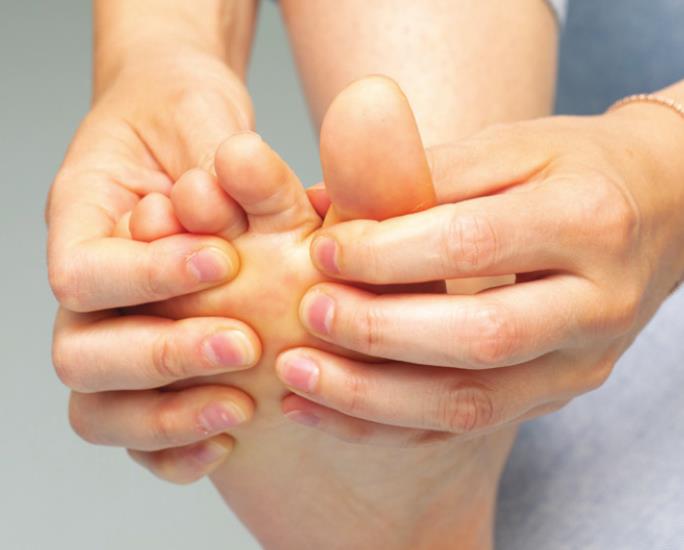
Last but not least, foot washing and inspection should be part of everyone’s daily hygiene practices. In addition to keeping your feet clean and dry to discourage infection, look at the bottoms of your feet and in between your toes for calluses, warts, blisters, open sores, foreign objects, or anything else that shouldn’t be there. This is especially critical for people with diabetes, which often causes some degree of neuropathy in the extremities, thereby limiting sensation in the feet, and can interfere with the body’s ability to heal properly.
In fact, to prevent foot injuries that could be reluctant to heal, people with diabetes are encouraged to be fitted for a pair of special diabetic shoes, which are wider and more accommodating than standard shoes. Diabetic shoes are also more protective if there is any deformity of the foot, such as a hammer toe or bunion, and come with softer insoles to prevent calluses and ulcerations while supporting the arch.
Remember, small foot problems can quickly turn to bigger and more severe ones if neglected. Be sure to wear supportive shoes that are appropriate for the activity at hand and give your feet the care they need to prevent injury or infection. If you experience pain or other unusual symptoms in your feet, see your podiatrist promptly for an evaluation.
