OVERTHE PASTFEWWEEKS, Canadian wildfire smoke has, at times, created unhealthy conditions in Ohio according to AirNow.gov. In response, the Ohio EPA has issued statewide Air Quality Advisories.
Smoke from wildfires contains particulates that can be inhaled into your lungs and cause irritation of the eyes, nose, or throat; coughing; shortness of breath; and chest pain. They can also aggravate chronic heart and lung conditions. Certain groups of people are considered sensitive groups and are at higher risk. Sensitive groups include people with chronic heart or lung disease, children, the elderly, pregnant women, and those who spend a lot of time outdoors.
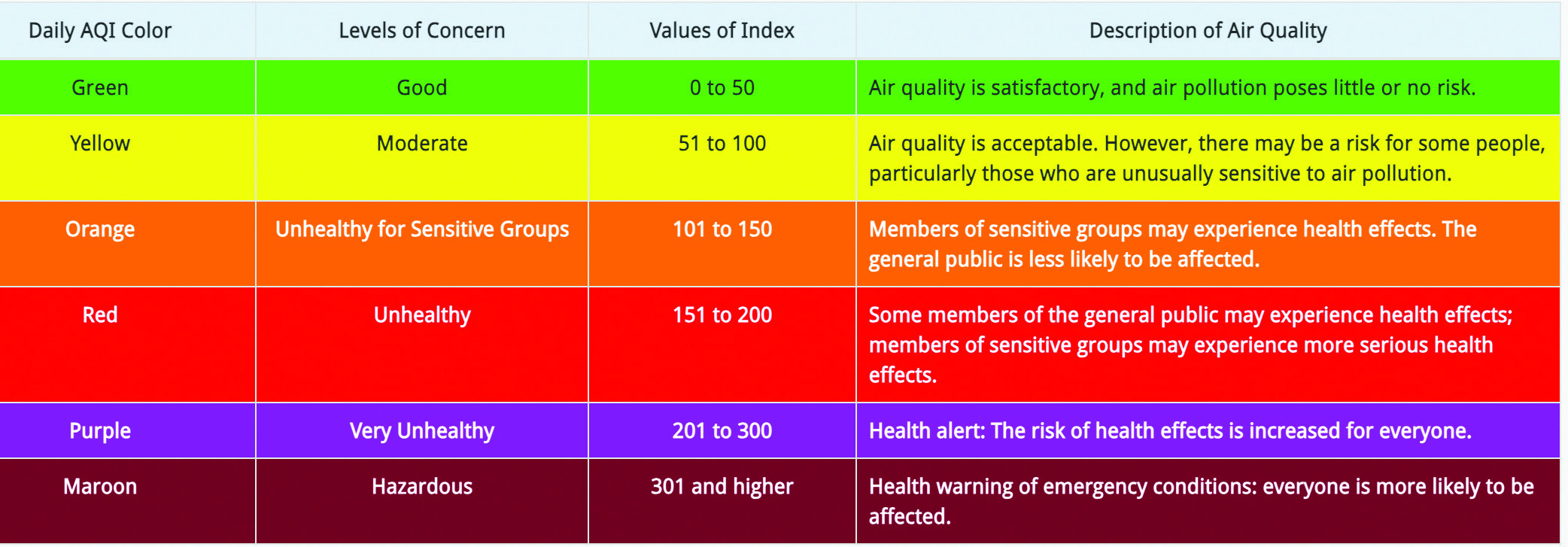
The Environmental Protection Agency (EPA) measures air quality using the Air Quality Index (AQI). The higher the AQI value, the greater the level of air pollution and the greater the risk of health effects. There are six AQI categories for particle pollution.
• Green = Good (AQI of 0-50): Particulate pollution poses little to no risk.
• Yellow = Moderate (AQI of 51-100): There may be a risk for some people, such as those particularly sensitive to air pollution.
• Orange = Unhealthy for Sensitive Groups (AQI of 101 150): People in this category may experience health effects, but the general public is less likely to be affected.
• Red = Unhealthy (AQI of 151 200): Sensitive groups should consider moving all activities indoors. Everyone else should reduce longer or more intense activities and take more breaks. Go indoors if you have symptoms.
• Purple = Very Unhealthy (AQI of 201-300): Sensitive groups should avoid all outdoor physical activities and go indoors for cleaner air if they don’t feel well. Everyone else should avoid long or intense activities outdoors and consider rescheduling or moving activities indoors.
• Maroon = Hazardous (AQI of 301-500): Sensitive groups should stay indoors in a place with cleaner indoor air and keep activity levels light.
Everyone should avoid all outdoor physical activity.
Anyone can see the real-time air quality level in their area by going to AirNow.gov and entering their location. Air quality levels can change throughout the day, so check often to determine whether air quality indicators may be elevated. You can also find fact sheets on topics such as how to reduce your smoke exposure, at-risk groups of people, how to protect your pets from wildfire smoke, indoor air filtration, and more.
If the air quality reaches a level of concern that could result in health effects for you or a family member, please take precautions until conditions improve. Limit outdoor activity, especially outdoor exercise and other strenuous activities. Consider moving physical activities indoors or rescheduling them. Those with asthma are encouraged to carefully follow your asthma action plan, if you have one. Make sure you have enough medication for several days. Those with heart disease or COPD should pay close attention to symptoms such as chest pain or tightness, a fast heartbeat, feeling more out of breath than usual, or extreme fatigue. Contact your doctor, or if symptoms are severe, call 9-1-1. For more information, go to woodcountyhealth.gov and click on Air Quality. ✲
Sources: https://www.airnow.gov/?city=Bowling% 20 Green&state=OH&country=USA https://www.airnow.gov/aqi/aqi-basics/ https://www.airnow.gov/sites/default/ files/2023-03/air-quality-guide-for-particle- pollution_0.pdf https://odh.ohio.gov/media-center/ odh-news-releases/odh-news-release- 06-27-23