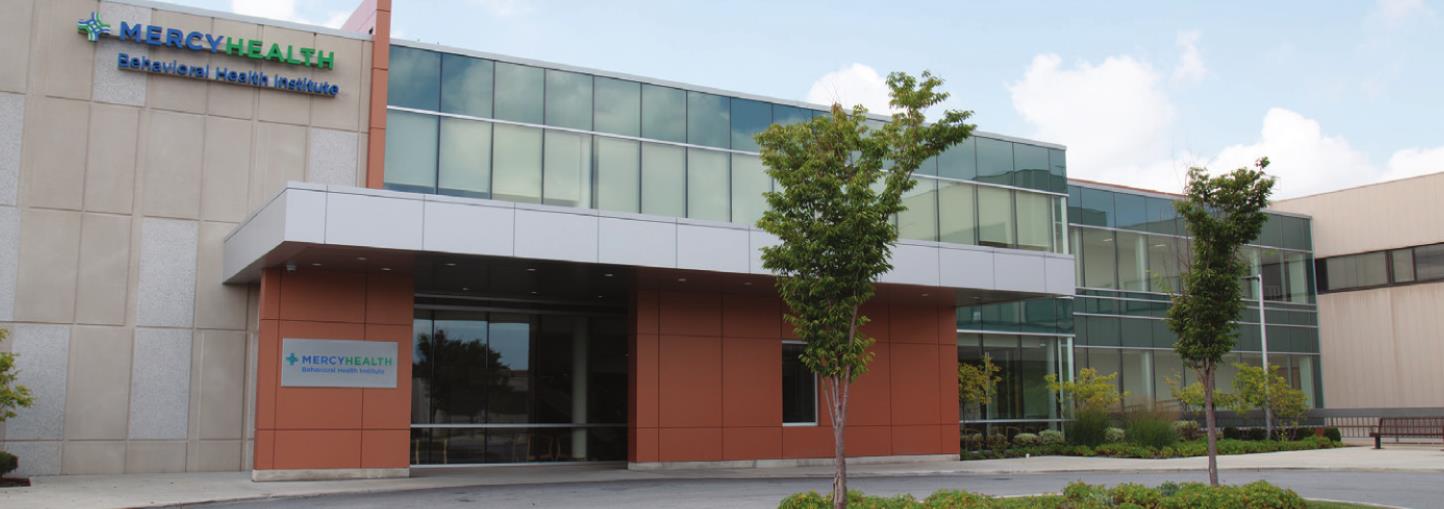
PEOPLE SUFFERING WITH SEVERE DEPRESSION or other chronic mental health disorders who don’t get relief from standard treatments such as psychotherapy or medications often feel as though they’ve run out of options. However, there is hope for these patients. The dedicated, highly experienced healthcare professionals at Mercy Health – St. Charles Interventional Psychiatry—consisting of psychiatrist Bryan Moloney, MD, psychiatrist Rajiv Parinja, MD, psychiatrist Rusheeth Thummalapally, MD, and Katie Bush, CNP—offer several advanced treatment modalities that often yield excellent results when first-line treatments fall short.
Among these state-of-the-art treatments are electroconvulsive therapy, transcranial magnetic stimulation, and the drug Esketamine. Dr. Moloney notes that each option will suit some patients better than others, but together they provide a powerful repertoire of interventions for patients in crisis who have failed other treatments. Each essentially works by activating and resetting circuits in certain areas of the brain that have gone dormant.
Electroconvulsive therapy (ECT) is probably the oldest treatment in psychiatry, yet it continues to be one of the most effective, benefiting a significant majority of patients who choose it. In fact, ECT has been the most effective treatment for depression since about 1940. “ECT also has broader implications than TMS or Esketamine. Right now, TMS is approved only for major depression, and Esketamine is just for major depression with suicidal ideation, whereas ECT can be used to treat several mental health disorders in addition to depression, such as mania, schizophrenia, and catatonia,” Dr. Moloney explains.
It’s important to understand that ECT bears no resemblance to the depictions people may have seen in movies and other media. Performed under general anesthesia on either an inpatient or outpatient basis, ECT is very safe and causes no pain or discomfort to the patient.
According to Dr. Moloney, the actual procedure takes only about five minutes—more time is spent getting the patient prepped. During ECT, the patient is put to sleep with an IV anesthetic, a medication is delivered to relax the muscles, and then a brief, controlled electrical current is delivered to induce a seizure in the brain. The seizure creates biochemical changes in the brain that help alleviate symptoms. ECT is typically done three days per week for two to four weeks, for an average of six to 12 treatments. Once improvement is seen, the frequency of treatment can be cut back, making sure the patient is still doing well, and then it can be determined whether it’s appropriate to stop or continue treatments.
Transcranial magnetic stimulation (TMS) is similar to ECT, but instead of using an electrical current to produce a seizure, it creates a magnetic field to induce a much smaller electric current in a specific part of the brain without causing a seizure or loss of consciousness. TMS requires no sedation and is typically performed on an outpatient basis four to five times per week for four to five weeks. Then the patient’s level of improvement is evaluated to determine whether maintenance treatments are appropriate or medications should be considered.
Dr. Parinja explains, “To conceptualize TMS, consider someone who has just experienced an adverse event in life, such as missing out on a promotion. It would be perfectly normal for that person to feel bad about the situation, but over time, with communication between the emotional and rational brain, he or she should be able to talk it through and recover. But in someone with severe depression, there is decreased activity in the frontal parts of the brain, so that communication shuts down. With TMS, we can use magnetic stimulation to increase the activity of the frontal parts of the brain that allows the back-and-forth communication to resume.”
Esketamine, or Spravato ® , is a nasal-spray medication used for people with depression and suicidal ideation. Treatment is typically administered twice per week initially but then tapered back to once per week if the patient is doing well. If the patient’s suicidal thoughts continue to improve, maintenance treatments may be deemed unnecessary. Esketamine must be administered in a clinical setting under the direct supervision of a healthcare provider.
Whether a patient is being treated with ECT, TMS, or Esketamine, ongoing investigation is necessary to determine whether it’s appropriate to stop or continue treatments as well as the appropriate frequency of treatments. Also, none of these treatments are given without the patient’s full consent and understanding of what the treatment entails. “Education for patients and their families is a big part of what we do here, and the treatment regimens are very patient-specific,” Bush states. “We want them to be actively involved so they can make informed decisions on which treatment option is best for them.”
Dr. Moloney states, “Whether you seek treatment here or anywhere else, if you’re really struggling with depression or another mood disorder and medications haven’t worked, don’t lose hope! Other, very effective treatment options are available. These modalities aren’t first-line treatments because they require more intervention, but they really can help patients reclaim their lives.”
For more information on these treatment modalities, please call Mercy Health – St. Charles Interventional Psychiatry at 419-696-8882.