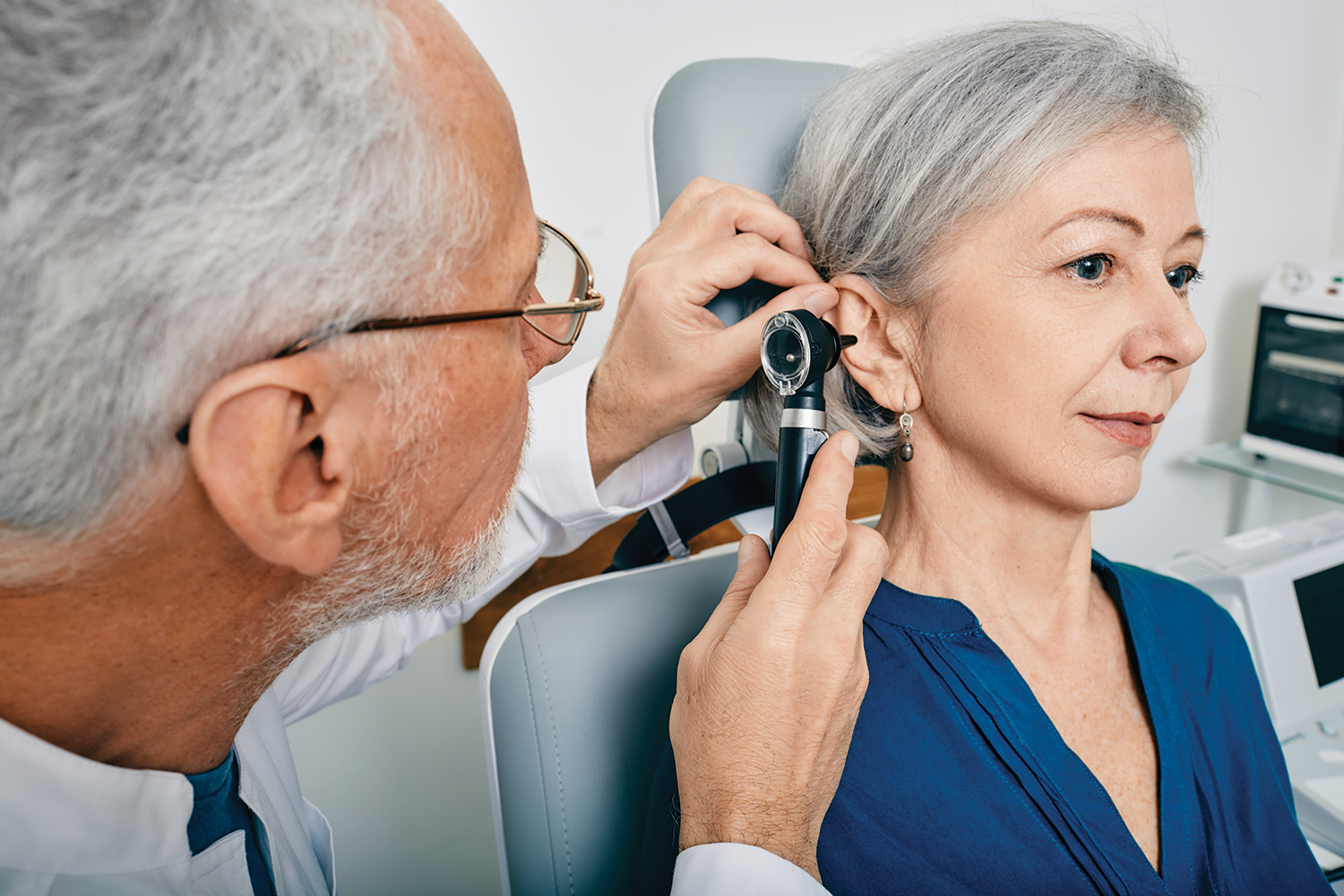
IN THE RANGE OF PHYSICAL AILMENTS there are those that are apparent—a cut or bruise, for example—and those that are not. The latter is what the World Health Organization refers to as an invisible disability, one that, while unseen, affects a person’s societal and mental health over time and is so important that the WHO designates a special day annually.
That disability: hearing loss. “World Hearing Day 2025 will be observed on March 3 with the theme Changing Mindsets: Empower yourself to make Ear and Hearing Care a reality for all,” the WHO said, adding it “will highlight the importance of changing mindsets about deafness and hearing loss within civil society and healthcare professionals.”
Joining the call about the importance of healthy hearing is Dr. Randa Mansour-Shousher, an audiologist and founder of HearAide and the Northwest Ohio Hearing Clinic. “Organizations are constantly trying to raise the level of awareness of hearing loss,” she said. “There are campaigns to reduce the stigma, such as World Hearing Day.”
She said hearing loss is an impairment that’s often forgotten or neglected because it’s invisible to the eye. She added, “People are in denial about hearing loss—people aren’t thrilled to obtain hearing aids and feel handicapped.”
However, Mansour-Shousher said, “It’s important to have good hearing health. The benefits are many. It increases social engagement, improves your communication, and may decrease the risk of depression. One’s quality of life may decrease over time when a hearing loss is left untreated.”
She goes into detail: “Communication is the foundation of good relationships. Good hearing health eliminates the frustration of missing out in conversations with family and friends. Being able to communicate is the avenue for success in life, and I feel it’s my responsibility to make sure I relay the importance of treating hearing health to assure the best outcome for now and the future.
“Healthy hearing has positive benefits to the brain—and good brain function is important.” She said good brain function supports maintaining memory, and forestalling dementia and Alzheimer’s disease. Preventing hearing loss “plays a big role in staying mentally sharp, and it’s good to retain mental sharpness as you get older,” she said.
“If you don’t treat your hearing loss, you’re going to start being isolated from social environments. That leads to an increase in cognitive decline—that and dementia are hand-in-hand.”
Mansour-Shousher continued, “When you have good hearing health, you have independence, you’re secure about yourself. For example, you hear the phone ring. The fire alarm. The doorbell. When driving, you can hear emergency vehicles—you’re aware of your surroundings. The benefit of good hearing health is security all the way around in your life.”
There are a few early signs of oncoming hearing loss: If you have trouble discerning what’s being said on the phone, TV or radio, or in conversation; if you often ask people to repeat what they say; if you avoid groups or noisy restaurants because of a din; or if there’s a ringing in the ears, she said. Such are the symptoms, and your hearing should be checked.
Mansour-Shousher said previously such hearing checks would start with a physician. Now, people can go directly to an audiologist for a hearing screening, “but if you feel more comfortable, you can go to a physician.”
“More people are aware that something can be done about hearing loss,” she said, “and are willing to do something.”
More and more individuals are willing to assess their hearing, especially young people in their 30s and 40s. “Hearing loss affects young people more than you think,” she said. “They’re embracing hearing aids’ improved technology.”
She said HearAide provides hearing healthcare to those “who are at risk of not being able to obtain services to assist hearing loss.” The nonprofit provides its services on a sliding fee scale, and its reach is local and global. More details are at HearAide.org Mansour-Shousher’s message: “Pay attention to the state of your hearing. Don’t think badly about getting it checked.”
Dennis Bova is a freelance writer and editor. ✲