
IN LAST MONTH’S INSTALLMENT OF EATING WELL, I covered the topic of healthy eating during pregnancy. This month I’d like to take the logical next step and talk about how to keep your infant on the nutritional straight-and-narrow after the little “bundle of joy” is born and you’re no longer eating for two.
The challenge in those first few years is that infants don’t come with feeding instructions. Wouldn’t it be great if they were born with little tags that tell you what and when to feed them along with a few tricks to get them to eat? If you’ve ever felt that way, you’re not alone. I sure know that’s how I felt. Even as a dietitian, it seemed like all my knowledge was out the window! Sure, as a new parent, you’ll get lots of advice, but that’s of no use when your two-year-old refuses to eat.
The fact is, all babies are different—truly unique—and grow at different rates. What worked for one parent may not work for you. What you really need are some simple guidelines that fit for most babies. With that in mind, let’s look at the different stages of feeding in the first two years of life and what parents can expect—again, very generally speaking—in each stage.
Newborn
As newborns, all babies need is breastmilk or formula from birth to four to six months. Plan on breast feeding eight to 12 times a day. If bottle feeding formula, plan on six to eight bottles a day. A good sign that feeding is going well is your infant having six wet diapers per day.
Four to six months
At four to six months, your baby may be ready for some cereal, but first ask your physician whether it’s okay to start cereal. If your doctor gives the go-ahead, start with baby rice cereal as it causes the fewest allergy problems. Mix one tablespoon of cereal with four tablespoons of breastmilk or formula. Be patient because your baby may refuse this new food the first few times. Just keep trying. To encourage variety in your baby’s diet, feed your baby one new cereal per week. Also, be sure to use a baby-size spoon when feeding, and avoid putting the cereal in a bottle. Your baby needs to learn to eat his or her food.
Six to eight months
If your baby has doubled in weight, can control his or her head and neck, can sit up with support, and, most important, shows interest in food when you eat, it’s time to try giving strained vegetables first (one new offering each week), then try strained fruits. Continue with breastmilk and/or formula, though baby may need less now if he or she is eating other foods well. If your baby has a few teeth at this point, you can try mashed or finely chopped fruits and vegetables closer to the eight-month mark. You can try giving four to six ounces of fruit juice in a cup, too.
Eight to 12 months
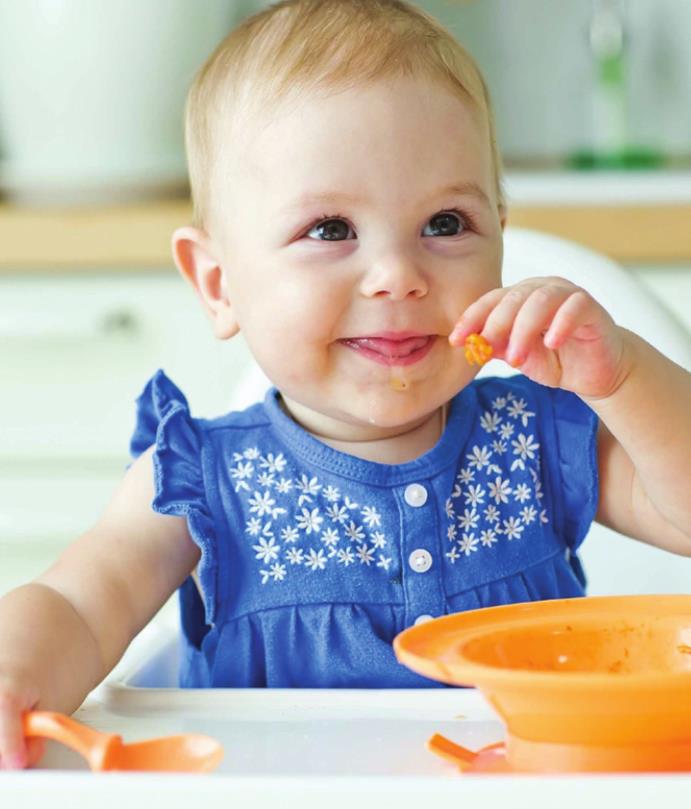
Go ahead and add strained or finely chopped meats now. Feed only one new meat a week. Wait until baby’s first birthday to feed egg whites, and keep in mind that some babies are sensitive to them. It is okay to give egg yolks. It’s also time to start “finger foods” and to let your baby feed himself/herself. Just be patient with the process. Let your baby try to feed, and don’t be bothered by the mess.
12 to 24 months
Around your baby’s first birthday, it’s time to add whole milk in a cup (four half-cup servings per day) and wean him or her off formula. Keep in mind that toddlers need three meals and three snacks a day, too.
Good snacks are cheese, yogurt, fruit, bagel, unsweetened cereals, pudding, steamed tender vegetables, frozen juice pops, graham crackers, smoothies or milkshakes, and pretzels. Beware of choking hazards such as apple chunks, grapes, hotdogs, sausage, peanut butter, popcorn, peanuts—all nuts and seeds, round candies, and hard chunks of uncooked vegetables like carrots.
At mealtimes, feed your toddler the same thing you’re eating and the same food you’re feeding the whole family, and let him or her sit at the table on a booster seat. However, keep in mind that toddlers can be very picky eaters. Respect your child’s likes and dislikes, and try to make meals fun and interesting. Keep trying new foods—it may take 10 tries of a food before a child will actually accept it. If your toddler wants the same thing day after day, don’t worry. It’s a food jag, and kids usually grow out of them. Above all, be patient. Your physician will track your child’s weights and heights, the best indicator of adequate nutrition.
As your child progresses through the first few years of life, keep in mind that babies and toddlers will usually let you know when they’re full. Trust that they know how much they need to eat, and believe they’re finished eating when they push away the nipple or refuse to clean the plate.
As a new parent you may worry whether you’re doing everything right—and you’ll get lots of advice. Each stage during this time frame is so different, with your baby growing and developing so quickly, and each baby is different but also the same.
These are just suggestions for feeding your little one. If you have more concerns, it’s best to discuss them with a doctor. Don’t worry if you do have to occasionally resort to a game of choo-choo train or airplane when feeding your child. It’s a stage every parent goes through.
Besides, you’ll have plenty of other things to worry about apart from nutrition when your child enters the “Terrible Twos.”
Laurie Syring, RDN/LD, is Clinical Nutrition Manager at ProMedica Flower Hospital.